
remove_red_eye 229
page background
Logo

TSD Inclusive

September & October 2026

TSD Inclusive September & October 2026

Building Belonging Across OneTroy: Defeat the Label Building Belonging Across OneTroy: Defeat the Label

User uploaded image
zoom_out_map

Troy School District is partnering with Defeat the Label during the 2026–27 school year to strengthen belonging, student agency, and healthy school communities across OneTroy. Following successful pilots in our elementary and secondary schools, this districtwide work will connect students, staff, families, schools, departments, and community partners through a shared approach to preventing bullying, strengthening Upstander behavior, and responding to harm.


Defeat the Label is a Michigan-based nonprofit that equips young people and adults with the skills and confidence to interrupt harm, support others, and help create communities where people are seen, valued, and considered.


What Will This Look Like for OneTroy?

  • Upper Elementary - Six in-person Upstander lessons focused on empathy, resilience, recognizing bullying, and practicing safe ways to speak up and support others.
  • Middle School - Eight Upstander sessions focused on peer accountability, digital citizenship, belonging, and responding to bullying or bias.
  • High School - Eight One Table: Leadership for Belonging sessions that will bring together diverse student cohorts to build dialogue, agency, leadership, and shared responsibility for school culture.
  • Families and Community - A four-part workshop series offering practical learning and conversation, including Raising Upstanders and The Digital Playground. Additional topics and dates will be announced.
  • Staff, Schools, Departments, and Teams - Aligned learning and implementation support connecting this work with restorative practices, BIST, wellness, student voice, school culture and responsiveness, and district processes for responding to harm and bias.


Why This Work Matters

This partnership grew from listening to students, families, staff, and community partners, including conversations with the Troy African American Parent Network (TAAPN) about the need for greater alignment and cohesion. Our goal is to create a more connected district approach so that belonging is reflected in what we teach, how we build community, how we respond when harm occurs, and how students and families help shape the way forward. Belonging will continue to guide our direction and remain a condition we intentionally foster and strengthen across OneTroy.


What Comes Next

District and building teams are mapping implementation schedules now. Families will hear more as dates, participating student groups, school-specific plans, and community learning opportunities are finalized. Schools will communicate building-level details directly, and information about the four-part family series will be shared districtwide.

We invite our families and broader community to learn with us, participate in upcoming sessions, and help us continue building this work together.

Learn more about Defeat the Label at defeatthelabel.com.

Celebrations, Observances, Recognitions Celebrations, Observances, Recognitions

User uploaded image
zoom_out_map

OneTroy is home to students, staff, and families representing many cultures, faith traditions, languages, identities, and lived experiences. This newsletter invites our entire community to celebrate and embrace those differences, expand our awareness, and continue cultivating empathy, curiosity, and connection across our schools.


As we move through another school year together, this annual reminder offers us an opportunity to pause and consider how we acknowledge the cultural, religious, heritage, and awareness observances that are meaningful to members of our community. These moments can be powerful opportunities to build belonging, deepen understanding, challenge stereotypes, and help ensure that every student, staff member, and family feels seen, respected, and valued.


This issue highlights inclusive observances and learning opportunities taking place from September and October 2026. Along the way, you will find reflection prompts, culturally responsive practices, wellness considerations, and trusted resources that can support continued learning at school and at home.This is not an exhaustive list, and no single resource can fully represent the diversity that exists within any culture, identity, faith, or community. We encourage everyone to approach these observances with care, curiosity, and a willingness to learn—while remembering that individuals within the same community may recognize or experience an observance differently.

Guidance Document for an Inclusive School Calendar

September September

MONTHLY

National Suicide Prevention Month — National Alliance on Mental Illness
Information for raising awareness, recognizing warning signs, reducing stigma, and connecting people with support.


National Recovery Month — Substance Abuse and Mental Health Services Administration
Resources highlighting recovery, evidence-based treatment, behavioral health support, and the importance of supportive communities.


National Hispanic Heritage Month — Smithsonian National Museum of the American Latino
Bilingual educational resources, stories, activities, historical information, and opportunities to explore the diversity of Latino cultures and experiences. Hispanic Heritage Month runs from September 15 through October 15.

Deaf Awareness Month — National Deaf Center
Resources supporting accessibility, belonging, communication, and educational equity for deaf and hard-of-hearing students.

✨September Spotlight ✨ ✨September Spotlight ✨

Belonging Begins WITH Being Seen AND Considered

Hispanic Heritage Month, religious inclusion, Suicide Prevention Month, and the International Day of Peace each invite us to recognize the identities, experiences, and needs represented across OneTroy. That recognition can begin with practices that may appear small but carry tremendous meaning—pronouncing a student’s name correctly, honoring their language and culture, making room for their faith, noticing when they may be struggling, and listening to how they experience our schools.


Being seen matters. Being considered matters, too. Consideration means that students’ humanity, histories, needs, gifts, and dreams are part of our thinking before a lesson is written, an event is planned, or a decision is made.


This is the heart of co-design: creating WITH people and making space for their voice, agency, and leadership. We saw an important example during Welcome Back Week in August, when members of the Student Equity Council designed and facilitated their own professional learning sessions for district staff. Students identified what mattered to them, shaped the experience, and spoke directly with the adults who serve them.


Their leadership was an important step forward—and a reminder of what becomes possible when we build our school communities with one another, especially our students.

Students Lead Professional Development

YPAR and OneTroy YPAR and OneTroy

What Is Youth Participatory Action Research (YPAR)?

Youth Participatory Action Research (YPAR) is a way of improving schools with young people rather than for them. Students identify challenges in their community, conduct research, and develop solutions. Each word in the name carries part of the approach:

  • Participatory: Everyone involved, including community members, is treated as a contributor of knowledge and lived experience.
  • Action: The research exists to produce a plan for addressing a real problem.
  • Research: It is a systematic look at a problem that centers community strengths, narratives, and knowledge.


In K–12 settings, YPAR can help us move from collecting student voice to building shared ownership. Students may use surveys, interviews, listening circles, observations, art, storytelling, or other forms of inquiry to explore issues connected to belonging, wellness, learning, school culture, or community. Educators serve as facilitators, thought partners, and advocates who help students access information, navigate systems, and bring their ideas to decision-making spaces. Stanford's Gardner Center notes that YPAR is especially powerful for young people experiencing marginalization. That fits our human-centered, culturally responsive approach and our Student Voice and Agency priority.


TSD Staff already building capacity

Some TSD staff have already committed to YPAR learning through the YPAR Certificate Program, offered by EMU Professional Programs and Training with Discover Without Barriers Consulting. The course is asynchronous and offers 30 State Continuing Education Clock Hours (SCECHs) for Michigan educators. Participants learn to:

  • Understand why YPAR matters and how to advise student-led projects
  • Identify appropriate audiences for student findings, building voice and agency
  • Connect YPAR to problem-, place-, and project-based learning
  • Learn the steps for doing a YPAR project alongside students


Resources for Educators

  • EMU/Discover Without Barriers YPAR Certificate Program: an asynchronous course offered with Eastern Michigan University's Professional Programs & Training that carries 30 SCECHs for Michigan educators.
  • EMU Today feature on the YPAR Certificate Program: a short EMU overview of the program and its partners, which works well as a quick read for colleagues.
  • SchYPAR (Youth Participatory Action Research in Schools): tools for educators and students, including lesson plans, student policy briefs, and student presentation slides.
  • KnowledgeWorks/WestEd YPAR Guidebook and Curriculum: an overview of YPAR principles and practices, with suggested steps and examples from a year-long YPAR course.
  • Stanford Gardner Center YPAR Brief: a research-practice partnership perspective on youth action research. This 2022 version comes from work with Oakland Unified in California, so it isn't connected to Oakland Schools here in Michigan.
  • U-M CREATE YPAR Resources (2023): a Michigan-based reference list of YPAR scholarship. I called it "annotated" earlier, but it's a reference list.
  • Youth Leadership Institute: YPAR overview: a plain-language explanation of the participatory, action, and research components.
  • Warren & Marciano (2018), "Activating student voice through YPAR": a Michigan State University study in which fifteen youth from seven high schools spent 18 weeks as co-researchers.
  • What Is YPAR? | Youth Participatory Action Research
    Introduction to Youth Participatory Action Research (YPAR)

    Rosh Hashanah and Yom Kippur Rosh Hashanah and Yom Kippur

    User uploaded image
    zoom_out_map

    Shanah Tovah!

    This season we recognize and honor our Jewish students, staff, families and community members observing the High Holy Days.


    Rosh Hashanah | September 11–13, 2026
    Rosh Hashanah, the Jewish New Year, marks a time of reflection, renewal and new beginnings. It also begins the Days of Awe, a sacred period of introspection that leads to Yom Kippur. For many Jewish families, the holiday includes prayer, gathering with loved ones and traditions that invite reflection on the year that has passed and hope for the year ahead.


    Yom Kippur | September 20–21, 2026
    Yom Kippur, the Day of Atonement, is considered the holiest day of the Jewish year. Centered on reflection, repentance, reconciliation and renewal, many who observe spend the day in prayer and fasting from sundown through the following evening.


    As a OneTroy community, recognition also calls us to consideration. Students, colleagues and families may be attending religious services, fasting, gathering with family, or stepping away from regular routines. Small acts of awareness, from considering scheduling and food-centered activities to extending flexibility and avoiding assumptions about how someone observes, help ensure people feel seen, valued and considered.


    A few things to keep in mind:

    • Jewish holidays begin at sundown, rather than at the start of the calendar day.
    • Observance varies across individuals, families and Jewish traditions; there is no single way to observe.
    • On Yom Kippur especially, fasting and extended religious services may affect participation, energy and scheduling for some students and staff.
    • Recognition is more than naming a holiday on the calendar. It is an opportunity to practice curiosity, consideration and care for the people who make up our community.


    To our Jewish families, students and colleagues, we honor this sacred season of reflection and renewal and wish you a meaningful observance and a sweet new year.


    Resource Mine to Support Teaching and Learning (not an exhaustive list)

    Jewish Educator Portal – Rosh Hashanah Resource Collection

    https://educator.jewishedproject.org/content/rosh-hashanah-resource-collection

    TeachersFirst – Rosh Hashanah and Yom Kippur

    https://teachersfirst.org/spectopics/roshhashanahandyomkippur.cfm

    About Rosh Hashanah – History.com

    https://www.history.com/topics/holidays/rosh-hashanah-history

    About Yom Kippur – History.com

    https://www.history.com/topics/holidays/yom-kippur-history

    Hispanic Heritage Month (Sep 15-Oct 15) Hispanic Heritage Month (Sep 15-Oct 15)

    User uploaded image
    zoom_out_map

    2026 Theme - Unidos, somos más” / “Together, we are more”

    Beginning September 15, National Hispanic Heritage Month is a national celebration that honors the history, culture, and influence of people of the past, present, and future generations of Hispanic heritage. Descendants of South and Central America, Spain, Mexico, and the Caribbean celebrate this time in various ways which to highlight the history, culture, and contributions of those Hispanic Americans.

    Hispanic Heritage Month | Celebrating culture, traditions and history
    Curated Resources - Inside and Out of the Classroom
    Hispanic Heritage Month | PBS LearningMedia
    Hispanic Heritage Month 2026

    Orange Shirt Day Orange Shirt Day

    All About Orange Shirt Day | CBC Kids
    User uploaded image
    zoom_out_map

    On September 30, we recognize Orange Shirt Day, a day of remembrance and learning rooted in the story of Phyllis Webstad. When Phyllis arrived at a residential school as a child, the new orange shirt her grandmother had given her was taken away. Her story has become a call to honor Indigenous children who were separated from their families, languages, and cultures—and to remember those who never returned home.


    Here in the United States, learning about Orange Shirt Day also invites us to examine the history and lasting impact of American Indian boarding schools. As we keep belonging our North Star, may we make room for truth, listen to Indigenous voices, and consider what it means for every child’s identity, language, family, and humanity to be valued in school. Indigenous communities’ stories of resilience and cultural continuity are part of this learning, too.

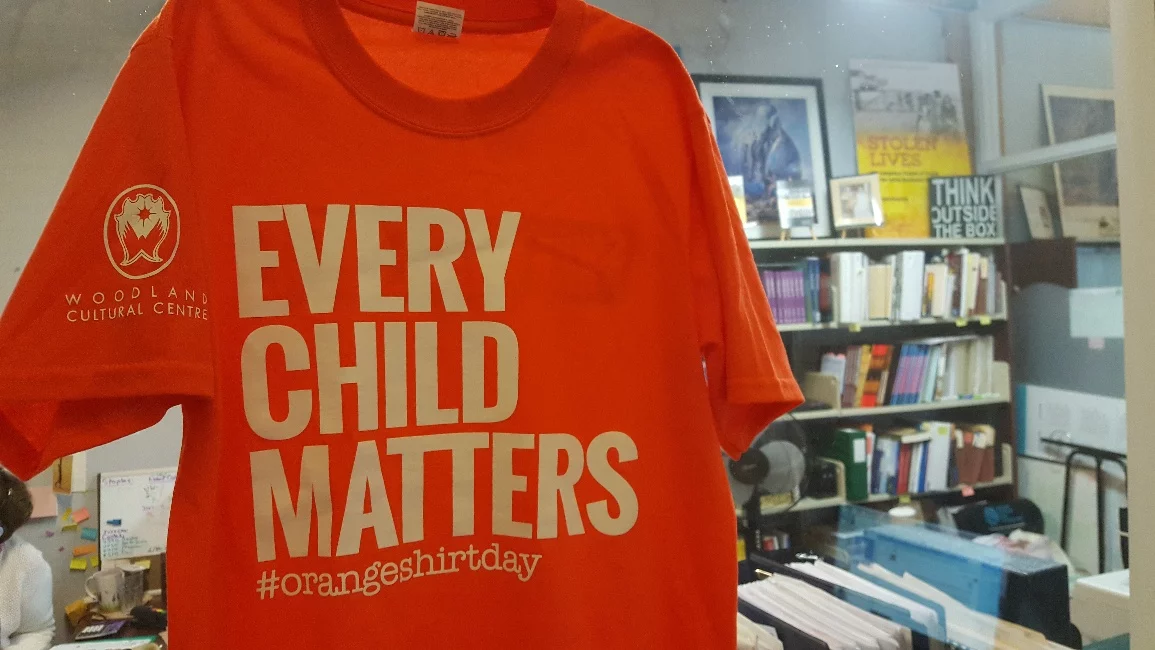
    Orange Shirt Society - Every Child Matters

    Orange Shirt Society - Every Child Matters

    Inspired by Phyllis Webstad’s story of having her orange shirt taken away on her first day at Indian residential school, we uplift the voices of Survivors and invite all people in Canada to walk the path of truth & reconciliation together. The Orange Shirt Society was established in 2015 to: Understanding Orange Shirt Day Orange […]

    launch orangeshirtday.org
    Five Teaching Ideas for Whole School Learning this Orange Shirt Day

    Five Teaching Ideas for Whole School Learning this Orange Shirt Day

    "orange shirt day"; lessons; reconciliation; reconciliaction; "phyllis webstad"; classroom; "whole school"; "professional development" "stolen lives"

    launch facingcanada.facinghistory.org
    Phyllis Webstad - On Orange Shirt Day.

    More September Moments More September Moments

    Krishna Janmashtami
    Labor Day
    Paryushana
    25th Anniversary of September 11 — 9/11 Memorial & Museum
    International Day of Peace
    International Day of Sign Languages
    User uploaded image
    zoom_out_map Show in original size
    User uploaded image
    zoom_out_map Show in original size

    October October

    MONTHLY

    ADHD Awareness Month — Builds understanding of attention-deficit/hyperactivity disorder while encouraging informed, strengths-based support for students and adults with ADHD.
    Bilingual Child Month — Celebrates children who communicate in more than one language and highlights the academic, cognitive, cultural, and relational strengths of multilingualism.
    Breast Cancer Awareness Month — Raises awareness about breast cancer, early detection, health education, treatment, and support for individuals and families affected by the disease.
    Domestic Violence Awareness Month — Promotes education, prevention, survivor support, healthy relationships, and community responsibility in recognizing and responding to domestic violence.
    Down Syndrome Awareness Month — Celebrates people with Down syndrome, amplifies their voices and accomplishments, and advances inclusion, opportunity, and belonging.
    Dyslexia Awareness Month — Expands understanding of dyslexia and encourages early identification, evidence-based instruction, and recognition of the strengths students with dyslexia bring to learning.
    Filipino American History Month — Honors the history, culture, experiences, and contributions of Filipino Americans throughout the United States.
    German American Heritage Month — Recognizes the history, traditions, and contributions of German immigrants and German Americans in shaping communities across the country.
    Global Diversity Awareness Month — Encourages learning about the cultures, identities, experiences, and perspectives that shape our local and global communities.
    Hispanic and Latine Heritage Month — September 15–October 15 — Celebrates the diverse histories, cultures, accomplishments, and lived experiences of Hispanic and Latine communities.
    Italian American Heritage and Culture Month — Honors the histories, traditions, and contributions of Italian immigrants and Italian Americans.
    LGBTQIA+ History Month — Recognizes LGBTQIA+ history, leadership, movements, and contributions while supporting learning environments where all students feel safe, valued, and included.
    National Bullying Prevention Month — Calls schools, families, and communities to prevent bullying, strengthen upstander behavior, and create safe and supportive environments for every student.
    National Disability Employment Awareness Month — Recognizes the skills and contributions of people with disabilities while advancing access, inclusion, and equitable opportunities in the workplace.
    National Principals Month — Recognizes the leadership, care, and commitment principals bring to students, staff, families, and school communities each day.
    Polish American Heritage Month — Celebrates Polish American history, culture, traditions, and contributions to the United States.

    ✨October Spotlight ✨ ✨October Spotlight ✨

    Care Before Conflict: Staying Human in Difficult Moments

    As October 7 approaches, we recognize the anniversary of the Hamas attacks in Israel and the grief, fear, and ongoing impact of the war in Gaza. For members of our school community, this date and the events that have followed may carry deep personal meaning. Students, families, and staff may be holding different experiences and emotions, including those they have not shared.


    In moments like this, belonging asks something of us. As educators, we can make space for questions and feelings without asking anyone to speak for a community or share a personal story. When conversations arise, we can offer age-appropriate, fact-based context, listen with care, and make clear that every student deserves dignity and safety in our schools. We can also be mindful that a student may need support or a private conversation rather than a classroom discussion.


    Thank you for the care you bring to our classrooms and relationships, especially when the world feels difficult to navigate together.

    Civil Discourse in the Classroom - Learning for Justice
    Talking to Children About War - NCTSN

    A Culturally Responsive and Inclusive Halloween Guide A Culturally Responsive and Inclusive Halloween Guide

    User uploaded image
    zoom_out_map

    As Halloween approaches, let's guide our learners in celebrating creatively while respecting diverse cultures and avoiding cultural appropriation in their costume choices. It's essential that costumes do not diminish or stereotype others' traditions or histories. Let's use this opportunity to foster an environment of inclusiveness and mutual respect, ensuring our celebrations are fun and respectful for all. Wishing everyone a mindful and joyful celebration!


    User uploaded image
    zoom_out_map Show in original size
    How to Host an Inclusive Halloween
    Trick-or-Treat: Under the Sea! — Troy Historic Village

    Trick-or-Treat: Under the Sea! — Troy Historic Village

    The Troy Historic Village is a collection of 11 buildings surrounding a gazebo and green in the heart of Troy, Michigan.

    launch troyhistoricvillage.org
    Troy Police Halloween Safety Bash

    Troy Police Halloween Safety Bash

    Join us for the annual Halloween Safety Bash on October 24th from 5pm - 8pm featuring a trunk-or-treat and emergency vehicle display.

    launch eventbrite.com

    More October Moments More October Moments

    International day of Nonviolence
    World Mental Health Day
    For Families - Healthy Minds - Programs | National PTA

    For Families - Healthy Minds - Programs | National PTA

    National PTA can help make mental health a daily priority. Check out these resources for parents faced with the daily challenges of supporting their children in the education experience.

    launch pta.org
    National Coming Out Day
    LGBTQ Community Inclusivity in PTA - Diversity, Equity & Inclusion

    LGBTQ Community Inclusivity in PTA - Diversity, Equity & Inclusion

    Learn how you can become an advocate for LGBTQ youth in our communities. PTAs believe that schools should be a safe, supportive and respectful environment for all students, including lesbian, gay, bisexual, transgender and queer/questioning (LGBTQ) students.

    launch pta.org
    User uploaded image
    zoom_out_map

    Indigenous Peoples’ Day - October 12

    Indigenous Peoples’ Day invites us to honor the histories, cultures, knowledge, and living contributions of Indigenous peoples and Native nations. It is also an opportunity to listen to the stories Native communities tell about themselves and to help students understand that Indigenous peoples are part of our communities and our shared future. Let us make space for learning that is accurate, respectful, and grounded in Native voices, on this day and throughout the year.

    Essential Understandings | Native Knowledge 360°

    Essential Understandings | Native Knowledge 360°

    The Native Knowledge 360° Framework for Essential Understandings about American Indians offers possibilities for creating new student learning experiences. #NK360

    launch americanindian.si.edu
    Native Knowledge 360° | Celebrating Native Cultures Through Words: Storytelling and Oral Traditions | Resource Overview

    Native Knowledge 360° | Celebrating Native Cultures Through Words: Storytelling and Oral Traditions | Resource Overview

    This short reference guide introduces the rich tradition of Indigenous storytelling within Native communities. While the oral tradition continues to be an integral part of Indigenous teaching and learning, many Native authors, illustrators, and creators are expanding this tradition through genres of literature, as well as art and film. Recommended resources are provided for different grade levels. #NK360

    launch americanindian.si.edu
    Unlearning Columbus Day Myths: Celebrating Indigenous Peoples’ Day | Overview | Native Knowledge 360°

    Unlearning Columbus Day Myths: Celebrating Indigenous Peoples’ Day | Overview | Native Knowledge 360°

    This short reference guide points educators to the value of honoring Indigenous Peoples’ Day. Examine resources for a more complete understanding of Columbus’ exploration in the Caribbean, and the impact and resilience of the Taíno today. #NK360

    launch americanindian.si.edu
    World Teachers Day
    International Day of the Girl
    International Day for the Eradication of Poverty
    International Day of Care and Support
    User uploaded image
    zoom_out_map Show in original size

    Culture Corner Culture Corner

    User uploaded image
    zoom_out_map Show in original size

    📌 Five Inclusive Classroom Tips 🖐🏻 📌 Five Inclusive Classroom Tips 🖐🏻

    1. Create a safe learning environment – safety “looks like” cultivating spaces where belonging is fostered. Spaces that welcome variation through curiosity, courageousness, and confirmation that every learner is exactly where the need to be for academic and social, emotional success.
    2. Diversify learning material/content – culturally responsive teaching and learning considers the uniqueness of every classroom community member (including teachers) where learning is transactional and transformative.
    3. Take stock of students’ needs – differentiation is essential to promoting equitable learning spaces. It goes hand in hand with diversity in learning materials providing each student exactly what they need, with high expectations for all.
    4. Make student participation easy and exciting – craft educational situations where voice and choice is welcomed and appreciated. Deep inquiry through asking questions for instance, promotes deep learning.
    5. Develop a rapport with every learner – relationships are not the least of importance but the foundation for successful, inclusive classrooms. One easy strategy to incorporate into classroom practices. They elevate community and can be curriculum focused or used for mindfulness moments.

    Make JOY A Learning Goal! Make JOY A Learning Goal!

    Bringing Joy Into Our Schools: A Conversation with Gholdy Muhammad | Cult of Pedagogy

    Bringing Joy Into Our Schools: A Conversation with Gholdy Muhammad | Cult of Pedagogy

    Joy is not an extra. It's what lets us stay present, care for ourselves, and give our best to students, even when fear is trying to take over.

    launch cultofpedagogy.com
    Dr. Gholdy Muhammad on Genius and Joy

    Fall Book Recommendations Fall Book Recommendations

    User uploaded image
    open_in_new zoom_out_map

    Last Stop On Market Street

    For Elementary Students

    User uploaded image
    open_in_new zoom_out_map

    The Namesake

    For Secondary Students
    User uploaded image
    open_in_new zoom_out_map

    The Vanishing Half

    For Adults

    CEWB: Community, Engagement, Wellness & Belonging! CEWB: Community, Engagement, Wellness & Belonging!

    User uploaded image
    zoom_out_map Show in original size

    The Art of Balance The Art of Balance

    What's Your Balance?

    Back in August, I had the opportunity to lead a PD session with those of you who selected it focused on finding balance in professional and personal spaces. It was a wonderful opportunity to build community together, and I wanted to share a piece of it more broadly.

    Seven Art of Balance offerings were gifted:


    1. Dig Deep — Check in with yourself, not just your to-do list. Ask what you've been carrying that you haven't actually named yet.

    2. Apply Critical Love — Find something you love in every moment — not everything, but something. Let that be enough some days.

    3. Rest as Resistance — Rest isn't something you have to earn. Use the PTO. Take the sick day. Notice when you're running on empty.

    4. Grace and Accountability — Hold both at once — grace for where you actually are, and accountability to the standard you're capable of. Neither alone is the practice.

    5. One Moment at a Time — Balance isn't a place you arrive at and stay — it's a decision you remake moment to moment. Let it look different day to day.

    6. Let Go of What You Should Not Carry — Ask yourself honestly: whose is this? Release what was never actually yours to hold...or it might drop anyway, because it's TOO HEAVY!

    7. A Call to Action — Move from awareness to commitment. Pick one small thing from this list and actually do it this week.

    Stories to Bridge Divides - Point of Relation Podcast
    Brené Brown on courageous leadership | ReThinking with Adam Grant
    JEDI Educator Summit & MORE

    Drop a line, connect, let's chat! Drop a line, connect, let's chat!

    Feedback and Reflection Form
    Your feedback helps shape the stories we tell, the supports we build, the ways we show up for one another. Strengthening the loop between information, action, and belonging.

    “Without Community There Is No Liberation” – Audre Lorde “Without Community There Is No Liberation” – Audre Lorde

    Wellness and Community Engagement
    Loading indicator

    close
    Powered by