


Mathematical Monthly
February/March 2024

We hope you all had a wonderful break! This past month we had our math data meetings. It was great to take a look at all the growth students have made from fall to winter. We had some meaningful conversations and look forward to seeing this continued growth through June.
This month we are beginning our ST Math March Mathness Challenge again. This is our fourth year and we know it is a much anticipated challenge! Will a new school take home the title, or will it be one of our previous winners? Take a look in the ST Math section below for more details.
MCAS is around the corner as well. The Scope and Sequences for grades 3-5 have links within them for MCAS released items that are organized by standard. This is a great resource not just for MCAS, but also for formative data and spiraling back to previously taught standards.
Happy Mathing!
Lauren, Jen, Anna, Kevin, and Liz





Kindergarten
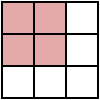
Students in Kindergarten are using the number twenty (20) to describe amounts and reviewing numbers that are less than twenty. Initially, your student will show how many objects there are by coloring boxes in ten frames - for example, coloring twenty boxes for twenty pencils. Then your student will count objects and write the corresponding number. Finally, your student will identify a group of objects with a specified number of items.
After practicing writing and counting numbers 11 through 20, your student will compare numbers up to 20.
Use the activities below to help your student use numbers through 20:
- Together, count objects on a walk through your neighborhood, such as leaves on the ground, cars in a parking lot, and cracks in the sidewalk.
- Choose a number from 10 through 20 and have a scavenger hunt to find that number of objects. For example, if you choose 14, you and your student might count 14 paper clips in a drawer or 14 sandwich bags in a package.
- To practice saying numbers in order, have your student use the numbers on a clock face or foot ruler to count to twelve and back. Then, have your student use the numbers on a tape measure or yardstick to count to 20 and back.
- Apply numbers through 20 to data collection. Have your student help record the number of objects in a closet or drawer. Discuss what categories of objects to count. For example, count pencils or pens, or cans of beans or peas, or black socks or blue socks. Then guide your student to draw a mark for each object. When you have finished tallying, ask your student to write the numbers of marks for each object. Talk about whether each number is equal to, greater than, or less than another number.

First Grade
Students in First Grade are learning various strategies for adding two-digit numbers. The lessons address adding tens and adding ones, using a number line to add, and making a 10 to add. There are no new vocabulary words introduced in this chapter.
There are many situations that you can use to model adding two numbers. Pointing out real-world situations that use addition is a great way to help students connect math with real life! This will help reinforce the importance of addition, and answer the question, “When will I ever use this?” The maximum sum in this chapter is 99. This aligns well with many daily activities.
Use the following strategies to practice with your student:
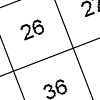
- ·To model adding tens and ones, point out the number of items needed for an activity. For example, point out that you will buy a package of 25 plates and a package of 36 cups for a birthday party. Then ask, “How many ones are there? Are there enough ones to make a 10? How many tens are there? How many plates and cups are there in all?” Encourage your student to make a quick sketch of the tens and ones if needed.
- To practice adding tens and ones on a number line, point out the day’s low and high temperatures. Say, “It is 57 degrees now. Later, it will be 74 degrees. How many degrees will the temperature increase?” Or say, “It is 57 degrees now. The temperature will increase 17 degrees this afternoon. What will the temperature be then?” Ask your student to explain how to use a number line to find the answer.
- To practice using addition strategies to solve problems, point out how many miles you will drive for an event. Say, “We will drive 18 miles to Grandma’s house, then 24 more miles to the zoo. We have enough gas in the car to drive 50 miles. Do we have enough gas, or do we need to stop for more along the way?” Have your student explain how to find the answer.

Second Grade
Students in Second Grade are learning to add numbers with sums up to 1,000. Students will use various strategies such as place value, open number lines, and compensation to add one-, two-, and three-digit numbers. Your student will also identify when regrouping is needed to add numbers. The vocabulary phrase for this chapter is compatible numbers.
Use the following activities to practice adding numbers with your student:
- When shopping, ask your student to add the price of 2 or 3 items to determine the total cost. Use whole-dollar amounts only. Ask your student whether a given amount is enough money to buy the items.
- Have your student be the scorekeeper when playing a game as a family. Ask what strategy he or she uses to total each player’s score. Have your student explain the strategy.
- Have your student add to find the total number of pages that he or she reads in a week. Have your student add to find the new total of pages each time he or she reads. Challenge your student to set a goal and read X number of pages that you determine for the week.
- Model other scenarios, making sure to use terms such as “total,” “sum,” ”addend,” “strategy,” and “compatible numbers.”

Third Grade
The vocabulary words for this chapter are: whole, whole numbers, sixths, eighths, fraction, unit fraction, numerator, and denominator.
Build your student's understanding of fractions at your next family dinner!
- What dinners do you and your family make in fraction-ready shapes? Two examples are lasagnas in rectangular pans and circular pizzas! The next time you sit down for dinner with a fraction-ready dish, invite your student to help you divide the dish into equal parts. Begin by cutting the dish in half. Ask, "Does this shape show equal parts or unequal parts?" Then ask your student to name the equal parts. Next, divide the dish again so your dish is in fourths. Ask your student to name the equal parts.
- Divide a fraction-ready dish into sixths or eighths. Then, remove a sixth or an eighth of the dish. Ask your student, "What fraction of the dish have we removed?" Have your student write down the fraction. Next, remove more parts of the dish, asking your student each time to write down fractions to represent the fraction of the whole that has been removed.
- Sketch an empty number line. Ask your student to plot their "dinner fractions" on the number line. Remind them that every number on a number line represents a distance from 0, and the distance from 0 to 1 is one whole.
- Once your student is comfortable plotting fractions less than 1 on a number line, challenge them to plot fractions greater than 1 on a number line. If you made more than one fraction-ready dish for dinner, you can use those dishes for this fraction practice! For example: Cut two lasagnas in rectangular pans into sixths. Remove 2 equal parts of the lasagna from one pan. Ask your student what fraction of a lasagna is still in the pans. Then, ask your student to plot that fraction on a number line.

Fourth Grade
Students in Grade 4 are learning to add and subtract fractions and mixed numbers with like denominators. Area model and number lines are used to help students visualize the operations. The vocabulary words for this chapter are mixed number and unit fraction.
There are many real life situations in which your student can practice adding and subtracting fractions. Here are a few you may want to try:
- Involve your student in the measurements of home improvement projects. Show how addition and subtraction of fractions are used. Ask your student questions such as, “If I buy a 24-inch board and cut a piece 3/4 inches long, how much is left over?”
- When getting ready for a family activity or errand, ask questions that involve fractional amounts of time. For example, “If it takes 1/4 of an hour to go to the bowling alley, 3/4 of an hour to bowl, and 1/4 of an hour to go home, how much time will we spend away from home?”
- Model real-life situations that require adding and subtracting with recipes. For example, say, “A recipe calls for 3/4 of a cup of flour and 1/3 of a cup of sugar. How much more flour than sugar does the recipe call for?”

Fifth Grade
Students in Grade 5 are learning how to apply whole number multiplication to fractions and mixed numbers. Your student will use visual fraction models to display the product of a whole number and a fraction, as well as the product of two fractions. They will also use rules to perform fraction multiplication. There are no new vocabulary terms for this chapter.
Help your student review and practice previously learned concepts to prepare for this chapter.
- Allow your student to demonstrate his or her understanding of multiplication. Ask questions such as, “What does 3 x 5 mean?” Extend that meaning to fractions by asking, “What does 1/2 x 5 mean?”
- Remind your student how visual models, such as tape diagrams, area models, and arrays, can be used to show multiplication. Provide grid paper and have your student use it to solve whole number multiplication problems.
- Find various recipes that include fractional amounts. Ask your student how he or she would adjust the amounts for different serving sizes. Guide your student to see how fraction multiplication can be applied in real-world situations.

Fluency Practice is Not a Worksheet
Fluency relies on knowing:
- how a strategy works
- when a strategy works
- strategies are flexible
- that which strategy to choose depends on the numbers and a person's preferences
What makes fluency practice high quality?
- Focused
- Begins with accuracy (learning to use a process and get the correct answer)
Provides practice with a strategy in isolation before it is mingled with previously learned facts or strategies
Includes problems that don’t lend themselves to the strategy - this helps students learn when the strategy is valuable
- Varied
- by cognitive demand
- Level 1: practice to rehearse the knowledge and skill of the strategy
- Level 2: understanding and comprehending the strategy
- Level 3: comparison/evaluation of the strategy (When do I use it? When not?)
- focus on components of fluency
- Solves in a reasonable amount of time
- Completes steps accurately
- Gets the correct answer
- Selects an appropriate strategy
- Applies a strategy to a new problem type
- Trades out or adapts strategy
- Type of engagement:
- Analyzing worked examples
- Fluency routines
- Playing games
- Processed
- Students need an opportunity to process and reflect on the experience. Why did I just do this? What did I learn by doing this? How did this help me? When might I use this again? What is an important takeaway across these problems?
- Number Talks vs. Number Strings
- same: showing one problem at a time, discussing each problem, moving to the next one
- different: with number strings, conversation focuses on adapting and using the ideas from the previous problem(s), students synthesize the strategy at the end of the routine, lend to independent practice
- Connected
- Practice that establishes or reinforces connections is arranged or sequenced in an intentional way so that students see relationships and make connections.
- Connections are made when problems are arranged so that relationships are abundantly obvious to students.
- When done well, students might say things like, “There was a pattern” or “I saw a shortcut.”
FAQs About Fluency Practice:
- What should fluency practice include or look like?
- Practice must have a specific purpose, which may be to "learn to use a strategy" or "learn to choose among strategies."
- The number of problems is less critical than the quality of the experience.
- Practice should be varied in type and purpose, so there is no one “best way.”
- The amount of time to spend on fluency practice varies due to type and purpose. (10 minutes doing a sheet is not equivalent to 10 minutes of routine work or 10 minutes playing a game.)
- The best practice offers benefit. This is done without frustration or anxiety.
- How many times does a skill or concept need to be practiced?
- The time needed to develop automaticity or fluency is not based on the content—it is based on the child.
- Some students may need little practice in school, others may need more. Factors include:
- Support with the skill or concept at home
- If the strategy/procedure is intuitive to the way the student already approaches the problem
- Prior knowledge and experiences
- Number of repetitions needed
- When do you practice?
- Explicit strategy instruction includes contexts and visuals. Without them, a strategy can be practice rotely and then be unlikely to be selected as a strategy in the future.
- With conceptual foundation in place, practice happens immediately after learning about a strategy and then is revisited over weeks and months through routines, games, and centers.
- How long should you practice?
- Practice should include the opportunity to make connections and reflect. How long you should practice depends on whether the strategy is new to students and whether they have mastered the strategy and are looking to practice or retain it.
- If it’s a new strategy that students are just learning to enact and need sufficient time, 30-45 minutes may be appropriate. Students may engage in a sorting task and/or play a game, then discuss ideas, and close with a few more experiences or a journaling prompt.
- If it’s a strategy that students have already mastered, the strategy could be featured in a number sense routine for a few days in a week. The same strategy could be practiced during independent practice or homework that week, or a game could be played that week or next.
- Fluency work is never “finished.” The answer to how long you should practice, then, is long enough for students to develop confidence using or choosing the strategy.
- How much of a grade should practice be worth?
- When mistakes happen during practice, it provides an opportunity for learning and teaching. If practice work is graded for “correctness” it is not a safe place for mistakes to happen. If your grading structure requires grading practice or homework, consider using a measure based on frequency and time spent practicing rather than the correctness of the work.
- Fluency Routines: Familiar, adaptable protocols for engaging students in learning through thinking and discussion.
- benefit the students talking and the students listening
- establish expectations for engagement and participation
- support management and foster positive math relationships in the classroom community
- Solving worked examples:
- alleviates anxiety and embarrassment because the work comes from a stranger
- can be correctly worked, partially worked or incorrectly worked
- can be used at various points in math class
- effective as independent practice and homework
- Games: Games provide a non-stressful environment for learning from peers, teaching peers, and getting substantial practice. They offer opportunity for engagement and hold the potential for developing problem-solving, strategic thinking, and fluency with a skill or strategy.
- focus: In what ways does this game help students develop the strategy/ies and automaticity/ies that we are learning?
- accountability: How do I know that students will engage in the game and the mathematics?
- adaptability: Can I adapt this game for different students? Can I adapt this strategy to extend what we are currently practicing?
- strategic: Is there a “strategy” to winning the game?
- accuracy checks: How do I know students will be accurate as they play the game?
- formative assessment: What data can I gather about my students when they play this game?
- process/reflect: Which questions might I ask so that my students can generalize strategies that will strengthen their fluency?
- Centers/Independent Practice:
- Focus tasks and games can be modified to become centers
- Independent practice ≠mindless practice
- Particular value when a practice sheet is paired with a routine or game
- Encourage students to use mental math, writing everything down goes against the fluency goal of efficiency
- Communicate to students to practice their Fluency Actions, including “selecting an appropriate strategy"


