The OWL π¦
DALLAS POLICE DEPARTMENT WELLNESS NEWSLETTER
1st Responders and Veterans Health and Resources Fair
Health and Resources Fair In Memory of Officer David Clark #9815
November 6th, 2026
1412 Griffin St. E, Dallas Texas 75215
8 AM to 2 PM
Please take an hour or two to make your health a priority on Friday, November 6. The DPD Wellness Unit has secured numerous FREE essential screenings and services specific to your needs. To name a few:
- Full Blood panels (results onsite)
- Cardiovascular risk assessment (ultrasounds)
- Liver Screenings
- Thyroid scans
- Kidney Screenings
- Body composition screening
- Complimentary B12 shots, discounted IV therapy
- Complimentary 3D foot scans
- 10-15 Minute muscle therapy treatments
- Self Care Device Demo (massage gun, infrared therapy, compression therapy)
- Resetting the CNS
- Mammograms
- EKGs
- Health Meal Prep samples
- Chiropractic information/services
Also, for veterans there will be the following services/information provided:
- Home Loan info for Veterans
- Assistance with Disability Claims
- Health Care Enrollment Resources
- Resources- Equine Counseling
- Wounded Warrior with be there with resources
Why Police Officers Face Higher Cancer Risks
The nature of law enforcement exposes officers to a unique combination of chemical, physical, and environmental carcinogens:
- Toxic Exposures: Officers frequently inhale or absorb hazardous toxins. These include traffic-related air pollution, diesel exhaust, benzene, particulate matter, ammunition/gun-cleaning solvents, and toxic chemicals found at clandestine methamphetamine labs.
- Circadian Disruption: Continuous shift work and irregular schedules disrupt natural sleep cycles. The World Health Organization (WHO) classifies night shift work as a probable carcinogen due to its impact on melatonin production and immune function.
- Chronic Stress: High occupational stress triggers long-term cortisol production, which can suppress the body's natural immune response against mutated, precancerous cells.
- Lifestyle Aggravators: The physical demands and erratic hours of the job often compound secondary risk factors, including poor diet, metabolic syndrome, lower physical activity during long vehicle patrols, and increased tobacco or alcohol use.
Finding Your "Why"
Knowing Your Why
Key Concepts
- The "Why": The fundamental belief or cause that drives you, beyond just making money.
- Fulfillment: Comes from why you do what you do, not just what you do.
- Inspiration: Knowing your "why" allows you to inspire yourself and others, leading to greater loyalty and success.
How it Works (The Process)
Gather Stories:
Collect impactful stories from your past, focusing on "highs" and "lows" (the "peaks and valleys").
Find a Partner:
Work with a facilitator or partner to help you objectively identify patterns, words, and feelings in your stories.
Identify Themes:
Look for recurring themes in your stories that reveal your core values and beliefs.
Craft Your "Why" Statement:
Use a template to articulate your purpose in a single, clear sentence, focusing on your contribution and its impact on others.
Highlighted Officer of Wellness
Lauri Gutierrez #10882
My name is Lauri Gutierrez, and I was born and raised in Arlington, Texas. In 2012, I graduated from Texas Wesleyan University, where I competed in cross country and track and field. I earned a degree in Criminal Justice. Shortly after, I attended the Dallas Police Academy and graduated in April 2015. I am currently assigned to Northwest CRT.
1. Tell us about how your approach to self-care and wellness has changed over the past five years.
I have adopted a more holistic approach to self-care and wellness because I wanted to improve my overall wellbeing. I prioritize cooking most of my meals at home and maintaining a consistent sleep routine, which has greatly contributed to how I feel. Most importantly, I have focused on incorporating flexibility into my routine, allowing for adjustments based on my energy levels and how I am feeling.
2. What are some of the things you do to take care of yourself?
I take care of myself through a combination of different activities that promote both physical and mental well-being. Physically, I enjoy running, weightlifting, and Pilates because they help clear my mind and boost my energy levels.
To improve my mental well-being, I have taken up new hobbies that promote skill development, social connection, and stress relief. Recently, I started practical shooting, which has helped me set new goals for myself. Additionally, I prioritize spending quality time with family and friends, as connecting with them brings me peace and joy.
Reading books and listening to podcasts have provided me with valuable information that I have been able to implement into my personal life, which has improved my self-care. Learning new things brings me a sense of fulfillment. I never want to stop learning or improving.
Finally, taking the time to rest. I like to spend time binge-watching my favorite shows/movies to prevent burnout.
3. How has your approach to training changed, and what was the catalyst for that change?
In 2026, one of my goals was to take my firearms training more seriously. I was tired of doubting my abilities and skills, which left me feeling unconfident. I made it a priority to visit the range several times a month and practice drills to improve my shooting. As a law enforcement officer, I believe it's crucial to be competent with my firearm. Additionally, I focus on staying physically fit, as this career can be both physically and mentally demanding. I want to ensure my body is resilient enough to handle the challenges that come my way.
4. Can you tell us about how firearms training and competition-style shooting have challenged you and stimulated growth?
Engaging in challenging activities and learning new skills is beneficial as it promotes neuroplasticity while building resilience and confidence. Practical shooting requires you to perform under pressure and in front of others, testing both your technical abilities and your strategic thinking. It tests how fast and accurate you can shoot. It's normal to feel intimidated attending a match when you aren't the best. However, I thrive on challenges. Thereβs nothing more fulfilling for me than working hard to improve in areas that matter to me. This pursuit has pushed me to stay disciplined with regular training, dry fire practice, and setting specific goals. It has not only boosted my confidence but, most importantly, it has been a lot of fun! I wish more law enforcement officers would participate in competitions, as it could help them feel more confident in their firearms training.
5. What are some good books on self-care and wellness you would recommend? Why these?
I chose these books because they have personally benefited me and are relatable to everyone.
SPARK - The Revolutionary New Science of Exercise and The Brain by John J. Ratey. This book touches on the connection between physical exercise and brain function.
The LET THEM Theory by Mel Robbins, which focuses on the idea of allowing others to make their own choices and live their own lives, rather than trying to control their decisions. This book emphasizes the importance of focusing energy on yourself and being secure in yourself.
The Science of Making Positive Changes That Stick by Wendy Wood. This book was one of my favorites; it delves into the psychology and neuroscience behind habit formation and lasting change.
Widen the Window by Elizabeth A. Stanley, a long read but worth reading. This book focuses on how to build resilience in the face of stress and trauma.
6. What would be your message to others who may be struggling out there to start prioritizing their health and peace?
My message is that the strongest version of yourself is built one day at a time. Remember, this is a journey, not a sprint. Donβt hesitate to ask for help or reach out for support, as we all face our own battles. Engage in activities that make you happy and bring you joy. Set boundaries to protect your mental health and prevent burnout.
Toxic Workplace and Bullying
Relationships
Your Partner Isnβt the Problem, but Your Nervous System Might Be
Learning to co-regulate can transform your relationship and your mental health.
Key points
- Conflict often stems from nervous system overload, not poor communication.
- Co-regulation helps calm the body so real connection becomes possible.
- You canβt connect when youβre in survival mode. Pause and regulate first.
- Mental health isnβt just self-care; itβs shared care in safe relationships.
Youβre mid-argument with your partner. Your chest tightens. Your voice starts to rise. You say something you instantly regret. Your partner talks faster, gets defensive, then storms out. And just like that, you're back in the same exhausting loop you swore youβd stop falling into.
Itβs tempting to call it a communication problemβor worse, a compatibility issue. But what if the root cause isnβt your words, or even your relationship habits?
What if itβs your nervous system?
The Missing Link Between Mental Health and Relationship Health
Mental health is often framed as an individual pursuit: meditate, journal, get to therapy, drink more water! But the reality is, your nervous system isnβt wired to operate in isolation. It's wired for connection. Which means your emotional well-being is shaped every day by how safe, or unsafe, you feel in your relationshipsβespecially your closest ones.
In romantic partnerships, our brains constantly scan for cues of safety or threat: a cold tone, a withdrawn glance, a delayed text response. These seemingly small things can trigger a huge physiological response. Itβs not just in your head; itβs in your body.
Core Workouts
Key Benefits of Core Workouts
- Everyday Functionality: Whether you are bending to tie your shoes, reaching for a top shelf, or carrying groceries, these coordinated movements rely on core stability.
- Pain Prevention: Strengthening your core stabilizes the spine, which distributes physical pressure more evenly and spares your back from carrying too much load. [
- Athletic Output: Power flows from the center of your body. Research shows core training improves balance, vertical jumping, and rotational velocity in sports like golf and tennis.
- Better Posture: Weak core muscles cause the spine to sag, leading to slouching and strain. A strong midsection holds the body upright naturally, reducing fatigue.
The Cost of the Mission
π¦ RESOURCES
Military Resources
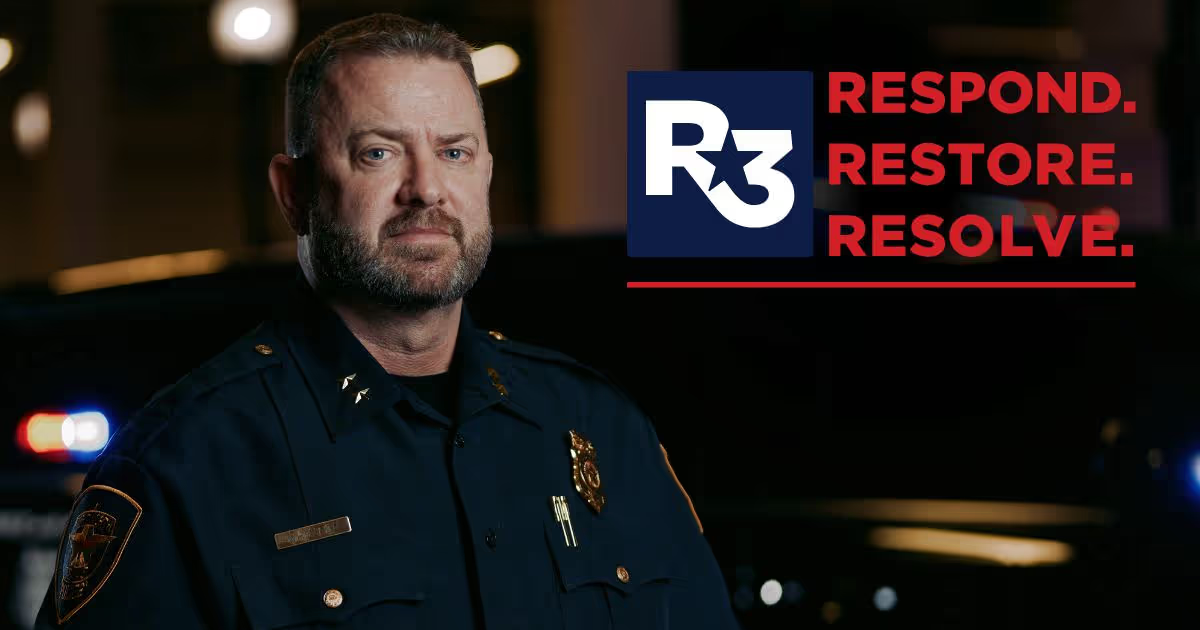
R3 Program
At the American Warrior Association, our mission is to address the profound impact of moral injury on veterans, first responders, and their families.
Guided by faith-based values, we provide healing, leadership development, and innovative programs that empower Americaβs heroes to find hope, resilience, and purpose.
POLICE CHAPLAINS
For information contact SC Jon Lumbley
Employee Relations Team @ 214-671-4448
Employee Assistance Program
What is EAP?
the EAP program is a network of counseling resources for our sworn and professional staff.
Once on the site to register:
Use Web ID: BCBSTXEAP for the Organization Web ID to register your account.
Call: (844) 213-8968 if you have any difficulties.
Blue Guardian Foundation
Blue Guardian Foundation was created to extend support beyond the badgeβproviding critical assistance to officers and their families facing life-altering challenges.
The mission of Blue Guardian Foundation is simple yet vital:
To provide financial assistance to law enforcement officers and their families across the country who have faced the loss of life or income due to serious injury, life-threatening illness, or other catastrophic events.
Sworn and Families β 8 sessions. Scan QR code for more info or to schedule
CITY INSURANCE ACCEPTED COUNSELORS
CHILDREN AND FAMILY COUNSELING
ARTICLE ON PLAY THERAPY FOR KIDS
NAMI NORTH TEXAS
A.T.O. CONFIDENTIAL COUNSELORS
Licensed Acupuncturist
COPLINE
NATIONAL SUICIDE HOTLINE
When life breaks you, it is because you are ready to be put back together differently.
Every piece of you that feels shattered is a piece that will find a new place, a new purpose, a new meaning.
Trust that the cracks are where the light gets in. And sometimes, in our brokenness, we find our greatest wholeness.
We find the courage to rebuild, to reimagine, to redefine what it means to be strong.
You are not broken; you are breaking through.