


Students Help Create AI Legislation
Sophomores contribute to establishing national K-12 AI Act


Two Don Tyson School of Innovation students contributed to establishing the STUDENTS FIRST Act, the nation's first student-led AI policy for K-12 schools.
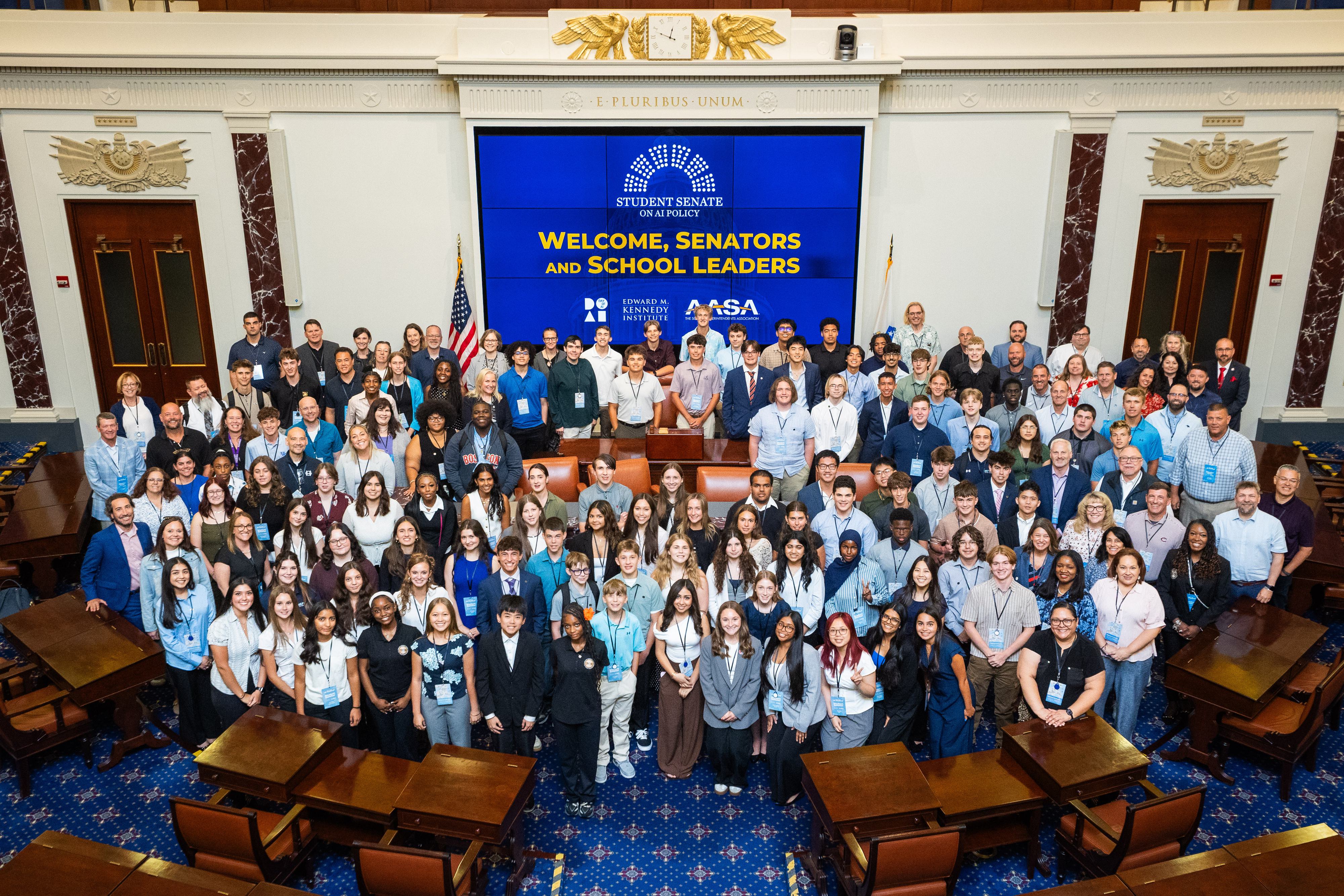
Springdale sophomores Ramey Jones and Danielle Robertson were among more than 130 Student Senators and education leaders from all 50 states who gathered July 17-19 at the America’s Youth AI Festival at Massachusetts Institute of Technology in Boston to create the policy.
“Representing Arkansas at the Youth AI Festival in Boston made me very aware of our country's cultural differences and similarities within the states,” Robertson said. “The event, and meeting others from all over the country, strengthened my pride in calling Arkansas and Springdale home.

Jones said the opportunity helped her understand the importance of senators when creating public policies.
“I learned about particular sections of a legislative draft, Senate Chamber decorum and the authority a senator holds,” she said, adding she would have never gained that understanding without attending the festival.
Robertson said making important decisions for her home state was very daunting, and she didn’t take that responsibility lightly as she considered how the AI policy bill would impact her fellow Arkansans.
“The experience opened my eyes to the stress and frustration of trying to make a piece of legislation as perfect as possible in a matter of hours,” she said, “but also to how rewarding it feels to speak up for what you believe in and to represent where you come from.”
Jones and Robertson admit the AI policy for K-12 schools they helped draft is imperfect.
“We, as students, were able to express our thoughts about an upcoming change in education by carefully stitching patches of our own autonomy into one big patchwork quilt that will still continue to be curated as we progress,” Jones said.

After a weekend of debate and amendment, Student Senators passed the STUDENTS FIRST Act by an 82-16 vote, according to a School Superintendents Association press release. The legislation is a landmark set of policy recommendations for responsible AI use in K-12 schools.
Robertson said policy contributors had just a few hours to amend and debate the bill, compared to the actual senators who don’t have those constraints but who still can fail to create perfect legislature.
“This was an amazing experience that allowed us to do what our senate has been unable to do: help teachers, parents, students and administrators manage AI use in education,” she said. “I cannot wait to see how this bill impacts our country and how it continues to be adapted to address this ever-changing technology.”
The event allowed the students to consider how they may choose to use AI in the future to maintain students’ creativity and critical thinking.
“This festival has educated me on AI literacy, positive impacts of AI in education and creative uses for AI,” Jones said. “I will continue to push for student autonomy and academic integrity.”
She added she’s thankful to have been a part of the process to create the K-12 AI policy that exposed students and educators to a senate experience.
“I am eager to see how our country utilizes this bill and adapts to the changes of education,” Jones said.

The following provisions will nationally apply generally to all K-12 public school community members.
1. Any organizations that offer generative AI powered services to public educational facilities must address all known biases within their generative AI, and must inform their clients of the biases that their products represent. The public educational facility must then provide this information to the parents and guardians of their students.
2. Educators should always prioritize educator-student relationships by omitting AI usage in situations where human connection is irreplaceable in the learning environment.
3. Nothing in this act shall: a. Infringe upon the professional judgment of teachers in managing their specific classroom environments.
b. Penalize a teacher or administrator for opting not to use AI tools in their personal instructional or administrative practice, provided they meet all other curriculum standards.
c. Preempt federal or state laws regarding student privacy and data protection.



Springdale Public Schools
FACEBOOK | INSTAGRAM | LINKEDIN | YOUTUBE
Email: communications@sdale.org
Website: https://www.sdale.org/
Location: PO Box 8 Springdale Ar 72764
Phone: 479-750-8800