

Character Counts
SEL Resources from your WPS Elementary School Counselors
*The intention of this newsletter compiled of some quoted information is to inform parents/caregivers about the Character Trait of the Month for March, COURAGE, and to highlight what students will be learning during our SEL lessons. Resources and at-home activities have also been compiled for parents throughout this newsletter. SEL lessons may vary depending on classroom needs and Teacher request.
What is Social and Emotional Learning?
Social and emotional learning (SEL) provides provides an array of benefits. Not only can it increase students’ academic achievement, but SEL activities can build students’ self-awareness, self-management, social awareness, relationship skills, and responsible decision making. All of these skills are important for students’ academic, social, and eventually, professional lives.
This month, Woburn Elementary School Adjustment Counselors will be teaching students about the importance of COURAGE. We will have interactive discussions and will do a guided activity together. *Lessons and activities may vary from school to school*
What is COURAGE?
Definition: Overcoming fear by saying and doing what is right. Mental or moral strength to venture, persevere, and withstand danger, fear, or difficulty.
Synonyms: bravery, boldness, daring, fearlessness, fortitude, gallantry, grit, heroism, spirit, tenacity
Antonyms: cowardice, fear, irresolution, timidity, weakness, faint-heartedness
________________________________________________________________________________________________
Courage begins by knowing what is good, true, and right. This gives you confidence that you are heading in the right direction. A greater way to build courage is to think through what you should do in specific situations. For example, what should you do if you wake up and hear a smoke alarm in your home? What should you do if a stranger asks you to get into his car? What should you do if you see someone being teased? Thinking ahead will help you overcome fear and make better choices when you face strange, difficult, or frightening situations. When you know something is good and true, stand up with courage instead of hiding in fear. You never know how your boldness and bravery will inspire others to stand up for what is true, right, and just.
Courage shows up in many ways all around you. Courage is standing up for a friend, helping someone in need or sticking with something that is hard for you to do. As a young person, courage is one of the most important things you can develop. Having courage makes you a better person, a better student and a better citizen.
Resources from your Elementary School Adjustment Counselors
Altevesta Elementary School
Location: 980 Main Street, Woburn
Email: kcarabello@woburnps.com
Phone: 1(781) 937-8235
Karen Carabello, MSW LISCW
Building Confidence and Self-Esteem for Girls 6-12
Ways to Help Children Feel their Feelings Without them Getting too Big
Goodyear Elementary School
Kelley Calkins, MSW, LICSW
Activities to talk about Courage
Courage Emojis: Design an original emoji that represents what courage looks like to them—it doesn't have to be a face; it can be any symbol of bravery or strength.
Courage Collages: Use old magazines to find images that represent bravery or things students find intimidating. Arrange these into a courage collage to visualize ways to face those fears
Courage Chains: When a student performs a "brave success," they write it on a paper strip. These strips are stapled together to form a classroom courage chain, visually showing the collective bravery of the group.
Courage Bingo: Create a list of "brave acts" (e.g., trying a new food, raising a hand in class). Place these on a bingo card and add a sticker every time they perform one of the actions.
Hurld Wyman Elementary School
Location: 39 Wyman Street, Woburn
Email:bAfonso@woburnps.com
Phone: (781) 937 8243
Brunna Afonso, M.Ed
Linscott - Rumford Elementary School
Location: 86 Elm Street, Woburn
Email: jzeidman@woburnps.com
Phone: 781-937-8239
Jackie Zeidman, MSW, LICSW
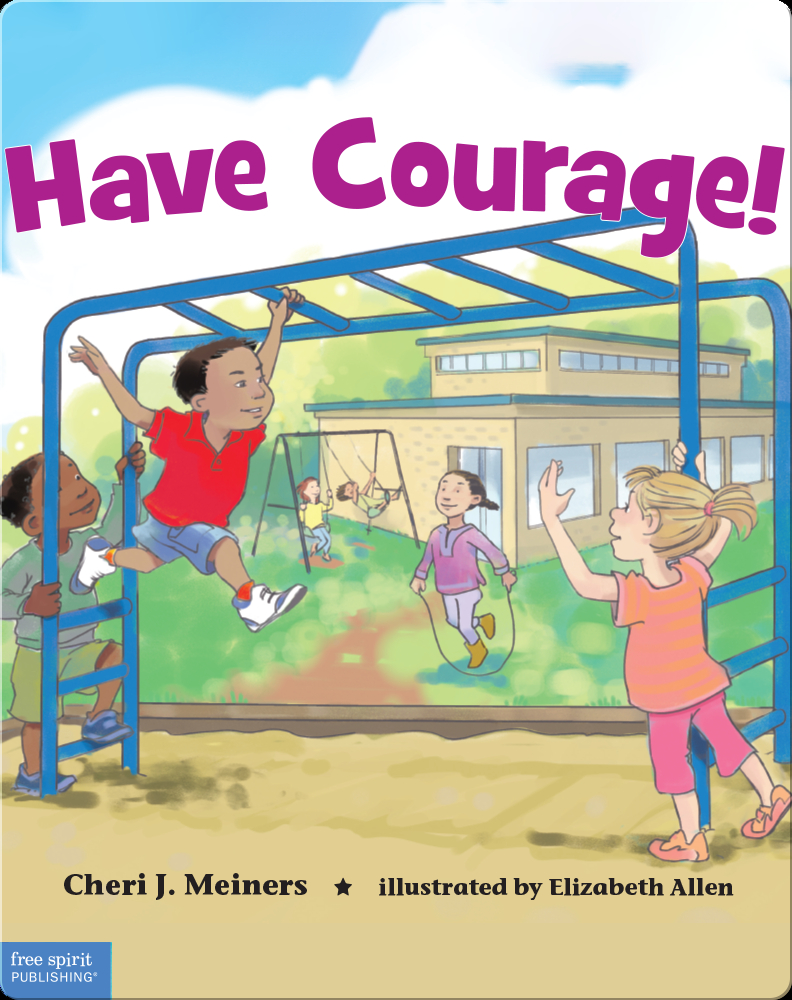
"Have Courage, A Book about Being Brave"
BRAVE: A boy with pyshical challenges learns how to be brave and to be himself
Tools to Help Children Become Brave and Try New Things
Reeves Elementary School
Location: 240 Lexington Street, Woburn, MA
Email: mmoisan@woburnps.com
Phone: 1- 781-937-8240 x 13302
Melanie Moisan, M.Ed, LMHC
THE DAY YOU BEGIN is about finding courage to take that first step even if it is scary. Because, when you take the first step, it is generally the stepping stone to progress.
Brave Irene is the story of a little girl who braves a storm to deliver a package. Can she make it?
Sometimes when we struggle with being brave, we make excuses for ourselves. That’s just what happens in the story, THE THING LOU COUDLN'T DO
Courage on a Daily Basis
- Trying a food that you've never tried before.
- Engaging in a new experience.
- Asking someone to play
- Riding a bike for the first time.
- Standing up for a person who is being picked on.
- Asking for help
- Helping out a person or animal in need, even if it might put you in a little bit of danger.
- Standing up for yourself
- Taking a stand against an unfair social or economic practice.
- Doing something by yourself for the first time.
- Making a public presentation about something you believe in.
- Signing up for a program or class that intimidates you.
- Signing up for a new activity.
Shamrock Memorial Elementary School
Location: 60 Green Street, Woburn
Email: jurquhart@woburnps.com
Phone: 1- 781-937-8240
Julie Urquhart, M.Ed., LMHC SISP k-12: Specialized Instructional Support Personal
Discussion starters
Providing our children with opportunities to practice courage at home and in the classroom in situations where being courageous may seem too hard, unpopular, or not worth the risk is crucial for our children's social and emotional growth. Below are some ways to initiate a conversation about courage ...
- Why is courage important?
- Who can you talk to when you feel afraid?
- Share an example of someone who showed courage in a story or movie.
- Imagine your friends are picking on someone new at school. What could you say or do?
- What is something courageous that you’ve done? How did you feel after you did it?
- Talk about a courageous person. What makes them courageous?
- Can you remember a story that you have read where the characters have courage? Or how about a story where a character did not have courage?
- What are some things you can do in your life that take courage?
The Six Types of Courage
Physical courage: This is the courage most people think of first: It involves developing physical strength, resiliency, and awareness.
Social courage: This type of courage is also very familiar to most of us as it involves the risk of social embarrassment or exclusion, unpopularity or rejection. It also involves leadership
Intellectual courage: This speaks to our willingness to engage with challenging ideas, to question our thinking, and to the risk of making mistakes. It means discerning and telling the truth.
Moral courage: This involves doing the right thing, particularly when risks involve shame, opposition, or the disapproval of others. Here we enter into ethics and integrity, the resolution to match word and action with values and ideals. It is not about who we claim to be to our children and to others, but who we reveal ourselves to be through our words and actions.
Emotional courage: This type of courage opens us to feeling the full spectrum of positive emotions, at the risk of encountering the negative ones. It is strongly correlated with happiness.
Spiritual courage: This fortifies us when we grapple with questions about faith, purpose, and meaning, either in a religious or nonreligious framework.
Table Talk: For each type of the six types of courage: pick a popular character from a book, TV show or movie and provide and example of how that character showed courage.
Malcolm White Elementary School
Location: 36 Bow Street, Woburn
Email: hvitagliano@woburnps.com
Phone: (781) 937 8242 ext.16134
Hallie VitagLiano, M.Ed, LMHC
This month, we are focusing on the character trait of courage- trying new things, speaking up when something feels hard or uncomfortable, and doing the right thing even when it’s difficult. Families can support courage at home by noticing brave moments, encouraging effort over perfection, and helping children take small risks in safe ways.
Ways Families Can Foster Courage at Home:
Name brave moments: Point out when your child shows courage (trying something new, asking for help, sharing feelings).
Normalize fear: Talk openly about feeling nervous and remind children that being brave doesn’t mean being fearless.
Model courage: Share age appropriate examples of times you tried something hard or spoke up.
Encourage small steps: Break challenges into manageable pieces and celebrate progress along the way.
Practice speaking up: Role-play asking questions, advocating for themselves, or standing up for themselves or others.
Reflect together: Ask “What was one brave thing you did today?” at dinner or bedtime.
Praise effort, not outcomes: Focus on trying, learning, and growing, even when things don’t go perfectly.
In search of a Therpaist for your Child?
After Hours Mental Health Emergency Contact Info:
If this communication is regarding a mental health emergency occurring before or after school hours (8:10am-2:55pm on school days) or on a weekend, holiday or school break, call 911, go to your nearest Emergency Room or Advocates Mobile Crisis Team.
Advocates Mobile Crisis Team: 1-800-640-5432
Other Mental Health Resources:
Suicide & Crisis Lifeline 24/7: call or text 988
Interface Mental Health Referal Service (non-emergency, 9am-5pm): 1-888-244-6843
