Smore logo
remove_red_eye 2.2K
page background

Earth Science

Earth's Structure, Earth's Interior, Plate Tectonics

Earth ScienceEarth's Structure, Earth's Interior, Plate Tectonics

Earth's Layers and Earth's Plates

  • The interior of the earth is hot. Heat flow and movement of material within the earth cause earthquakes and volcanic eruptions and create mountains and ocean basins. Gas and dust from large volcanoes can change the atmosphere.
  • Some changes in the earth's surface are abrupt (such as earthquakes and volcanic eruptions) while other changes happen very slowly (such as uplift and wearing down of mountains).
  • Matching coastlines and similarities in rock types and life forms suggest that today's continents are separated parts of what was long ago a single continent.
  • The earth first formed in a molten state and then the surface cooled into solid rock.
  • The outer layer of the earth—including both the continents and the ocean basins—consists of separate plates.
  • The earth's plates sit on a dense, hot, somewhat melted layer of the earth. The plates move very slowly, pressing against one another in some places and pulling apart in other places, sometimes scraping alongside each other as they do. Mountains form as two continental plates, or an ocean plate and a continental plate, press together.
  • There are worldwide patterns to major geological events (such as earthquakes, volcanic eruptions, and mountain building) that coincide with plate boundaries.

Questions:

What are the compositional layers of Earth from the outside to the inside?

What are the mechanical layers of Earth from the outside to the inside?

What are some unique properties of each structural layer of Earth?

How are each of the layers of the Earth similar and different?

What is the crust?

What is the mantle?

What is the core?

What is the lithosphere?

What is the asthenosphere?

What is the mesosphere?

What is the inner core and outer core? How are they similar and different?

What are the major elements that comprise the largest portion of solid Earth?

What is the theory that explains tectonic plate movement?

What is a tectonic plate?

What are the six major tectonic plates?

Given a world map partially labeled with continents and/or oceans, what are the locations of each major tectonic plate?

Why do tectonic plates move?

How is plate movement related to the structure of the Earth?

What are the two types of plates?

What is oceanic crust?

What is continental crust?

What is a plate boundary?

What are the three types of plate movement or plate boundaries?

What is "divergent" plate movement?

What is "convergent" plate movement?

What is "transform" plate movement?

Why does plate movement occur at plate boundaries?

How does plate tectonics cause major geological events?

What are some major geological events that can occur as a result of plate movement?

What is the relationship between plate movement and ocean basin formation?

What is the relationship between plate movement and an earthquake?

What is the relationship between plate movement and a volcanic eruption?

What is the relationship between plate movement and mountain building?

What type of geological events commonly occur as a result of divergent plate movement?

What type of geological events commonly occur as a result of convergent plate movement?

What type of geological events commonly occur as a result of transform plate movement?

Vocabulary - Earth's Layers and The Rock Cycle (Rock Cycle on Separate Newsletter)

Key Content Vocabulary:

  • Asthenosphere – the somewhat fluid portion of the mantle upon which the lithosphere is located
  • Cementation – process of binding and hardening sediments into hard rock
  • Compaction – process by which overlying pressure from rocks and soil reduces the size or volume of sediments
  • Compositional layers – structural layers of Earth defined by the materials from which they are made
  • Core – the central region of the Earth; primarily made of nickel and iron
  • Igneous – a type of rock formed when crystallized through melting and cooling rock
  • Lithosphere – the solid and rigid outer layer of the Earth consisting of the crust and the solid portion of the upper mantle; positioned between the atmosphere and the asthenosphere
  • Mantle – the region inside the Earth between the core and the crust
  • Mechanical layers – structural layers of Earth defined on the basis of how materials act
  • Mesosphere – the region of the mantle beneath the lithosphere and asthenosphere, but above the outer core
  • Metamorphic – a type of rock formed when igneous or sedimentary rocks are put under intense heat and / or pressure in the Earth’s crust
  • Plasticity – the quality of being easily shaped or molded
  • Rock cycle – the continual process by which rocks can be changed into different types of rock
  • Sedimentary – a type of rock formed through the accumulation, compaction, and cementation of sediment
  • Sedimentation – the deposition of solid material from being suspended in a fluid (water)
  • Semi-solid – having the qualities of both a solid and a liquid; exceptionally thick substance

Related Vocabulary:


  • Advantage
  • Crust
  • Crystals
  • Density
  • Deposition
  • Erosion
  • Inner core
  • Limitation
  • Lower mantle
  • Malleable
  • Minerals
  • Model
  • Outer core
  • Pressure
  • Rocks
  • Sediment
  • Upper mantle
  • Weathering

Vocabulary - Plate Tectonics

Key Content Vocabulary:

  • Continental crust – thicker part of Earth’s crust that forms the large land masses
  • Convergent boundary – two plates coming together
  • Divergent boundary – two plates moving apart
  • Geologic event – a change to the structure of the Earth by tectonic activities
  • Mid-ocean ridge – undersea mountain range formed where two parts of the Earth’s crust are moving apart
  • Ocean basin – large bowl shaped depression that holds ocean water; regions of crust below sea level
  • Oceanic crust – thinner part of Earth’s crust that lies underneath the ocean basins
  • Plate – distinct sections of the lithosphere which make up the outermost layer of the Earth
  • Plate boundary – a region where two lithospheric plates meet
  • Sea-floor spreading – formation of new oceanic crust due to the upwelling of magma at mid-ocean ridges
  • Subduction – process where one plate slides under another
  • Tectonics – study of the movement of large masses of rock, known as plates, on the Earth’s surface; includes folds, faults, and plate movement
  • Theory – an explanation of a set of related observations or events based upon proven hypotheses and verified multiple times by groups of detached researchers; can be used to explain and predict natural phenomena
  • Theory of plate tectonics – theory that describes plate movement and how it affects Earth’s geologic features
  • Transform boundary – two plates sliding past each other in opposite directions

Related Vocabulary:

  • Convection current
  • Crust
  • Earthquake
  • Lithosphere
  • Mantle
  • Mountain building
  • Ocean basin formation
  • Volcanic eruptions

ICONIC - EARTH'S LAYERS RAP ICONIC - EARTH'S LAYERS RAP

Google Drive: Sign-in

Access Google Drive with a free Google account (for personal use) or G Suite account (for business use).

launch drive.google.com

Check out the links below: Check out the links below:

Interactives. Dynamic Earth. Earth's Structure

launch learner.org

Layers of Earth Project and Journey to the Center of Earth Travel Brochure

We will be sending notes home to explain the specific requirements of the project and the travel brochure. There are some example pictures below or the 3D Layers of Earth Project. There is also a YouTube video showing how make a Layers of the Earth Play-Doh project.
zoom_out_map

3D Layers of Earth Project

zoom_out_map

Earth's Layers Travel Brochure

zoom_out_map

zoom_out_map

zoom_out_map

zoom_out_map

zoom_out_map

zoom_out_map

zoom_out_map

zoom_out_map

zoom_out_map

zoom_out_map
zoom_out_map
zoom_out_map
zoom_out_map

zoom_out_map

zoom_out_map

zoom_out_map

zoom_out_map

zoom_out_map

zoom_out_map

zoom_out_map

zoom_out_map

zoom_out_map

zoom_out_map

zoom_out_map

Mr. Lee - Layers of the Earth rap
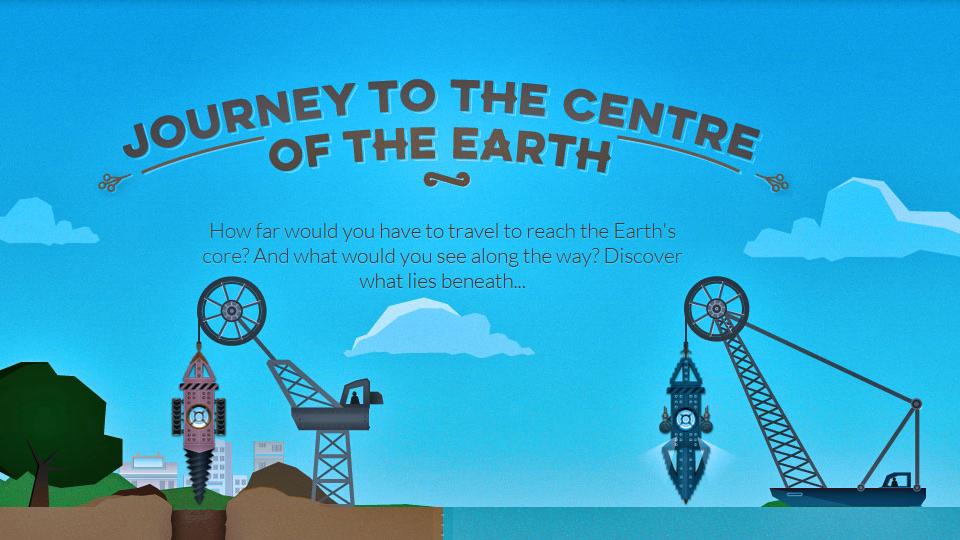
Journey to the Centre of the Earth

Journey to the Centre of the Earth

How far would you have to travel to reach the Earth's core? And what would you see along the way? Discover what lies beneath...

launch bbc.com

The LAYERS OF EARTH and the ROCK CYCLE The LAYERS OF EARTH and the ROCK CYCLE

What is the rock cycle?

launch earth.rice.edu

The Brainpop link is below. Username: kilgoremiddle Password: pop1 The Brainpop link is below. Username: kilgoremiddle Password: pop1

Search Results - BrainPOP

Learn more and understand better with BrainPOP’s animated movies, games, playful assessments, and activities covering Science, Math, History, English, and more!

launch brainpop.com

Search Results - BrainPOP

Learn more and understand better with BrainPOP’s animated movies, games, playful assessments, and activities covering Science, Math, History, English, and more!

launch brainpop.com

Layers of Earth flashcards | Quizlet

Vocabulary words for Layers of Earth. Includes studying games and tools such as flashcards.

launch quizlet.com

The Layers of Earth flashcards | Quizlet

Vocabulary words for The Layers of Earth. Includes studying games and tools such as flashcards.

launch quizlet.com

Earth's Interior, Convection Currents, & the Mantle flashcards | Quizlet

Vocabulary words for Earth's Interior, Convection Currents, & the Mantle. Includes studying games and tools such as flashcards.

launch quizlet.com

Plate Tectonics Plate Tectonics

Introduction to Plate Tectonics | Texas Gateway

launch texasgateway.org

Plate Tectonics | Texas Gateway

launch texasgateway.org
Plate Tectonics Explained

Flocabulary - Educational Hip-Hop

launch flocabulary.com

Plasticity is the ability of a solid to flow like a liquid. Plasticity is the ability of a solid to flow like a liquid.

Can You Walk on Water? (Non-Newtonian Fluid Pool)
Non-Newtonian Cornstarch Recipe | Science Experiments | Steve Spangler Science

Non-Newtonian Cornstarch Recipe | Science Experiments | Steve Spangler Science

launch stevespanglerscience.com
"Continental Drift Pangea Final" Pangea Plate Tectonics (english version)
plate tectonics
https://www.youtube.com/watch?v=HrKTuCDierM
https://www.youtube.com/watch?v=6I0m-kZaLFE

Plate Boundaries

Convergent, Divergent, and Transform Plate Boundaries
Convergent Divergent and Transform Plate Boundaries Topic 2
Explore Plate Tectonics

Explore Plate Tectonics

Learn about how plates move and their impact on the Earth's surface.

launch nationalgeographic.com

Interactives. Dynamic Earth. Plates & Boundaries

launch learner.org
https://www.youtube.com/watch?v=GyMLlLxbfa4

Khan Academy: Plate Tectonics Khan Academy: Plate Tectonics

Plate tectonics: Difference between crust and lithosphere : Khan Academy on a Stick

launch oer2go.org
https://www.youtube.com/watch?v=LdlEufZop-Y
Plate Tectonics

Plate Tectonics

Plate Tectonics explains how and why crustal plates move around the Earth creating volcanoes, earthquakes and tsunamis.

launch kids-fun-science.com
Ring of Fire Volcanoes

Ring of Fire Volcanoes

Ring of Fire volcanoes circle the Pacific Ocean. The horseshoe shaped circle is 40,000 km (25,000 miles) long. It has 452 volcanoes with 75% of the world's active volcanoes in the circle.

launch kids-fun-science.com

Subduction Zones

Subduction zones are convergent boundaries where at least one of the tectonic plates is an oceanic crust. Subducting plates ring the Pacific Ocean creating volcanic arcs and great earthquakes.

launch kids-fun-science.com
Creep on the Hayward Fault

Creep on the Hayward Fault

Jeremy Miller reports on the Hayward Fault, which underlies large, densely populated swaths of Northern California’s East Bay—and which could rupture soon.

launch newyorker.com

Rice Earth, Environmental & Planetary Sciences | Flow in the asthenosphere drags tectonic plates along

launch earthscience.rice.edu

The Dynamic Earth @ National Museum of Natural History

launch naturalhistory.si.edu

Plate Tectonics flashcards | Quizlet

Vocabulary words for Plate Tectonics. Includes studying games and tools such as flashcards.

launch quizlet.com

More Plate Tectonics flashcards | Quizlet

Vocabulary words for More Plate Tectonics. Includes studying games and tools such as flashcards.

launch quizlet.com

Boundaries (Convergent, Divergent, and Transform) flashcards | Quizlet

Vocabulary words for Boundaries (Convergent, Divergent, and Transform). Includes studying games and tools such as flashcards.

launch quizlet.com
Plate Tectonics

Plate Tectonics

Explore how plates move on the surface of the earth. Change temperature, composition, and thickness of plates. Discover how to create new mountains, volcanoes, or oceans!

launch phet.colorado.edu
https://www.youtube.com/watch?v=rd_d43jHTUs
Pangaea's Moving Farther Apart Again Song
Continental Drift Song
Plate Tectonics Song
Crust in Pieces Song
Shakes It All
Ring of Fire-Eruption Song
https://www.youtube.com/watch?v=1PVMs2NSdmc
https://www.youtube.com/watch?v=kJyhTp4p7PU
https://www.youtube.com/watch?v=jWz-fVbAWZ8
https://www.youtube.com/watch?v=E39GIysMevQ
https://www.youtube.com/watch?v=RUMX_b_m3Js
https://www.youtube.com/watch?v=XbWBkwM1WAI
https://www.youtube.com/watch?v=Jrj3zfPVXhk
https://www.youtube.com/watch?v=Hds1OBxVg4s
https://www.youtube.com/watch?v=sIXyxvSEKFY
https://www.youtube.com/watch?v=190PwAooKU8
https://www.youtube.com/watch?v=PZyF1UUhZYQ
https://www.youtube.com/watch?v=uk32EXMb-p8
https://www.youtube.com/watch?v=hhxjAAnwNKM
https://www.youtube.com/watch?v=JTM7GUyCXmw
https://www.youtube.com/watch?v=STDgv0Nsuyg

Plate Tectonics Review Game Jeopardy Template

, The thinnest layer of the Earth, A number of rigid, but moving, pieces of Earth's surface, The theory that all continents are fragments of Pangaea now drifting apart, States that youngest rocks of ocean floor are at divergin boundaries, moving outward

launch jeopardylabs.com
https://www.youtube.com/watch?v=smouixj44iI
https://www.youtube.com/watch?v=1c6uoT3Wjag

Plate Boundaries | Texas Gateway

launch texasgateway.org

Earth's Layers Travel Brochure Examples

zoom_out_map
zoom_out_map
zoom_out_map
zoom_out_map
zoom_out_map
zoom_out_map
zoom_out_map
zoom_out_map
zoom_out_map
zoom_out_map
zoom_out_map
zoom_out_map
zoom_out_map
zoom_out_map
zoom_out_map
zoom_out_map
zoom_out_map
zoom_out_map
zoom_out_map
zoom_out_map
Clay Model Inside The Earth, Easy Science Project
zoom_out_map
zoom_out_map
zoom_out_map

Volcanoes - Magma Lava - Volcanic Eruption - Flocabulary

Learn about volcanoes with Flocabulary’s educational hip-hop video and lesson activities.

launch flocabulary.com

Earthquakes - Earthquakes Video - Plate Tectonics Lesson - Flocabulary

Learn about earthquakes with Flocabulary’s educational hip-hop video and lesson resources.

launch flocabulary.com
San Andreas Fault Through Carrizo Plain
The San Andreas Fault: What you need to know | Earthquake Ready or Not
The Mid-Atlantic Ridge
The Himalayas from 20,000 ft.
Why is Mount Everest so tall? - Michele Koppes
Continental Drift [Updated 2018]
Loading indicator

close

Created with

Communicate quickly and effectively with interactive newsletters.

Smore empowers educators to connect with their community, streamline school communications,
and increase engagement.

Create a newsletter