remove_red_eye 629
page background

Coweta Impact

February 2018

CowetaImpactFebruary 2018

Using research-based practices to impact student learning

Hattie's research - Visible Learning

What is meant by VISIBLE LEARNING? Is it only about the visual learner? Actually, no. Visible Learning is about making learning visible for students through the use of clear learning intentions and success criteria.


Hattie's research, through over 800 meta-analyses, discovered practices that worked in schools resulting in high levels of student learning. However, Hattie cautions educators to understand that simply implementing the practices will not guarantee high levels of learning. At times, poor implementation of a practice can cause more damage than good. For instance, feedback has a high effect size. What if the feedback is poorly given or given in a very harmful way. That feedback can build resentment and disengagement rather than accelerating learning. Feedback must be carefully given and openly received.


As we explore and learn more about Hattie's effect sizes, use them with professional caution - for good and not for harm. Just using teacher clarity can hurt - if the message is clearly not helpful for a student.

(Hattie, 2009)

Application in the classroom

According to Hattie's Visible Learning website (https://visible-learning.org), classroom discussion allows students to voice their opinions and thoughts, thus improving communication skills. Teachers can also benefit from these discussions as they discover levels of student understanding. Suggestions for effective classroom implementation include:


  • creating a series of questions for students to consider
  • allocating enough time for elaborate discussions
  • creating an environment where students can freely express opinions without feeling ridiculed or laughed at.
https://www.youtube.com/watch?v=T_BANRJZedU
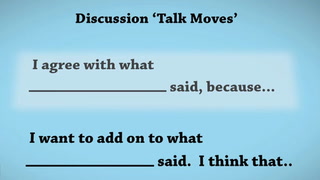
Talk Moves in Academic Discussions

Talk Moves in Academic Discussions

Here are great tips to help students learn the proper way to listen and respond during academic discussions. This is perfect for those who have ELLs or ELDs in their classroom.

launch teachingchannel.org
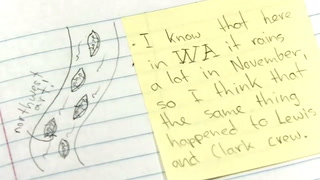
Post-its: Little Notes for Big Discussions

Post-its: Little Notes for Big Discussions

A great tool for helping students with note taking, as well as speaking in discussions on a topic, is the Post It. With Post It Notes, students can write down a thought to refer back to later in the discussion.

launch teachingchannel.org

Using Impact Teams for collaborative planning Using Impact Teams for collaborative planning

https://www.youtube.com/watch?v=sXjTxj3bhS4
Based on John Hattie's research, Impact Teams build on teacher expertise and extend student learning. The teams focus on Rick and Rebecca DuFour, Professional Learning Communities and the attempt to answer these questions:
  1. What should all students know and be able to do?
  2. How will we know when all students have learned?
  3. What will we do when a student hasn’t learned?
  4. What will we do when a student has learned or reached proficiency?

Impact Teams use six Visible Learning practices that have been proven to have a high effect on student learning:


  • Feedback: .75 effect size (ES)
  • Teacher Clarity: .75 ES
  • Classroom Discussion: .82 ES
  • Formative Evaluation: .90 ES
  • Success Criteria: 1.13 ES
  • Assessment Capable Learners: 1.44 ES
  • Collective Efficacy: 1.57 ES

Impact Teams use a 3-step process call Evidence-Analysis-Action helping members of the team stay focused on analyzing the impact of the learning.


To read more about this process, click on the link below:

Article


Raun & Duva (2018)

The COACH Approach to Feedback

Have you tried giving feedback and it doesn't seem to be making the impact that you expected? Maybe you should try a coach approach. The article below shares some insight for teachers and administrators on the importance of the right approach to feedback.


http://blogs.edweek.org/edweek/finding_common_ground/2017/06/the_coach_approach_to_giving_and_receiving_feedback_in_schools.html


DeWitt (2017)

zoom_out_map

Know thy impact

Click here to access the video.
zoom_out_map

Inspired and Passionate Teaching

Click here for the video.
zoom_out_map

Collaborative Expertise

Watch the video here.

Calculate your own effect size

Want to know what impact your instruction for a specific unit of study was? See the video below on how to calculate your own effect size based on pretest and posttest scores.
https://www.youtube.com/watch?v=VupAofWhZZo

Sources

DeWitt, P. (2017, June 18). The Coach Approach to Giving and Recieving Feedback in Schools. Retrieved from http://blogs.edweek.org/edweek/finding_common_ground/2017/06/the_coach_approach_to_giving_and_receiving_feedback_in_schools.html


Fisher, D., Frey, N. & Hattie, J. (2016) Visible Learning for Literacy. Thousand Oaks, CA:

Corwin.


Hattie, J. (2009) Visible Learning: A Synthesis of Over 800 Meta-Analyses Relating to Achievement.


Hattie, J (2012) Visible Learning for Teachers: Maximizing Impact on Learning. New York:

Routledge.


Johnson, S. (2016, December 19). Calculating Effect Sizes - from the book VISIBLE LEARNING FOR LITERACY. Retrieved from https://www.youtube.com/watch?v=VupAofWhZZo&t=11s.


Raun, K &Duva, S. (2018, January 12). Impact Teams - The Next BIG Thing: A success story of how one school evolved past PLCs. Retrieved from http://corwin-connect.com/2018/01/impact-teams-next-big-thing-success-story-one-school-evolved-past-plcs/


https://visible-learning.org/


https://www.teachingchannel.org

Loading indicator

close
Powered by