
AI in Action for Educators
Lesson 19: March 3 The Cost of a Click
📰 The Cost of a Click-Balancing Creativity & Carbon in the Age of AI
🌟 Why This Lesson Matters 🌟
🎯 What You’ll Learn 🎯
By the end of this lesson, you will:
- Understand the conceptual and ethical costs of AI.
- Help students distinguish between using AI to enhance creativity versus replacing the creative process.
- Introduce ethical considerations around AI: authenticity, sustainability, and intentionality.
- Facilitate hands-on reflection and analysis activities that highlight the value of human effort and intentional creativity.
- Encourage conversations about digital responsibility and the “cost of a prompt.”
Is Your Prompt Worth a Thought?
AI can feel magical and fun — but it comes with hidden costs.
Behind every image, paragraph, or prompt is energy use, data center infrastructure, and environmental impact. Even small requests add up when millions of users are generating content every day.
This lesson invites us to pause and ask:
-
Is this prompt necessary?
-
Is this the best use of this tool?
-
Am I using AI intentionally — or impulsively?
We’ll explore creativity, ethics, and thoughtful decision-making in the age of AI — without requiring anyone to generate new content. You can also share these ideas with students as part of digital responsibility conversations.

The Magic Trick Effect
It’s impressive and it's fun, but consider this analogy:
A magic trick amazes because the magician has practiced, designed, and executed it.
If a machine just does it for you, the wonder fades.
We need to teach students the difference between using a tool to enhance a vision versus letting a tool replace the vision.
Consider this:
If a student 'creates' a masterpiece in 3 seconds, did they learn the 'why' behind the colors, or did they just learn to order off a menu?
The Conceptual Cost: AI is Not Free
Even without generating AI content in class, students can understand that AI has hidden costs: energy, data, and effort.
-
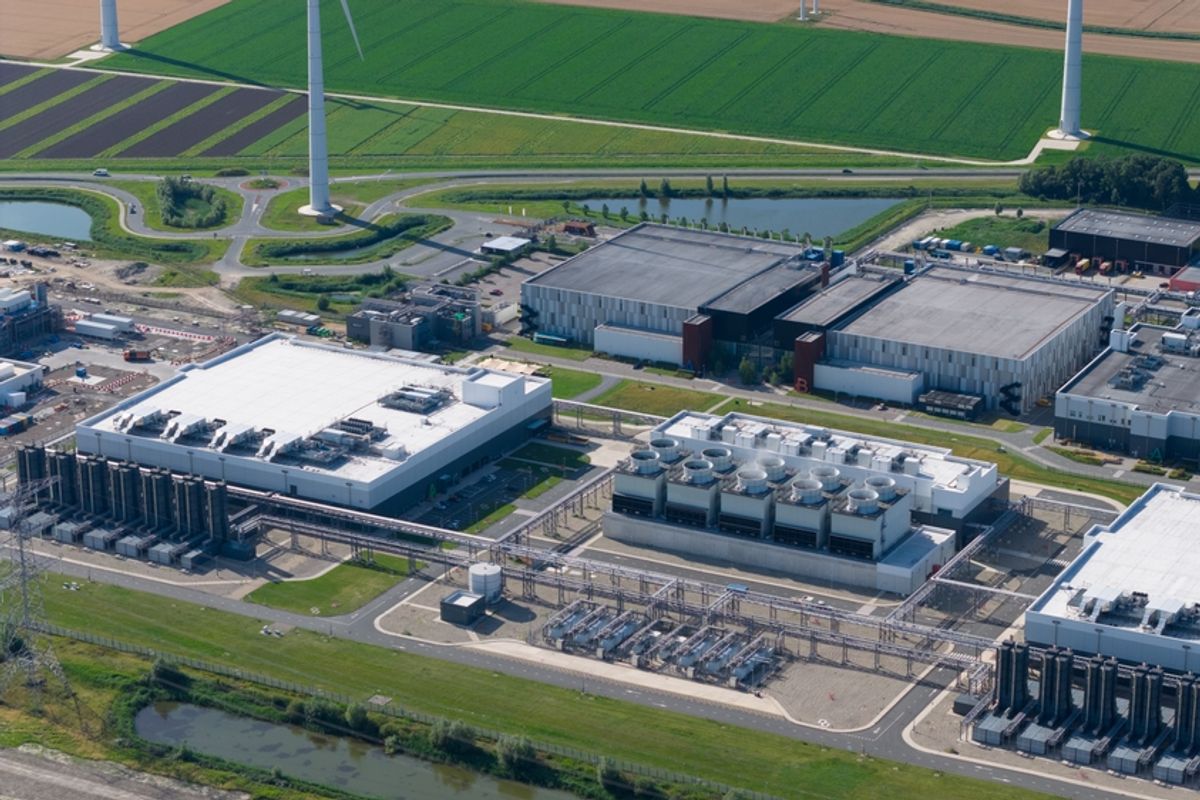
AI runs on massive data centers in places like Iowa, Nebraska, and Arizona.
-
Each query uses electricity and cooling resources — it’s not “just a click.”
-
Discuss: Is the convenience of instant output worth the learning that might be lost?
Classroom Discussion Idea:
-
Show an AI-generated image or text you’ve produced in advance (teacher-only example).
-
Ask students: “What did the AI do? What did the human do? What learning happened?”
-
Guide students to think critically about effort, creativity, and intentionality.
The Hidden “Weight” of an AI Prompt

⚡ The Physical Reality: "AI is Not in the Clouds"⚡
Most people think of AI as "ethereal" or living in a digital "cloud," but the truth is much heavier. In reality, your prompts live in massive warehouses in places like Iowa and Nebraska. These data centers are enormous users of both energy and water. To put it in perspective, a single ChatGPT prompt can use 10 times the electricity of a standard Google search. In terms of water, researchers estimate that a basic conversation of 20 to 50 questions with an AI is equivalent to "drinking" a 500ml bottle of water just for the cooling systems required to keep the servers from overheating.
AI's Secret Energy Cost: The Truth Behind the Hype
🔌 The "Smartphone" Metric: Visualizing the Cost 🔌
When we see "free" AI caricatures on social media, we aren't seeing the utility bill. Generating just one high-resolution AI image consumes approximately as much energy as fully charging your smartphone. While a single charge might seem small, when millions of users hit "generate" repeatedly to find the "perfect" avatar, the collective energy draw is equivalent to powering thousands of private homes. This is a great "gut check" for students: Is this specific prompt worth the energy of a full phone charge, or am I just clicking because it’s easy?
The Creative Ethics: Convenience vs. Craft
The Struggle is the Learning:
The process of drafting, erasing, and revising builds neural pathways. AI removes that friction, but in doing so, it can also remove learning.
Human-Centric Creativity:
Think: hand-knit sweater vs. factory-made. We value intentional, human-made work. AI should amplify your craft, not replace it.
Teacher Talking Point:
"AI is a great Architect, but a poor Builder."
We want students to be architects — crafting the vision — rather than just pressing "randomize."
🎨 Creativity vs. Convenience: Why the "Struggle" Matters 🎨
For educators, the concern isn't just about the environment; it’s about the brain. Research into "cognitive fixation" shows that once students see an AI's initial ideas, they often have a harder time coming up with their own unique concepts—they get "stuck" on what the machine produced. In education, the "messy middle"—the erased lines, the bad first drafts, and the struggle to find the right word—is actually where the learning happens. When we let AI jump straight to the finish line, we risk "creative complacency" where students learn to order off a menu rather than learning how to cook for themselves.
Quick Win Activity: Human vs. AI Reflection
Step 1: Show students an AI-generated example or prompt result (teacher-prepared).
Step 2: Compare it to a hand-created version (student example from previous work, or a teacher example).
Step 3: Facilitate discussion:
-
Which version shows more effort, creativity, or learning?
-
How might AI support the creative process without replacing it?
The Lesson:
Students will see that learning, intent, and effort are often more valuable than instant results, and that AI should be used thoughtfully.
Minnesota Connection
- Many AI servers are in the Midwest — think Iowa, Nebraska, and Minnesota-adjacent energy grids.
-
AI isn’t “free” — it uses electricity, water, and physical infrastructure.
-
Discussing the conceptual cost of AI sparks reflection without creating unnecessary output in class.
🛠️ AI Ethics in Action 🛠️

Staff Prompt for Reflection
"Before using AI, pause and ask: Does this output enhance the vision and learning, or am I just enjoying the instant result?"
Mini-Activity Idea:
-
Have students rate AI vs. hand-created work using the table.
-
Discuss which creations were authentic, intentional, and conceptually worthwhile.
🚦 The "Green Prompting" Checklist 🚦
To help model intentionality for our students, we can adopt a "High Value vs. Low Value" mindset for our clicks:
🍎 Teachers: Have students brainstorm independently first with pen and paper. This builds their "creative confidence" before they ever touch a keyboard.
⌨️ Secretaries & Staff: Use AI for "High Value" tasks that save hours (like summarizing a 50-email thread), but skip it for "Low Value" tasks that you can do just as fast yourself (like a simple one-sentence thank you).
🏢 Administrators: Model "thinking aloud." When using AI, tell your staff or students why you chose to use it for that specific task and what the trade-off was.
I encourage you to read this thoughtful piece from Discover Magazine: “AI Data Centers Come With a Hidden Environmental Cost — Is Sustainability Possible?” The article reminds us that AI doesn’t live in a weightless “cloud.” It relies on physical data centers that require significant electricity, water, and infrastructure to operate. As AI use grows, so does its real-world footprint.
This article provides helpful context as we consider intentional and responsible AI use in schools.
Things to talk about with colleagues and students:
-
When is AI use truly enhancing learning — and when is it just convenient?
-
How can we model responsible digital citizenship when the environmental impact is mostly invisible?
-
What criteria should we use to decide when an AI prompt is “worth it”?


💡 Find out More 💡
Want to read more about the costs of AI? Here are some articles to start with:
1. AI’s environmental and energy impacts explained
-
A clear, science-based overview of generative AI and data center energy use and implications from MIT’s Sustainability program — good for grounding the “AI isn’t just in the cloud” concept.
🔗 Generative AI’s environmental impact
2. AI’s hidden environmental costs and what we currently know
-
A broader summary outlining energy, water usage, and greenhouse gas emissions tied to AI systems — great for educator conversations.
🔗 AI’s environmental costs
3. Practical considerations for educators on AI’s impact
-
A practical, education-focused discussion of how AI environmental impact intersects with classroom decisions — especially helpful since you’re talking to staff.
🔗 Environmental Impact of AI
4. Balanced research perspective on the broader AI-environment relationship
-
A peer-reviewed academic discussion of both AI’s potential environmental benefits and challenges — useful if you want a deeper conceptual reference.
🔗 AI and the Net-Zero Journey: Energy Demand, Emissions, and Potential
🗣️ Staff Voices Needed 🗣️
As we continue this AI journey together, I’d love your input.
This series has explored practical tools, ethical considerations, environmental costs, and responsible use. But the best next steps come from your real questions.
I’d love to hear from you:
-
What AI topics would you like to explore more deeply?
-
Where are you feeling confident? Where are you feeling uncertain?
-
What classroom or role-specific challenges are you encountering?
-
What ethical questions are coming up in conversations with students?
-
What would make these newsletters more useful to you?
You can reply with a sentence or a paragraph — all feedback helps shape what comes next.
A Final Thought
AI is a powerful tool, but with power comes responsibility. Encourage students to ask themselves:
-
Does this AI output enhance my vision?
-
Am I learning by doing, or just clicking?
-
Is convenience worth the cost — in learning, effort, and thought?
We can model intentional AI use and make creativity both smart and sustainable.
— Laurie
👀 Sneak Peek at Lesson 20: 👀
Lesson 20 — What Does “Original” Mean Anymore?
If AI can compose music, generate art, and write text in seconds, what does originality look like now?
Next time, we’ll explore how artists, musicians, and creators are using AI — and how we can help students think about creativity, authorship, and intentional thinking in a world full of generative tools.
🎥 What? No video? A Quick Question for You:
To help me make these lessons most useful (and to use my time wisely), I’d love your input:
How do you prefer to receive these AI lessons?
☐ Short written newsletters like this
☐ Short video walkthroughs
☐ A combination of both
You don’t need to reply unless you’d like to—this is just helpful feedback.
And finally, if you would like a short video or Google Meet walkthrough of anything we cover, please let me know. I’m happy to create videos or meet virtually with you when you'd like help.
📖 Miss any of these Lessons?
You can view all of the AI in Action for Educators lessons on our district website through this link: https://www.parkrapids.k12.mn.us/departments/technology-homepage/ai