Native American Heritage Month
November 2024
Celebrating Tribal Sovereignty and Identity
Ways to honor Native American Heritage Month
Celebrate Spirit Week with us!
Read, Read and Read some more!
Learn about Tribal Sovereignty
Tribal sovereignty is the right of Indigenous tribes in the United States to govern themselves. It includes the authority to:
- Establish their own form of government
- Determine citizenship
- Make and enforce laws
- Preserve cultural identity
- Tax, license, and regulate
- Exclude wrongdoers from tribal lands
Tribal sovereignty is a legal concept that's protected by the U.S. Constitution and treaties, and upheld by the U.S. Supreme Court. It's an inherent right that was in place before colonization.
Tribal sovereignty is important because it allows tribes to preserve their cultures and traditional ways of life. However, there is disagreement between Indigenous groups and the U.S. government over what tribal sovereignty entails, and how tribes and states should work together.
Learn about Treaty's
Indian Pride | Treaties and Sovereignty | Lesson Plan
Lesson summary
Create understanding among students of the significance of treaties as a part of the foundation of Indian sovereignty and the rights of American Indians as having a political identity. Dispel myths about benefits owed to American Indians.
Time allotment: 4 class periods
Learning objectives
- Understand the origin of Indian treaties and their importance to contemporary Indian people and governments.
- Be active questioners and critical readers while analyzing primary documents.
- Compare and contrast the similarities and differences of treaties between foreign nations and the United States and Indian nations and the United States.
- Identify and explain the major concepts of the foundation of treaties between the federal government and Indian Nations.
- Be able to identify the types of provisions that were common in many Indian treaties.
- Explain in various forms the primary the reasons why treaties are living documents and importation today to Indian tribes to protect and preserve the rights contained within treaties.
Introductory activity
Students will view episode #102 “Treaties and Sovereignty” of the PBS Indian Pride series. Following a discussion of the video, questions will be charted for later discussion.
Students will be asked to identify any unfamiliar words from the video. These will be added to the key vocabulary terms list. Assignment will be given to students to: Read Handout #1 – What is a Treaty?
Students will read the handout and add to the vocabulary list and terms\words which are unfamiliar. Out of class assignments: students will be asked to research the list of key vocabulary words, and additional words added to the list.
Students will answer the following questions:
1) What are some of the common reasons why treaties are entered into?
2) What are the five (5) primary elements of most Indian-U.S. Treaties?
Learning activity #1
Students will be given Handout #2. Understanding Treaties.
Working in teams, students will be asked to assign members of the team to take one concept. Each concept from the reading will be identified and explained. Students will be asked to give an example (if applicable) within their state of a treaty, or nationally, which involved an Indian tribe; and which involved a foreign nation. Students will identify the provisions of each treaty and identify its importance to the nations who entered into the treaty. Summary of students work will be charted and retained for Class Period IV. After reviewing Handout #2: teams will discuss and answer the following questions:
- What were some of the major challenges when negotiating treaties between the United States government and Indian nations?
- Would leaders of countries today agree to sign a treaty written in a language they could not understand?
- Would leaders today sign a treaty containing ideas or concepts vastly different from their way of thinking, containing provisions that are vastly different from practices and customs that sustained their country and communities?
Learning activity #2
Instruct students that they will work in the library for the third class period. Students in the team will research Kapplers Treaties: and identify an Indian treaty between and Indian tribe within their state or region.
Teams will research and respond to the following questions:
1) Provide the name of the treaty.
2) Name the parties to the treaty.
3) What are the primary provisions of the treaty (by section)
Learning activity #3
Students will read Handout #3: Importance of Indian Treaties Today.
Based upon their research and review of the handouts, teams will present to the full class paying attention to the following questions: Based upon what your team researched about the treaty you selected, Draw conclusions, and communicate to the full class your findings about a particular treaty that responds to the following questions:
- What provisions did the tribe reserve for itself?
- Is the tribal nations occupying its’ aboriginal territory (original homelands) as identified in the treaty?
Culminating activity
Student recognizes and demonstrates:
- An understanding of the role of treaties related to the American Indian livelihood.
- An understanding of the interactions between American Indians nations and the United States government in their state or region.
- Demonstrates an ability to use a variety of written, virtual resources as research.
- Critical analysis to make informed judgments about current issues.
In the Treaty of 1837, Mille Lacs Band and other Ojibwe tribes ceded 13 million of acres of land to the United States government. Following its rise to statehood, Minnesota officials soon enacted a policy to deny Ojibwe people their treaty-reserved rights to natural resources. Wenji-Bimaadiziyaang tells the story of the political and legal fight to reaffirm Ojibwe treaty rights in the Minnesota 1837 Territory after more than 150 years of persecution.
Remember the Sandy Lake Tragedy
This short film focuses on the 1850 Sandy Lake Tragedy and the struggle for Anishinaabeg to survive amidst forced assimilation and tragedy. Today, many communities come together to celebrate a chapter of survival at the annual mikwendaagoziwag ceremony located at the Sandy Lake memorial in northern Minnesota.
In the fall and early winter of 1850, the US government forced thousands of Lake Superior Ojibwe to leave their homeland in Wisconsin and gather at Sandy Lake, in Minnesota Territory, to receive an annual treaty payment. When the money never arrived and the government provided spoiled rations, many tried to return to Wisconsin. As a result, about 400 Ojibwe people died from starvation, disease, and exposure in what is known as the Sandy Lake Tragedy.
We will guide the audience through the stereotypes that diminished the successes of a thriving community by communicating with experts within their community to share the brilliance and ingenuity of their lives.
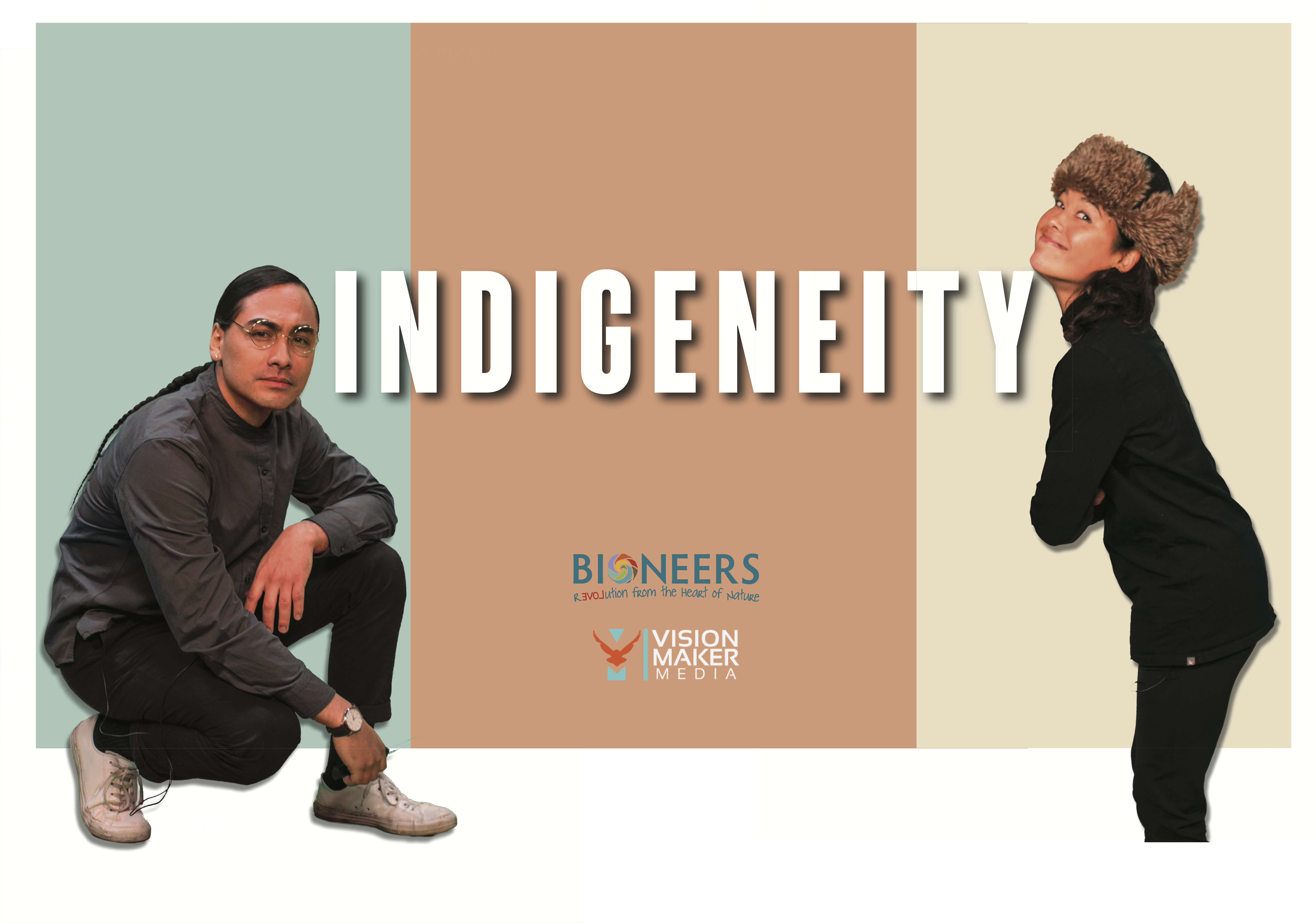
The Indigeneity webisode series presents an accurate portrait of the Native American Experience by tackling stereotypes, exploring contemporary issues, and celebrating Indigenous contributions to America. The Indigeneity series brings Native American Studies lessons to all learners with access to the internet. Hosted by Native American media personalities Ariel Tweto and Julian Noisecat, the series brings a virtual classroom to the world, combining truth, traditional knowledge, humor, animation, and personality to present important educational themes in Indigenous Studies.
These episodes are accompanied by Discussion Guides and Lesson Plans that help teachers to integrate Native American subject matter and knowledge across a range of subjects already being taught in school curriculums.
Post-Viewing: Exploring the Facts
1. Why is it important to understand what to call Indigenous Peoples?
2. Why are the terms ‘Eskimo’ and ‘Indian’ problematic for some people and not to others? Would you use those terms? Why/why not?
3. Why is it important to learn the appropriate labels for groups of people who are identified by racial, ethnic or religious categories?
4. Why is it insensitive to ask, “Where are you from?” to a person of color?
5. Why is it important to know how labels for people change over time?
Post-Viewing: Exploring the Facts
1. Why is it important to understand the diversity of American Indian and Alaska Native populations across the US?
2. What does it mean for a tribe to be “federally recognized”?
3. How does “nationhood” differentiate American Indians and Alaska Natives from other race and ethnic groups in the US?
4. Why is a DNA test showing Native American ancestry not sufficient to prove membership in a tribe?
After Watching: Exploring the Facts
1. Have you ever experienced harmful stereotypes directed to you personally or a racial, religious or ethnic group you belong to? How did it feel? Did you do anything about it? If so, what did you do?
2. Why is dehumanization harmful? Can you think of other examples of dehumanization in the present day?
3. Can you think of an example from books or media where you encountered a negative stereotype about Native Americans? What was it?
4. In the video, the co-hosts offer ways to address negative stereotypes about Native Americans. They suggested:
- 1) offering an alternative to the stereo- type, such as replacing a harmful mascot,
- 2) pointing out that Native Peoples are still here when media presents them as “of the past” only,
- 3) telling others that dressing up as an Indian for Halloween reduces real people to stereotypes,
- 4) calling out stereotypes when you see them.
Learn about the Four Sacred Medicines
The four sacred medicines that are central to Indigenous peoples in North America and are often featured on medicine wheels are tobacco, cedar, sage, and sweetgrass:
Tobacco
The first plant given to Native people by the Creator, tobacco is used to communicate with the spirit world and as an offering in ceremonies. It is burned and smoked in a pipe or sacred puwagan.
Cedar
Used to purify the home and for medicinal purposes. Cedar tea can clean the body of infections, and a cedar bath or shower can help cleanse the mind and body.
Sage
Used to prepare people for ceremonies and teachings. Sage is also used to cleanse and purify a home or space.
Sweetgrass
Considered the sacred hair of Mother Earth, sweetgrass is used in healing circles to have a calming effect. It can also be used for smudging and purification.
The number four has great significance in most Indigenous cultures. The four sacred medicines are used in everyday life and in ceremonies, and all of them can be used to smudge with.
Learn about Residential Boarding Schools
The truth about the U.S. Indian boarding school policy has largely been written out of the history books. There were more than 523 government-funded, and often church-run, Indian Boarding schools across the U.S. in the 19th and 20th centuries. Indian children were forcibly abducted by government agents, sent to schools hundreds of miles away, and beaten, starved, or otherwise abused when they spoke their Native languages.
Beginning with the Indian Civilization Act Fund of March 3, 1819 and the Peace Policy of 1869 the United States, in concert with and at the urging of several denominations of the Christian Church, adopted an Indian Boarding School Policy expressly intended to implement cultural genocide through the removal and reprogramming of American Indian and Alaska Native children to accomplish the systematic destruction of Native cultures and communities. The stated purpose of this policy was to “Kill the Indian, Save the Man.”
Between 1869 and the 1960s, hundreds of thousands of Native American children were removed from their homes and families and placed in boarding schools operated by the federal government and the churches.
Though we don't know how many children were taken in total, by 1900 there were 20,000 children in Indian boarding schools, and by 1925 that number had more than tripled. The U.S. Native children that were voluntarily or forcibly removed from their homes, families, and communities during this time were taken to schools far away where they were punished for speaking their Native language, banned from acting in any way that might be seen to represent traditional or cultural practices, stripped of traditional clothing, hair and personal belongings and behaviors reflective of their native culture.
They suffered physical, sexual, cultural and spiritual abuse and neglect, and experienced treatment that in many cases constituted torture for speaking their Native languages. Many children never returned home and their fates have yet to be accounted for by the U.S. government.