Smore logo
remove_red_eye 8
page background
Logo

For the Love of Leopards & Literacy

The one with the Tools for Using TIDE for Opinion Writing

For the Love ofLeopards & LiteracyThe one with the Tools for Using TIDE for Opinion Writing

Leveling Up with Lexia Leveling Up with Lexia

Shout Outs

🤞Our Current Usage Goal: 75%

Usage Average for the Week of 2/2: 65%

🟢This is an increase of 17 percentage points from the previous week.


🎉The following teacher(s) had at least 75% of their students meet their usage target:

McCarthy, Benton, Dallas, Edmonds, & Hudson

Updates & Reminders from the District's Lexia Team

District Expectations

  • PK-2nd grade students and 3rd-5th grade priority students are expected to meet their target minutes 75% of the time. Remember, this translates to ALL students meeting their usage every 3 out of 4 weeks.


Best Practices

  • PK-2nd grade students should use Lexia for 15-20 minutes per session 3-4 times per week.
  • 3rd-5th grade students should use Lexia for 20-30 minutes per session 3-4 times per week.
  • The days per week should be adjusted based on individual student targets.

The Lexia Weekly 5-Minute Check-In

Curious about who’s making progress in Lexia? This quick 3-minute overview provides all you need to navigate Lexia, track student progress, and plan new instruction and independent work based on each student’s current level—all in just five minutes. Remember to log in weekly to stay up-to-date on your students’ growth!


The Lexia Core5 5 Minute Check In
Lexia Core5 Resource Hub
Explore a combination of digital and printable resources to support literacy instruction.
Lexia Resources
Explore full lessons for small group and individual instruction.

Lexia Skill Builders

Lexia Skill Builders are offline, paper-and-pencil extension activities that reinforce the skills students practice in their Lexia online lessons. To access them, open your Lexia Classroom Overview and click the RESOURCES tab in the top right corner. Select Lexia Core5, then choose Lexia Skill Builders under the Instructional Materials section. From there, you can browse the Skill Builder library and filter by grade level, program, and skill to quickly find what you need.


How Teachers Can Use Lexia Skill Builders in Class

1. Use Skill Builders After Students Complete an Online Level

Students are expected to work on Skill Builders after completing a full online activity or level, as indicated in the Action Plan in myLexia. This helps reinforce the specific skills they just learned.

2. Integrate Them Into Literacy Centers or Stations

Skill Builders fit well into:

· Independent literacy centers

· Partner work stations

· Small group rotations

They are designed for both independent practice and peer collaboration, making them ideal for structured center time.

3. Use Them for Small-Group Targeted Support

Teachers can pull skill-specific Skill Builders to:

· Address gaps shown in MyLexia reports

· Reinforce a tricky phonics pattern or comprehension skill

· Provide structured support for students needing reteaching


Because Skill Builders match specific online skills, they create a natural bridge from digital data to small-group instruction.

User uploaded image
zoom_out_map Show in original size
User uploaded image
zoom_out_map Show in original size

Superintendent's Book Club Superintendent's Book Club

It's baaaaaaack....

The Superintendent's Book Club has officially started! Please see the link below for the official landing page for this celebration. Here, you will find the ES & MS kickoff messages from Superintendent Dr. Walker as well as tutorials and additional resources.

Supe's Book Club Homepage
Link to Overall District Progress Toward the Challenge
User uploaded image
zoom_out_map Show in original size

Fireflies Reading Program Partnership

A few of you have been asking about if we will have any additional incentives for the Supe's Book Club this year.


I am excited to share with you all that our school is participating in the Fireflies Reading Program. As part of this program, children complete a reading goal to earn a complimentary ticket, junior hot dog, and soda to our school's Fireflies baseball game night.


What is the goal students will need to meet? Reading at least 1,500 minutes for the Superintendent's Book Club challenge on Beanstack.


Each homeroom teacher has received a class set (plus a few extra copies) of the Fireflies Reading Program Instructions and a tracking sheet in your box. Remember, in order to make it into the Supe's Book Club, minutes must be logged into Beanstack.


Here are some additional details below:


Game Date: ​Friday April 10th at 7:05 pm (Neon Night)

Reading Program Dates: Jan 12th - March 16th

How it works:

  • When students have completed their reading goals, we will be provided with a direct link for our school to send out to families.

  • All tickets will be on a first come first serve basis. The Fireflies will do their best to keep our school in one section. Once availability becomes limited, other sections will be opened to accommodate.

  • If our school's game night does not work for a family, Fireflies offers additional dates they may trade out.

Please reach out to Mrs. Bennett or I if you have additional questions. Happy reading!

User uploaded image
zoom_out_map Show in original size

Reading Log

Students should be able to access Beanstack at home as long as they have access to Wi-Fi, a device, and their ClassLink login information. However, in case students are not able to access Beanstack at home for any reason, Mrs. Bennet has created the reading log template attached below to support students in logging their books at home. Please note that all minutes will still need to be entered into Beanstack once students return to school.


While we encourage students to log books and minutes on their own if they are able, these logs may also support teachers in logging students' reading if necessary.

pdf
insert_drive_file
Logan Reading Log.pdf
Download
22.2 KB

Beanstack Tutorials and Time Stamps Beanstack Tutorials and Time Stamps

Superintendent's Book Club Tutorial
  • 01:04 How to log in to Beanstack

  • 01:43 How to log reading using the timer

  • 02:43 How to log a book using the barcode scanner, rather than typing it in

  • 04:09 How to use the leaderboard

  • 04:33 How to write and read book reviews

  • 04:45 How to see earned badges

  • 05:00 See reading streak and list of books read

Logging For Class / Deleting Flagged Reading
  • 00:36 How to get to Beanstack

  • 01:01 How to log books for all students simultaneously (great for logging read alouds)

  • 02:43 Deleting flagged reading for students who may have mis-entered or over-entered their reading

Beanstack Teacher Experience -- SY 22/23

launch loom.com
  • 0:26 How to log reading for the entire class, groups of students, or individuals

  • 02:54 How to access and navigate a student's Reader Profile

  • 03:50 How to access and navigate the Insights tab

  • 05:37 How to access and view reports

  • 06:15: How to customize a report for specific information

Teacher Spotlights Teacher Spotlights

Mrs. Scott's Class: Boom, Snap, Clap, Grab!

Watch Mrs. Scott's class review parts of speech with this fun activity below. See how to play and ideas for other applications below as well. What contexts could you try this interactive activity in?
Boom Snap Clap
User uploaded image
zoom_out_map Show in original size

Enrichment Resources Enrichment Resources

This week in PLCs...

We discussed a variety of enrichment opportunities. See links to some of the resources we discussed (and more!) below. You can also find these in the Literacy Toolkit.

Differentiation Made East: Low-Prep Potpourri
Mensa for Kids: Excellence in Reading Lists
Did you know that Mensa has a website for kids? It includes a reading challenge / reading list for grade bands. Teachers and librarians can participate, too!
Mensa for Kids: Lesson Plans
Mensa for Kids: TED Connections
This part of the website provides teachers with guidance in using Ted Talks in the classroom to enrich instruction.

Using TIDE-L for Opinion Writing Using TIDE-L for Opinion Writing

Do your students need more support with understanding the structure of opinion or argumentative writing? Mnemonics are evidence based strategies that support this understanding. Whether you are using TIDE or OREO, all mnemonics are a great strategy (so you won't see me starting mnemonic wars).


However, I recommend TIDE because it is so versatile. It can be used for personal narrative, informational/expository, and opinion/argument writing. This versatility supports students because they need only remember a single mnemonic to understand the overarching structure of these major genres.


Here is an early grades breakdown of the parts of TIDE-L when writing opinion, vs older grades

User uploaded image
zoom_out_map Show in original size

There is so much overlap between info and opinion writing. Often, maybe most of the time, writing is such a blend that we call it both - we say it has both informative and opinion elements. When a prompt is clearly opinion (Decide, Choose, Argue for or against...), it's helpful to back map and pull out the features that make opinion writing more opinion-y than more informative.


Here is a video of a teacher modeling this so explicitly, so well:

Penguin Opinion back map
User uploaded image
zoom_out_map Show in original size

Engaging Families in Reading Engaging Families in Reading

Are you looking for ways to engage families and caregivers in their child's reading?


The Parent handout below guides families and caregivers in supporting children with making GIST statements that summarize their reading (and support syntax development). This can be given in conjunction with GIST graphic organizers for children in need of an additional scaffold.

pdf
insert_drive_file
Parent Gist Handout.pdf
Download
79.1 KB
pdf
insert_drive_file
Gist Statement Frames (K-2 and 2-5 Options).pdf
Download
281.3 KB

MVPA Standards Assessed MVPA Standards Assessed

The MVPA assessment window opens on February 23rd.


Please use the attached document as a guide to review students’ most recent MVPA mastery data, classroom assessments, and other available evidence. This information should help you identify the specific standards that need additional focus and reinforcement as we prepare for the final MVPAs.

Thank you, Dr. Little, for gathering this information and making it available to teachers,

pdf
insert_drive_file
MVPA Standards.pdf
Download
1.2 MB

Read 2 Succeed Priority Student Portfolio Resources Read 2 Succeed Priority Student Portfolio Resources

Update to Winter Portfolio Deadline

In order to allow more time to complete the Spring Portfolio, the district has moved the Winter deadline up to an earlier date. The new Winter Portfolio deadline is March 16th, 2025. The Read to Succeed checklist has been updated to reflect this date. Please update your calendars.

User uploaded image
zoom_out_map Show in original size
Portfolio Mini-Deadlines Document
Read 2 Succeed Resources Folder

For the Love of Teachers: This Section is Just for You For the Love of Teachers: This Section is Just for You

Focus on the Bright Spots

Last year, I spoke to many of you about the natural "negativity bias" that our brains possess. We developed this bias as a way to protect ourselves from danger. However, this negativity bias does not always serve us in a modern world, where we are not being threatened by predators in nature.


Here is the good news: we can rewire our brains. We can hone our attention to focus on our strengths, assets, and skills. This is a skill that can be developed with practice. Remember, every moment, every thought, is an opportunity to practice. This helps us generally feel better and enables us to respond to challenges more effectively. Focusing on strengths also boosts our levels of self-efficacy, and we feel more empowered to influence our surroundings.

Try It: The Unsent Gratitude Letter

In the podcast below, Mel Robbins, author of The Let Them Theory, explains how research around gratitude journaling has shown to improve mental health outcomes. She suggests a specific kind of gratitude journaling or letter writing activity to try. In your daily letter, write to a person who has done something you are grateful for and include:


1. What did they do?

2. Why did it matter?

3. How did it affect you?


Try it...and let me know how it goes. Happy writing.

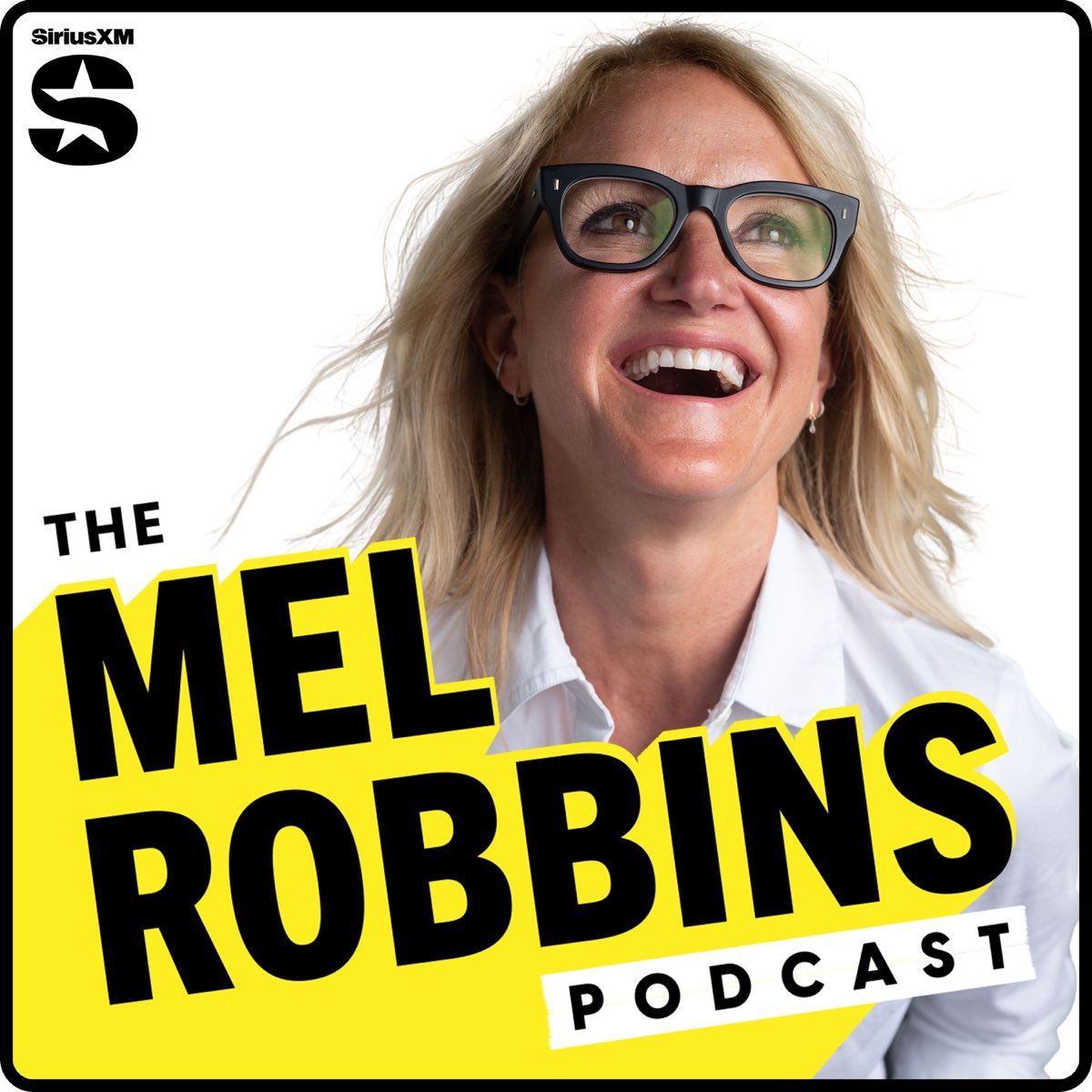
How to Live a Happier Life: Do THIS Gratitude Practice Today

Podcast Episode · The Mel Robbins Podcast · 11/27/2025 · 46m

launch podcasts.apple.com

What Am I Reading? What Am I Reading?

User uploaded image
zoom_out_map

Syntax: Knowledge to Practice by Margie Bussman Gillis & Nancy Chapel Eberhardt

Syntax: Knowledge to Practice by Margie Bussmann Gillis & Nancy Chapel Eberhardt is part of the Literacy How Professional Learning Series, a collection designed to translate current reading research into practical classroom instruction. This is the only book from this particular series I have read, but after reading this one, I am inclined to seek out the other books. This volume focuses specifically on syntax (sentence-level skills) and its powerful role in reading comprehension and written expression. Bonus: It is under 200 pages long!


What makes this book especially valuable is the balance between research and application. The authors ground their work in Chall’s stages of reading development, then move quickly into clear instructional principles and scaffolded activities teachers can implement immediately. The text clarifies the relationship between grammar and syntax, explains why syntactic awareness supports both comprehension and writing, and emphasizes teaching syntax in meaningful contexts rather than in isolation.


Each chapter includes:

  • Concise summaries of relevant research

  • Background knowledge for effective instruction

  • Evidence-based activities for teaching and informal assessment

  • Lessons and activities aligned to developmental stages

  • Additional resources for deeper study


Although the series emphasizes PreK–3 instruction, the strategies are equally useful for older emerging or struggling readers. For educators working to strengthen the connection between sentence-level knowledge, cohesion, and writing development, this book provides both the “why” and the “how.”

Want a Thought Partner? Contact the Coach Want a Thought Partner? Contact the Coach

User uploaded image
zoom_out_map

Hi, I'm Madison Kozeny, your literacy coach. I partner with teachers to turn their instructional goals and great ideas into reality. Whether we’re digging into data, co-planning, co-teaching, reflecting, or trying something new together, my goal is to work alongside you in ways that feel purposeful and manageable.

Together, we can make a meaningful impact on literacy education--and most importantly, students.

Interested in having a teaching partner?

I am so excited to work with each of you this year to support your students in ELA and literacy in the content areas. Our work together is confidential and based on your students' personal needs.


Planning is a creative, complex process and you don’t have to do it alone. I’m here to help you think through anything from student engagement to data to unit design. Use the tools below to request support or explore what coaching might look like.


Don't hesitate to text me at (864) 517-0542, email me at madison.kozeny@richlandone.org, stop by my room (333) or click the button below to access my collaboration request form, which is also conveniently located in my email signature.

Collaboration Request Form
User uploaded image
zoom_out_map Show in original size

Previous Newsletters Previous Newsletters

Click Me
Literacy Toolkit
Madison Kozeny
Madison is using Smore to create beautiful newsletters
Loading indicator

close

Created with

Communicate quickly and effectively with interactive newsletters.

Smore empowers educators to connect with their community, streamline school communications,
and increase engagement.

Create a newsletter