

KISD Secondary Science Newsletter
May 2026

Killeen ISD cultivates scientific excellence through inquiry and engineering practices, empowering each student for life!

Hello, Science Teachers:
“If the big rocks don’t go in first, they aren’t going to fit in later.” — Stephen R. Covey
As we close out the year, stay focused on the “big rocks”—high-impact instruction, meaningful learning, and strong relationships. Finish strong.
You've done an amazing job — thank you, and enjoy your break!
Sandra
Secondary Science -District Summer Professional Development

Drop the Beat. Elevate Learning.
We’re excited to offer District Summer Professional Development!
This year’s 80’s-inspired theme, “Drop the Beat. Elevate Learning,” is all about one priority: strengthening Tier 1 instruction so every student experiences high-quality, engaging learning every day.
This summer, we’re remixing our practice with a clear focus on what matters most: powerful core instruction that reaches every learner the first time.
Our sessions are built around the REMIX mindset:
R – Refine Tier 1 instructional practices to ensure clarity, rigor, and alignment
E – Engage all learners through intentional, research-based strategies
M – Maximize instructional time and impact in every lesson
I – Integrate effective tools and strategies to support diverse learners
X – eXpand student success through strong, consistent core instruction
Inside the catalog, you’ll find sessions designed to support high-quality first instruction, including TEKS-aligned planning, strategies for reaching all learners, meaningful use of technology, and practical approaches you can implement immediately in your classroom.
🗓 Registration opens: May 2, 2026, at 8:00 AM
🔗 View the Summer PD Catalog: https://canva.link/kisd-summerpd2026
📝 Register in Eduphoria: https://killeen.schoolobjects.com/strive/professional-learning/courses
Teacher Exchange Day Information
Teachers have the option to “exchange” Friday, September 4, 2026, for one (1) day of summer professional learning. The following criteria apply for professional learning sessions:
Session eligibility:
1. A minimum of 6 hours in length, either as a single session or as two 3-hour sessions, completed as a learner or as a presenter.
2. *In-district or out-of-district learning during non-contract days (June 1, 2026 – August 3, 2026 only) (Out-of-district PD must be approved by the district instructional specialist over that content. Approval must be submitted to CIS before attending PD.)
3. Related to 2026-2027 teaching assignment and specific content
4. No compensation or stipend received for attending or presenting sessions
Science PD Offerings-July 2026
TEKS, Tests, and Teaching: The Secondary Science Playbook for Middle School Teachers
This training equips secondary science teachers with practical strategies for aligning instruction to TEKS, using instructional products effectively, and preparing students for standardized assessments. Participants will also learn how to leverage data and small group instruction to target student needs and drive achievement.
July 20, 8:30-11:30 am, KCC Lecture HallTEKS, Tests, and Teaching: The Secondary Science Playbook for High School Teachers
This training equips secondary science teachers with practical strategies for aligning instruction to TEKS, using instructional products effectively, and preparing students for standardized assessments. Participants will also learn how to leverage data and small group instruction to target student needs and drive achievement.
July 20, 1:00-4:00 pm, KCC Lecture HallHS Science: Adapt & Thrive: Evolution and Ecology Projects That Engage
Bring evolution and ecology to life through meaningful, student-centered projects that go beyond the textbook. In this session, high school science teachers will explore engaging, TEKS-aligned project ideas that help students analyze natural selection, ecosystem interactions, biodiversity, and environmental impact. Participants will experience ready-to-use project frameworks, including inquiry-based investigations, real-world problem-solving scenarios, and cross-curricular connections that promote critical thinking and scientific reasoning. Walk away with adaptable resources, assessment ideas, and strategies to support all learners while making evolution and ecology relevant, rigorous, and memorable.
July 21, 8:30-11:30 am, KCC Room 403HS Science: Biology First Nine Weeks: TEKS, Labs, and Instructional Strategies
HS Science: Inquiry and Investigations in Biology
The professional development session for the first nine weeks of Biology (2026–2027) will focus on building strong instructional practices across Units 1–3: ecosystems, biomolecules, cell structure and function, and key cellular processes such as photosynthesis and cellular respiration. The session will highlight essential concepts, investigations and inquiry, and areas where students traditionally struggle, helping teachers prioritize instruction for maximum impact early in the year. Participants will explore a range of engaging laboratory investigations and demonstrations designed to deepen student understanding. These will include ecosystem simulations and energy transfer models, macromolecule testing labs, microscopy investigations of cell structures, and hands-on activities modeling photosynthesis and respiration. Emphasis will be placed on inquiry-based learning, data analysis, and connecting lab experiences to real-world biological systems.
Lab Safety and How to Properly Store and Discard Any Chemicals
First Nine Weeks of Chemistry
Start the year strong with a focused look at the first nine weeks of chemistry! This session will unpack key TEKS, essential concepts, and common student misconceptions while modeling engaging lab demonstrations and instructional strategies. Participants will explore ways to scaffold learning, support struggling students, and build a strong foundation for future units. Walk away with practical resources, pacing ideas, and ready-to-use strategies to ensure student success from day one.
Chemistry 2nd Nine Weeks: Deepening Understanding & Driving Inquiry
Strengthen instruction and student understanding during the second nine weeks of chemistry by diving into key concepts such as chemical bonding, chemical reactions, and stoichiometry. In this session, high school chemistry teachers will explore engaging, TEKS-aligned strategies, lab investigations, and demonstrations that make abstract concepts more accessible and meaningful. Participants will examine common student misconceptions, analyze data-driven approaches to support learning, and collaborate on instructional practices that promote critical thinking and problem-solving. Walk away with ready-to-use lessons, assessment ideas, and practical tools to help students succeed during this pivotal phase of the chemistry course.
Secondary Science: Write It, Do It, Learn It: Interactive Notebooks in Science
Transform student engagement and organization with interactive notebooks designed specifically for high school science classrooms. In this session, teachers will explore how to effectively structure notebooks to support content mastery, from bell ringers and input pages to processing activities and reflections. Participants will experience a variety of hands-on TEKS-aligned activities—such as foldables, concept mapping, and data analysis tasks—that promote active learning and deeper understanding. Learn how to balance creativity with rigor, incorporate formative assessment seamlessly, and support all learners through intentional notebook design. Walk away with ready-to-use templates, activity ideas, and practical strategies to make interactive notebooks a powerful tool for student success.
MS Science: First Nine Weeks of 6th Gr Science-CANCELLED
This professional development session will focus on strengthening instruction for the first nine weeks by unpacking priority TEKS, key shifts in rigor, and alignment to assessment expectations. Teachers will collaboratively plan high-impact, inquiry-based learning experiences, including hands-on investigations and demonstrations that build conceptual understanding. The session will emphasize strategies to address common misconceptions, support diverse learners, and increase student engagement through discourse, data analysis, and formative assessment. Participants will leave with practical resources, aligned lesson ideas, and targeted strategies to improve student mastery.
MS Science: Beyond the Textbook: Phenomena-Driven Instruction that Sparks Curiosity and Engagement
Step into a middle school science classroom where engagement is non-negotiable. This session will showcase how we've reimagined instruction using the revised Science TEKS, focusing on phenomena-rich tasks that drive inquiry. You'll explore how interactive notebooks, scaffolded critical thinking tasks, and intentionally selected experiences build deep understanding. Walk away with replicable strategies, student examples, and practical AI tools that bring science to life — moving beyond the bounds of a textbook!
Think Big Learning: The Language of Science: Vocabulary Strategies for ALL Learners
During this session, we explore methods to scaffold learning and deeper thinking through intentional vocabulary instruction and support. We will also analyze the ELPS and consider how to best incorporate those standards in a science classroom to the benefit of all learners. Participants will leave with effective strategies that they can utilize immediately to supplement their current instructional practices.
Secondary Science: Building Critical Thinking Classrooms
How can we encourage all of our students to think deeper and more critically? Asking good questions, analyzing information, and drawing conclusions are crucial skills for success in the science classroom. In addition, cultivating strong reasoning skills is so important for 21st century learners. Participants in this session will engage in practical, ready-to-use strategies to promote critical thinking for all students.
Secondary Science: First Nine Weeks of 8th Grade Science
Participants will explore concepts taught in the first 9 weeks of grade 8 science. Come and collaborate with your colleagues.
McGraw Hill Sessions (HS Science)


HS Science-McGraw Hill PD Summer Sessions
Great news! Our school board has officially approved McGraw Hill as our instructional resource for Biology, Chemistry, Physics, and IPC.
To support your transition, we’ve attached a flyer with optional summer Zoom sessions where you can learn more about the platform and explore its features at your convenience. We encourage you to take advantage of these opportunities as you begin familiarizing yourself with the new resource. Please click on image to register!
Cengage PD Offerings (HS Electives)
Welcome to the Cengage School Learning Academy! —a self‑paced course library designed specifically for educators and administrators. These courses will help teachers confidently and successfully use Cengage School tools and instructional resources.
🎓 Access Your Learning Academy Courses
- Science, Social Studies, Advanced Placement, and Electives
👉 https://cengage.box.com/s/06d9vut692fc52l3a7m3h4w37c0tg2rr
📚 Join Our Back‑to‑School Webinar Series
We’re also excited to launch our Back‑to‑School Webinar Series!
👉 Click here to learn more and register today: https://cengage.box.com/s/yzf38vyrnrwz5yid7c32k8qi10dkrzu7
This series includes live sessions, where you can:
- Get to know your program
- Learn best practices and tips
- Ask questions during Open Office Hours
Out of District Professional Development Opportunities in Science
The following professional development opportunities are offered by external providers and may require a registration fee. These are not funded by the district, and participants must pay for themselves. Recommended providers include:
Region 12 Education Service Center
Region 13 Education Service Center
Region 4 Education Service Center
HHMI BioInteractive
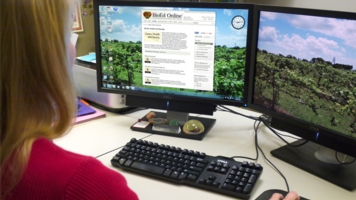
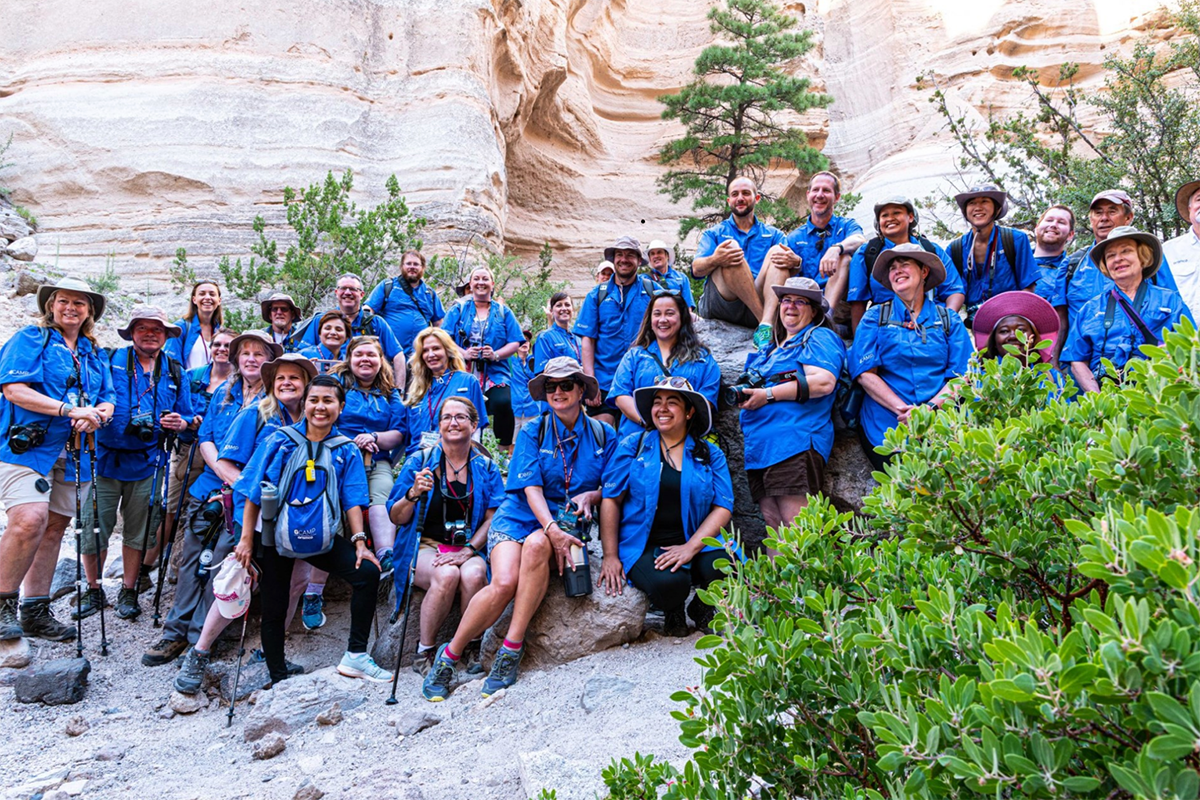
🔬Free Online Workshops in June: Ready-to-Use Ideas for the Classroom
Secure your place in our free professional development workshops for high school and undergraduate biology educators. Join 90-minute sessions and leave with ready-to-use strategies, high-quality resources, and a certificate of participation.
Connecting to Place: Using BiomeViewer to Explore Biomes from Local to Global
📅 Monday, June 1 | 6:00 PM - 7:30 PM ET
Use BioInteractive’s BiomeViewer web tool to examine biomes at local and global scales while engaging students in data analysis, questioning, and real-world connections.
🔗 Register here
The Popped Secret: Modeling Population Genetics with Corn
📅 Thursday, June 4 | 6:00 PM - 7:30 PM ET
Explore how ancient farmers turned teosinte into corn using BioInteractive’s Population Genetics Explorer. A practical approach to teaching selection, mutation, bottlenecks, and gene flow in a meaningful context.
🔗 Register here
What is Life? Start Your Biology Course with Big Ideas and Argumentation
📅 Saturday, June 6 | 1:00 PM - 2:30 PM ET
Use BioInteractive resources to launch scientific argumentation and active learning from day one—then troubleshoot common challenges with fellow educators.
🔗 Register here
Get the Most Out of BioInteractive
📅 Thursday, June 11 | 6:00 PM - 7:30 PM ET
Use the new search and navigation tools, organize resources into custom playlists, stay current with your dashboard, and connect with peers in the Online Community—all in one hands-on session.
🔗 Register here
TEA Science Update
TEA Assessment Will Host Virtual Sessions in May
The TEA Assessment Design, Development, and Quality Division will host four virtual sessions. Based on feedback from the field, we will offer two sessions on the assessment development process and two sessions on scale scoring. Use the links below to sign up for the webinars.
Assessment Development Process:
This session will cover the assessment development process, highlighting when and how educators can participate in the process. It will address three specific areas:
- What happens when there are new TEKS?
- When do teachers get to review the test questions?
- What is standard-setting and why do we do it?
Session 1: Monday, May 11, 2026, 4:00 pm – 5:00 pm CDT. Register now.
Session 2: Monday, May 18, 2026, 4:00 pm – 5:00 pm CDT. Register now.
Scale Scores: Why tests are equal year to year:
This session will cover why scale scores are used and how they maintain validity and reliability for the test. It will address two specific areas:
- How are tests equal from year to year?
- How will HB 8 impact the assessments?
Session 1: Thursday, May 14, 2026, 4:00 pm – 5:00 pm CDT. Register now.
Session 2: Tuesday, May 19, 2026, 4:00 pm – 5:00 pm CDT. Register now.
CAST Call for Proposals

Every year, educators lead sessions at the Conference for the Advancement of Science Teaching (CAST), presented by the Science Teachers Association of Texas (STAT), that help fellow teachers discover new ideas, strategies, and inspiration to bring back to their classrooms.
The Call for Proposals for CAST26, November 12–14 in Houston, is open through May 31.
Four Tips to Strengthen Your Session Proposal
BE CLEAR ABOUT WHO YOUR SESSION IS FOR
Clearly identify target grade levels, subject areas, and your ideal audience. Attendees love to find sessions designed for their classroom, content area, and role.
LEAD WITH PRACTICAL TAKEAWAYS
Show what teachers will actually take back with them. Attendees want to leave with hands-on ideas, usable resources, ready-to-use strategies, or classroom materials they can apply right away.
CONNECT YOUR IDEA TO CURRENT PRACTICE
Show how your session supports what educators are working on right now—whether that's the Revised Science TEKS, SEPs, RTCs, three-dimensional learning, or hands-on instruction.
PROOFREAD BEFORE YOU SUBMIT
A polished proposal shows care and clarity. Review for grammar, spelling, and formatting, and consider asking a colleague to take a quick look before you hit submit.
Science Benchmark Information
KISD MS Science Benchmark Schedule
4th 9-Weeks Benchmark Blueprints
Engineering Design Challenges
Developing an Engineering Design Challenge Grades 6-8
Engineering design challenges can be created for a specific standard or aligned with multiple standards and subject areas. This tool supports educators in developing cross-curricular engineering design challenges anchored in the science standards. Engineering practices are part of the student expectations in the Texas Essential Knowledge and Skills (TEKS) for science. However, an engineering design challenge can incorporate content from multiple subject areas, enabling students to apply it to solve a real-world problem.
End of School Year-Engineering Design Challenges
Engaging students in engineering design challenges at the end of the school year is an excellent way to reinforce scientific and engineering practices. These hands-on activities promote creativity, problem-solving, and collaboration. Below is a curated list of activities suitable for middle and high school students, along with resources to help you implement them:
🏗️ 1. Windy City Tower
-
Objective: Design and build a paper tower that can withstand simulated wind forces.
-
Skills: Structural engineering, understanding of lateral forces, and stability.
-
Resource: STEM Clearinghouse – Windy City TowerTeachEngineering+3clearinghouse.starnetlibraries.org+3Reddit+3
🌊 2. Surviving Storm Surge
-
Objective: Construct a model house on a simulated coastline that can resist flooding.
-
Skills: Environmental engineering, hydrodynamics, and material selection.
-
Resource: STEM Clearinghouse – Surviving Storm Surgeclearinghouse.starnetlibraries.org
🏗️ 3. Strongest Shapes
-
Objective: Use index cards to build a bridge employing a single geometric shape that supports a toy car.
-
Skills: Geometry, structural analysis, and design optimization.
-
Resource: STEM Clearinghouse – Strongest ShapesInstructables+6clearinghouse.starnetlibraries.org+6Lumiere Education+6
🌞 4. Pizza Box Solar Oven
-
Objective: Create a solar oven using a pizza box to understand solar energy and heat transfer.
-
Skills: Thermodynamics, renewable energy concepts, and experimental design.
-
Resource: Lumiere Education – Pizza Box Solar OvenLumiere Education
🥚 5. Egg Drop Challenge
-
Objective: Design a container that protects an egg from breaking when dropped from a height.
-
Skills: Impact force analysis, material science, and iterative testing.
-
Resource: Lumiere Education – Egg Drop ChallengeLumiere Education+1Kid Spark Education+1
🎢 6. Paper Roller Coasters
-
Objective: Construct a roller coaster using paper and tape that allows a marble to travel from start to finish.
-
Skills: Kinetics, potential and kinetic energy, and creative design.
-
Resource: Science Buddies
🎡 7. Ferris Wheel Fun
-
Objective: Build a functioning Ferris wheel model using everyday materials.
-
Skills: Mechanical engineering, rotational motion, and design thinking.
-
Resource: Explore Engineering – Ferris Wheel FunExplore Engineering
🎪 8. STEM Carnival
-
Objective: Organize a carnival where students design and build games that demonstrate STEM principles.
-
Skills: Project-based learning, application of scientific concepts, and community engagement.
-
Resource: STEAM Powered Family – STEM CarnivalKid Spark Education+2Steampowered Family+2STEM in the Middle+2
🧠 9. Mini Design Challenges
-
Objective: Engage students in quick, hands-on engineering challenges that can be completed in under an hour.
-
Skills: Rapid prototyping, critical thinking, and adaptability.
-
Resource: The Tech Interactive – Mini Design ChallengesThe Tech Interactive+1en.wikipedia.org+1
📚 10. TEXAS Mobile STEM LABS
-
Objective: Access a comprehensive collection of short, practical STEM activities suitable for various settings.
-
Skills: Diverse STEM concepts, flexibility in implementation, and resourcefulness.
-
Resource: https://www.learningundefeated.org/project/txcurriculum/
Tips for Implementation:
-
Align with Standards: Ensure each activity aligns with the Texas Essential Knowledge and Skills Standards for Science.
-
Encourage Reflection: Have students document their design process, challenges faced, and solutions developed.
-
Promote Collaboration: Foster teamwork by assigning roles and encouraging peer feedback.
-
Showcase Projects: Organize a showcase or presentation day where students can display their work to peers, parents, or the school community.TeachEngineering
Feel free to select activities that best fit your classroom's needs and time constraints. If you need further assistance or additional resources, don't hesitate to ask!
Previous KISD Secondary Science Newsletters
September 2025: https://secure.smore.com/n/vhcfwp
October 2025: https://secure.smore.com/n/ac5rp
November/December 2025: https://app.smore.com/n/djaqr
January 2026: https://app.smore.com/n/7ftz8
February 2026: https://app.smore.com/n/jy0b1
March/April 2026: https://app.smore.com/n/uzrtk


Hello, I am Sandra Marcussen the District Instructional Specialist for Secondary Science. I'm excited to help you in any way that you need. You can reach me at sandra.marcussen@killeenisd.org, text at 254-371-9692 or call my desk phone at 254-336-0300.