Reframing the Narrative

What You Will Find in this Toolkit: Links to Different Sections
Section One: Reframing the Narrative
Section Two: Inclusion Year-Round
Section Three: Ideas for Any Disability Event
Section Four: Four District-Recognized Disability/Inclusion Events and Ways to Celebrate
- Disability Awareness (Any Time)
- National Bullying Prevention Month and Unity Day (October)
- Inclusive Schools Week (First Week of December)
- Disability History Month (March)
Reframing the Narrative on Disability
One consequence of the exclusion of disabled voices in the past is that our society has developed a rather narrow and negative view of disability. For many years, disabled leaders have worked to reframe the narrative and change how the world views disability.
Read on to discover how you can be a part of the movement to reframe the narrative on disability and support #DisabilityPride by always including disabled voices, adhering to the social model of disability, presuming competence, using current respectful language about disability and implementing neurodiversity affirming practices.
Start Here: Tips for Using the Toolkit
Nothing About Us Without Us: Including Disabled Voices
A mantra for self-advocacy in the disability community is: Nothing About Us Without Us! That means that people with disabilities deserve a voice in plans and policies that are created to serve people with disabilities. It means that every disabled person has the right to be involved in decisions about their own lives.
What does that look like in our schools and our communities?
- A good way to start is by including students with disabilities in their IEP meetings so they can give input on decisions about goals, services and placement.
- Invite a speaker with a disability to your classroom or school assembly for events, especially those centered on disability celebration, awareness and inclusion.
- Make sure that people with disabilities are always included in "the room where it happens" when decisions are made about policies and services.
Check out the following videos to learn morel
Leah Goes to School
This video tells the story of Lea, a girl with Down syndrome who wants to be included at school. Many students put on a separate "special" path in school wind up on a not-so-special path for their entire lives, a path that leads nowhere. Lea uses her voice to say that she doesn't want to be "special." She just wants to be Lea. #IncludeUsFromTheStart #SelfAdvocacy
Garrett Shows I'm in Charge
This short film tells the story of Garrett, a teenager with disabilities who is included in school. Garrett also runs his IEP meetings, creating buy-in from the entire team about his goals and his future. #TheRoomWhereItHappens #SelfAdvocacy
Liz Weintraub Explains the Meaning of Nothing About Us Without Us
Tuesdays with Liz is a video series that highlights current issues in disability policy. It is hosted by Liz Weintraub, Senior Advocacy Specialist at the Association of University Centers on Disability (AUCD) and a well known self-advocate in the disability community. Listen as Liz shares what Nothing About Us Without Us means to disabled people. #SelfAdvocacy
No Decision Without Us
This amazing and hilarious advocacy video shows what it means to include people with disabilities in decisions, and the result is a better world for all! #NothingAboutUsWithoutUs
Social vs. Medical Model of Disability
Historically, disabilities were seen as "less than" rather than as a natural part of human diversity. The medical model of disability approaches people with disabilities as "the problem" and tries to "fix" their disabilities so that they can function in a world not built for them.
While medical interventions and supports remain important for many people with disabilities, the social model of disability looks at barriers in society as the problems that require solutions, rather than placing the responsibility on the disabled. People are encouraged to be their authentic selves, and society needs to change to provide accommodations, accessibility, equity and inclusion for disabled people.
The video below provides a good explanation of the social and medical models of disability.
Presume Competence
Rather than assuming that a disabled person needs help, #PresumeCompetence instead. Allow disabled people the space to fail or succeed on their own.
Sometimes, it can be difficult to tell if a person with a disability does need help with something that is inaccessible. That's okay. If you feel the urge to help, just ask. And then, be prepared to accept that the answer might be, "No."
Presuming competence is a great way to be an ally to people with disabilities. Allow them the dignity of self-reliance and autonomy. At the same time, be ready to offer support if it is requested or if you would offer the same help to a nondisabled person in the same situation.
Empathy (understanding what the other person is feeling) rather than sympathy (feeling sorry for someone else) is the best guide to navigating any uncertainty.
Check out the video below to learn more!
Dr. Shelley Moore: Presuming Competence
Teacher and inclusion advocate Dr. Shelley Moore explains the importance of presuming competence in this funny and insightful video, which is part of her 5 Moore Minutes series. #WeAllNeedLifeSkills
Use Current Respectful Language About Disability
Purposefully and regularly modeling respectful language about disability is one of the most powerful ways to teach students about inclusivity and showing respect to everyone. It also helps people overcome the fear of saying the wrong thing.
- Currently, person-first language is the default for most disabilities (person with Down syndrome, student with ADHD.)
- However, some groups like the autistic, blind and Deaf communities prefer identity-first language (autistic rather than person with autism, blind person rather than person with blindness, Deaf person rather than person with hearing impairment.)
- Some words have been replaced, because they have negative connotations. For example, use Accessible Parking rather than Handicapped Parking.
- Some words have become slurs and should be eliminated from use, such as the R-word. Learn more about the Spread the Word to End the Word campaign.
- Another word that is sometimes used as a slur is Autistic. Students may insult or tease a friend by saying "Your'e so autistic!" or "That's so autistic." They may also explain their own mistakes by saying, "I'm so autistic." Using the positive identity of autistic as a slur or insult is incredibly harmful to the autistic community, as it perpetuates a stereotype of autism as a negative rather than a different way of thinking and experiencing the world.
- Some words have seeped into our vocabulary in such a way that we are not aware they are ableist. Learn more about Ableist Language and Phrases You May Unknowingly Use.
- Euphemisms like "special needs" or "special abilities" are not the preferred language of people with disabilities. Why "special needs" is not helpful.
- In fact, such euphemisms can be hurtful to disabled people. "Special needs" has become a euphemism more harmful than the word it replaces.
In the disability community, the current preferred language is either people with disabilities or disabled people. This toolkit attempts to use both equally to demonstrate respectful language.
Read this article to learn more about Types of Ableist Language and What to Say Instead.
Check out the videos below to learn more about ableist language and using respectful language.
Identity-First Language Preferred by the Deaf and Autistic Communities
This video describes how both the Autistic and Deaf communities prefer identity-first language over person-first language, and why it is important for all of us to listen to them. #NothingAboutUsWithoutUs
Casual Ableist Language
Disability advocate Annie Elainey shares how ableism is commonly used to insult others or to describe something negative. Often, people don't even realize the origin of the words they are using and how the use of those words perpetuates the idea that people with disabilities are lesser. #DifferentNotLess
Not Special Needs
This lighthearted video makes the point that the needs of people with disabilities are not "special," and using the term "special needs" diminishes the idea that we all have the same needs as humans. Disability is a natural part of human diversity, and we should stop saying "special needs," because it is othering to disabled people. #NotSpecialNeeds
The Spread the Word to End the Word campaign was founded in 2009 to end the use of the R-word. In 2019, Spread the Word to End the Word became Spread the Word, with a focus not just on the elimination of a word but on the creation of a new reality: inclusion for all people with intellectual and developmental disabilities.
Spread the Word to End the Word
This video from the Spread the Word campaign beautifully captures why the R-word should be eliminated from our language. #SpreadTheWordToEndTheWord
Promote Spread the Word
Participate in the Spread the Word campaign by creating a banner for students to sign as part of the pledge to use respectful and inclusive language. #InclusionRevolution
Celebrate Spread the Word Day
Spread the Word Day is the first Wednesday of March each year. Celebrate the day with lunchtime activities, like creating an Inclusion Banner or Chalk Art Mural.
For a fun twist, have students paint their pinky nail with nail polish as a symbol of a Pinky Promise to include and support everyone!
Another fun activity is Pin It Forward, where students decorate clothespins with positive messages of inclusion and acceptance. Check out the photo or the examples below for inspiration!
INCLUSION STARTS WITH 'I'!
WE ARE STRONGER TOGETHER
CELEBRATE DIVERSITY EVERY DAY
This guide exists for students of all backgrounds, their parents and educators who need to know:
- Why the R-word is still bad
- What to do if you hear it
- How to handle being called the R-word
- How to discuss the word with your child or students
- And more.
Spread the Word has been at the forefront in helping the R-word disappear.
But they need your help in making sure it doesn’t return full force.
Four Dos & Don'ts of Promoting Autism Acceptance
1. Say YES to Identity-First Language
A debate has been ongoing in the autism community for many years. Should we say autistic or person with autism? Parents and professionals often use person-first language in an attempt to respect the personhood of an autistic individual. However, autistic adults and advocates have a preference for identity-first language, because being autistic is a part of their identity. Moreover, autism is not something that is separate from the person -- it is how their brain works.
Check out the video below to learn more!
Autistic or Person with Autism?
In this video, autistic advocate Kaelynn Partlow explains three reasons why you should use identity-first language. #AutisticAndProud
The article below from the Autistic Self Advocacy Network goes into depth on the importance of Identity-First Language and how to have a respectful discussion with those who might disagree.
2. Say NO to Autism Speaks and Light It Up Blue
Many autistic adults and allies are not fans of Autism Speaks or the Light It Up Blue campaign. The video below explains why autistics say #WearRedInstead.
Wear Red for World Autism Day and Autism Acceptance Month
Autistic advocate Britini D'Angelo explains why you should wear red for World Autism Day and why autistics do not support Autism Speaks or Light It Up Blue. #WearRedInstead
3. Say NO to the Puzzle Piece
Many autistics reject the Puzzle Piece as the symbol for autism or Autism Acceptance Month.
The cartoon below explains some of the reasons why the puzzle piece should be retired from use as a representation of autism.
4. Say YES to the Gold or Rainbow Infinity Symbol
Symbols also evolve over time, so it is important to stay up-to-date on what is the most current and empowering way to represent people with disabilities or specific disabilities.
Neurodiversity Affirming Practices
The concept of neurodiversity is that every brain is unique and that differences in how we think, learn, and experience the world are normal aspects of human nature. No one type of brain is better than another!
Neurodivergent is an umbrella term that describes people whose minds diverge from what is considered “typical,” and in reality, neurotypical brains are just the ones most people are used to.
There are a lot of recognized identities that fall under the neurodivergent umbrella (pictured above), including ADHD, autism, Down syndrome and dyslexia.
Neurodiversity-affirming practices are approaches that recognize and celebrate the natural diversity in how people's brains work.
Instead of trying to "fix" or change how someone thinks or behaves, the goal is to create an environment where every student feels accepted, supported and empowered. These practices change the dynamic so that everyone can thrive as their authentic selves.
Check out the video below to learn more about Neurodiversity!
Neurodiversity Term Definitions (What is Neurodivergent & Neurotypical?)
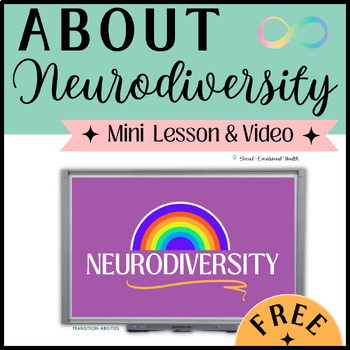
Neurodiversity, Neurodivergent and Neurotypical may be new terms to many folks who are new to learning about autism, ADHD, Down syndrome and other neurotypes under the Neurodivergent umbrella. Teach kids, teenagers or adults (with or without disabilities) how to be neurodiversity-affirming as they learn the difference between these important terms related to Neurodiversity.
Click the link below for the free lesson that goes along with this video!
Neurodiverse Brains
This video was developed to share ideas about neurodiversity in a simple and fun way and is a great resource to teach younger students about neurodiversity and how to support neurodivergent friends and classmates.
The Brain Forest
This book written by a neurodivergent author follows a mother and her son down the path of understanding the different ways brains can be. The story helps celebrate neurodiversity without dismissing its challenges and centers around building a strengths-based society where everyone is valued for what they have to offer.
A kids book about Neurodiversity
This read aloud video of "A kids book about Neurodiversity" is a great way to introduce third to fifth graders to the concept of neurodiversity and how they can make the world a better place for their neurodivergent friends and schoolmates. This book is from the "A kids book about..." series.
What Exactly is Neurodiversity?
This video by ADHD advocate Jessica McCabe explains neurodiversity, the origins of the movement and how ignoring neurodiversity is harmful to neurodivergent people. This video would be great for middle and high school students to learn how to support their peers.
A Parent's Guide to Neurodiversity
Check out the slide deck linked here designed to help parents understand neurodiversity and how to support their neurodivergent child.
Articles about Neurodivergence in School
Check out the articles below for a better understanding of the impacts of typical school settings on neurodivergent students, including information on masking, restraint collapse, ADHD and autistic burnout and school distress.
Resources for Neurodiversity Celebration Week
Neurodiversity Celebration Week is a worldwide initiative that challenges stereotypes and misconceptions about neurological differences. It aims to transform how neurodivergent individuals are perceived and supported by providing schools, universities, organizations and others around the world with the opportunity to recognize the many skills and talents of neurodivergent individuals, while creating more inclusive and equitable cultures that celebrate differences and empower every individual.
Check out the links below for the event website, resources and slide presentations to share!
Neurodiversity PowerPoint Presentations
These two presentations are designed to be shown in classrooms. One is aimed at elementary students, and one is for middle and high school students. #CelebrateNeurodiversity
Neurodivergent Icons
Did you know that two-thirds of the actors portraying the Harry Potter trio are neurodivergent?
Daniel Radcliffe
Emma Watson
Did you know that some of the most successful people in music and sports are neurodivergent?
Originally created by the SEDAC Disability Celebrations Committee, 2021-2022
- Erin Bell, SEDAC Chair
- Jenny Crosby, Committee Chair, Newbury Park High School SEDAC Representative
- Lee Ann Holland, Committee Chair, SEDAC Member At Large, Colina Middle School SEDAC Representative
- Carole Shelton, SEDAC Member At Large
Updated by the SEDAC Inclusion Committee, 2024-2025
- Denise Benic, SEDAC Chair
- Lee Ann Holland, Committee Chair, SEDAC Parliamentarian
- Lana Clark, EARthS SEDAC Representative
- Karen Kyle, SEDAC Member At Large, Weathersfield Elementary SEDAC Representative
- Neptune Mizrahi, Cypress Elementary SEDAC Representative
- Michelle Murphy, Wildwood Elementary SEDAC Representative
- Danielle Vega, Community Member