

The Classroom Connection
August 2025


Questions on the First Day
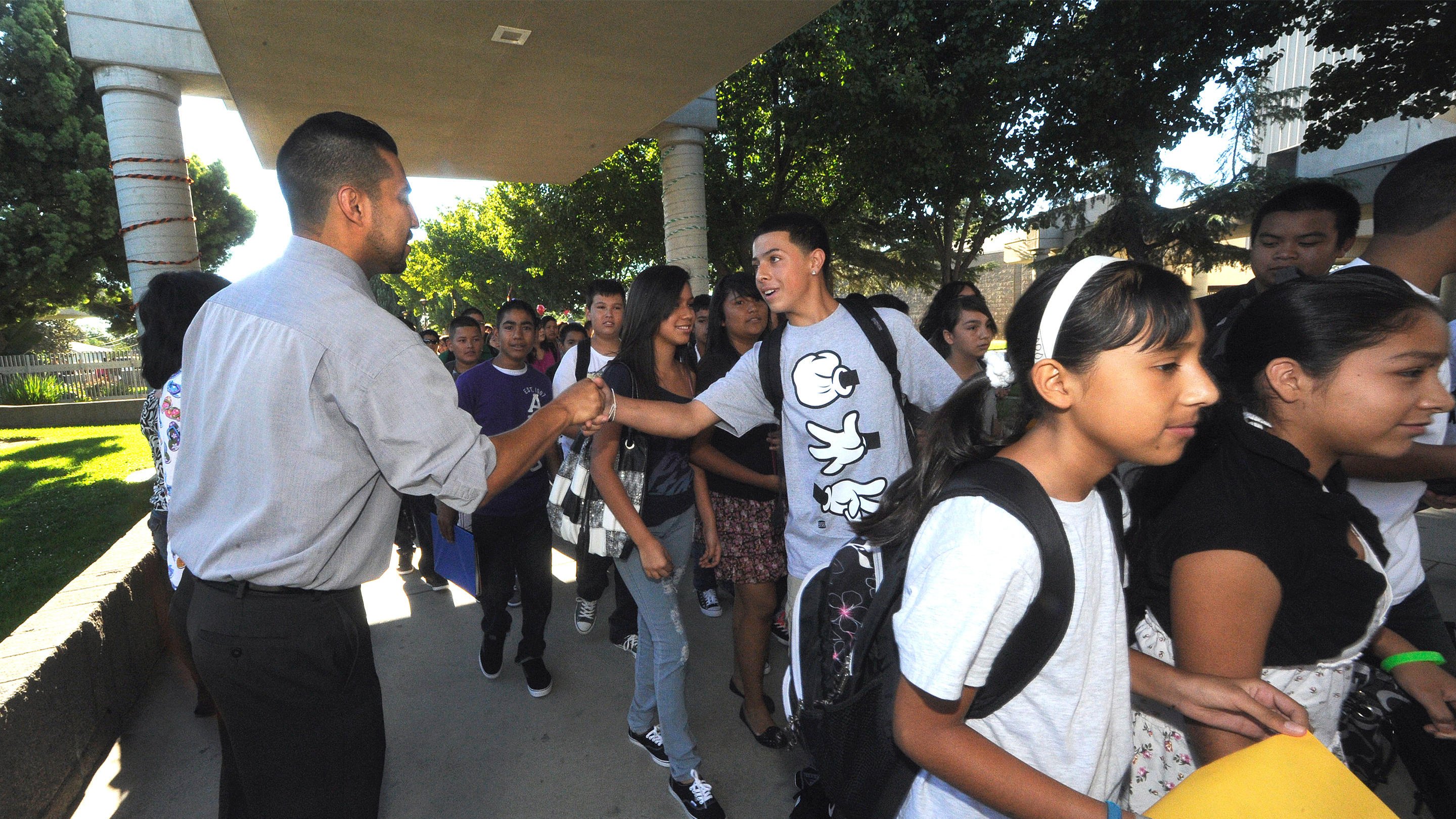
The first day of school is filled with a mixture of excitement, nerves, and optimism for the school year. We set up our classroom environments for learning, but what do students need to know on the first day of school to feel safe and to be successful?
Am I in the right room?
Where am I supposed to sit?
What will I be doing this year?
What are the rules in the classroom?
Who is this teacher as a person?
How will I be graded?
Will the teacher treat me as human being?

What Can You Do on Day 1?
Plan out every minute of what you'll say and do. This isn't about being rigid, but about having a clear roadmap to ensure you cover all essential information, manage transitions smoothly, and minimize dead time on the first day. It helps you feel confident and prepared, projecting an organized and in-charge demeanor to your new students.
Create Seating Charts
Demonstrate your expectations the moment students enter the room. A seating chart allows you to quickly learn names, manage classroom dynamics, and facilitates the distribution of materials. A well-thought-out seating chart can preempt potential behavioral issues and set a focused tone from the moment students enter.
Know What Students Will Do When They Enter the Room
Have a clear, engaging activity ready for students the moment they walk in. This could be a bell-ringer, a warm-up question on the board, a puzzle, a coloring sheet, or a brief survey. This strategy eliminates uncertainty, immediately sets a productive atmosphere, and allows you to handle administrative tasks without losing instructional time or classroom control.
Prioritize Basic Procedures
Explicitly teach and practice essential routines like how to enter/leave the room, sharpen pencils, ask questions, or use the restroom. Don't assume students know these things. Dedicating time on the first day to these fundamental procedures establishes clear expectations and lays the groundwork for a smooth, efficient learning environment throughout the year.
Sell Your Class
Smile and communicate your passion for your students and the content you teach. This is an opportunity to show your personality. Share exciting projects, interesting topics, or real-world connections. Generate enthusiasm and buy-in, inspiring students to be engaged and excited to come back to your classroom.



Seating Arrangements

Seating Chart Templates
Make classroom arrangement a piece of cake with these seating chart templates from Canva!

Seating Charts in High School
Assigned seating works in all classrooms. Read the article below about the benefit in high school classrooms.


Crystal clear behavior expectations are the backbone of a successful classroom management plan. Clear behavior expectations create boundaries for students. Everything you ask your students to do in the classroom requires clear expectations--before the activity, during the activity, and after the activity. Here are some tips to creating clear expectations in your classroom.
Be Clear, Simple, and Specific
Leave no room for misinterpretation. Instead of vague statements like "be good," tell students exactly what "good" looks like in your classroom.
Focus on what students should do rather than what they shouldn't.
Teach Students How to Succeed
Break down complex behaviors into smaller steps. Show them what the expectation looks like. Provide the tools and strategies they need to master the desired behaviors.
Introduce, Model, Practice, and Review Expectations
Use a structured approach to ensure understanding. Introduce each expectation, explaining its purpose. Then, model the desired behavior, showing students exactly what it looks like. Follow this with opportunities for students to practice the expectation, providing feedback. Finally, review expectations regularly, especially in the first few weeks, to reinforce learning and address any lingering questions.
Use Visuals
Post anchor charts, create hand signals for common requests, or use pictures to illustrate routines. Visual cues serve as constant reminders and are especially helpful for younger students or those who are visual learners, making expectations more accessible and memorable.
Use Specific Praise
When students meet an expectation, use specific praise to reinforce the behavior. Instead of a general "Good job," say, "I noticed you quietly got started on your bell-ringer as soon as you entered the room; that shows great readiness for learning!" Specific praise highlights the exact behavior you want to see repeated and helps students understand precisely what they did well.




Planting Seeds
The Office of Professional Learning’s Planting Seeds for Successful Classroom Management is a two-day professional learning experience designed to deepen teachers’ understanding of the 7 Keys to Effective Classroom Management. Throughout the session, participants will explore practical strategies to help them establish clear structure and foster a positive, student-centered classroom culture.
The first sessions of the year begin in August! Attendance requires campus approval, so please reach out to your admin to register. See the upcoming sessions below:
Elementary
Day 1 - September 30
Day 2 - October 15
Secondary
Day 1 - October 7
Day 2 - October 21


Sarah Jaramillo
Instructional Coach
(210) 397-7934


Jacob Tijerina
Instructional Coach
(210) 397-7927