

DEIAA Newsletter
ACNL |Q1 2026 Newsletter
Goal Setting, Mentoring, and Representation
Welcome to the Q1 2026 newsletter edition of the Association of California Nurse Leaders Diversity, Equity, Inclusion, Accessibility and Anti-Racism (DEIAA) Committee Newsletter.
The DEIAA Committee Members:
Anitra Williams
Austin Nation – Board Liaison
Beth Eichenberger
Christine M. Oldini
Gena Woods
Hannah Fox
Hirut Truneh
Jessica Laughlin
Joy Kiat-Floro
Karen Mitchell-Keels
Kimako Desvignes
Kimberly Long
Lulette Infante
Make’da Traynum
Mariah Gillam - ACNL Support Staff
Nicole Barnett – Chair
Sarah Adbolcader
Sunitha Dharman
Tia Newell – Co-Chair
Trarina Jerome Harris
Vanessa Martinez
Equity begins with awareness, grows through action, and thrives through accountability. Together, we can continue building a culture where both our patients and our teams feel seen, heard, and valued.
ACNL Annual Nursing Leadership Conference
Thank You for Attending the 2026 ACNL Annual Nursing Leadership Conference
The ACNL Board of Directors and Annual Program Committee extend our sincere gratitude to everyone who joined us for the 2026 Annual Nursing Leadership Conference. Your participation helped make this year’s event a meaningful and memorable experience for California’s nursing leadership community.
We hope you enjoyed the dynamic program featuring premier presenters who shared cutting-edge insights on topics critical to today’s health care leaders. Your engagement in the sessions, discussions, and networking opportunities is what makes this conference such a valuable gathering each year.
The ACNL Nursing Leadership Conference continues to be a special time for connecting with colleagues, rekindling friendships, building new professional relationships, and celebrating the incredible work of nurse leaders across California. For many of our members, this is the one opportunity each year to come together in person, and we are grateful to share that space with you.
We would also like to extend a warm thank you to our first-time attendees and new members for joining us. We hope you felt welcomed and left the conference feeling refreshed, renewed, and more connected to the ACNL community.
Thank you again for being part of the 2026 ACNL Annual Nursing Leadership Conference. We look forward to continuing to support and celebrate nursing leadership together.

Award Luncheon & Ceremony
Toby Marsh and the Kaiser Nursing Leadership Team
ACNL 2026 DEIAA Award Recipient Dr. Anna Maria Valdez
Nominated by Sandy Phan DNP, RN, NPDA-BC, EBP-C
"I had the honor of attending Dr. Anna Maria Valdez’s keynote presentation at the 2023 ACNL conference, where she courageously acknowledged the denial of racism in nursing. Her ability to authentically engage the audience through personal storytelling left a lasting impression on me. Since that moment, I have followed her work closely and remain profoundly inspired by her leadership. Dr. Valdez has developed frameworks and tools that I have since integrated into my practice to advance equity in nursing.
Dr. Anna Maria Valdez is a nationally recognized scholar, educator, editor, consultant, and change agent whose work has significantly advanced diversity, equity, inclusion, accessibility, and antiracism (DEIAA) in nursing education, practice, research, and policy. As founder and CEO of AVA Consulting Group, Dr. Valdez has provided DEIAA training to over 20 healthcare and academic institutions, including Stanford, UCSF, and the Accreditation Commission for Education in Nursing. Her original 4As Model—Awareness, Assessment, Action, and Accountability—offers a framework for operationalizing antiracism and health equity.
In her academic role at Sonoma State University, Dr. Valdez teaches a course on health promotion for racially diverse populations and leads curricular and structural changes to center equity in nursing education. Nationally, her leadership has redefined inclusive publishing as Editor-in-Chief for two nursing peer-reviewed journals. She has revised author guidelines to require inclusive language, diversified editorial boards, and implemented equity-minded editorial policies, resulting in increased engagement, submissions, and impact factors. Her guest editorials, including “Words Matter: Labeling, Bias and Stigma in Nursing,” have shaped critical discourse on bias in nursing literature.
Dr. Valdez has served in numerous national DEIAA leadership roles. She is a commissioner for the National Commission to Address Racism in Nursing and co-author of its foundational report. She co-developed the Allyship in Nursing Tool and serves as a moderator for the ANA Project ECHO series on racism in nursing. As Chair of the Emergency Nurses Association DEI Committee, she led organization-wide DEI training and developed a process for equity review of all published materials. She also serves on the AACN DEI Leadership Network and advises an organization that advocates for the global disability community.
Her scholarship on health equity, racism, disability inclusion, and bias are widely published in distinguished peer-review scholarly journals. She is co-author of the landmark article on disability and accommodation use in U.S. BSN programs and has been an invited speaker at over 40 national and international conferences. She is also interviewed in the film Everybody’s Work: Healing What Heals Us All for her leadership in addressing racism in nursing.
Dr. Valdez has received the Distinguished Service in Advancing Health Equity Award from DNPs of Color and the DEI Initiatives of the Year Award from the Emergency Nurses Association. Through her teaching, consulting, publishing, and mentorship, she has transformed systems and empowered the next generation of nurse leaders to advance justice and equity in nursing. Dr. Valdez’s contributions are systemic, sustained, and visionary. Her leadership continues to shape a more inclusive, just, and equitable nursing profession".

Goal Setting


Mentoring
"My participation in the mentorship program was transformational for me as a mentor in ways that has made me an even more effective leader. My mentee posed deep and thoughtful questions during our discussions that served as guideposts for learning and development. When two strong and deeply committed leaders come together the experience can lead to profound insights that enrich the entire profession".
Dr. Nicole M. Barnett, DHSc, MBA, RN, NEA-BC
Reimagining Mentorship: Building Anti-Racist, Trauma-Informed Pathways for Emerging Nurse Leaders of Color
Prepared for the ACNL Diversity, Equity, Inclusion, Accessibility and Anti-Racism Committee
By Dr. Sharon Goldfarb, DNP, APRN, FNP-BC
Nursing is the most trusted profession in the United States, yet trust alone cannot reconcile the inequities embedded within our systems. Despite progress in diversifying the workforce, nurses of color continue to face structural barriers in admission, hiring, promotion, and leadership pathways. These inequities are not the result of individual shortcomings—they are produced by structural racism, implicit bias, and exclusionary norms that shape who is recognized, supported, and elevated within the profession.
There remains a profound gap in published guidance on how to mentor emerging nurse leaders of color using frameworks that center racial equity, psychological safety, trauma-informed practice, and transformative leadership. This article fills that gap and aligns with ACNL’s DEI mission to empower the next generation of nurse leaders through intentional, equity-driven mentorship and sponsorship.
State of Mentorship
Traditional mentorship models in nursing often assume a race-neutral approach. In reality, race-neutral frameworks usually reinforce inequities because they fail to acknowledge the structural forces influencing access, visibility, evaluations, and leadership opportunities. Nurses of color frequently experience:
• Structural racism in admissions, hiring, pay, and promotion
• Implicit bias affecting evaluation of competence and leadership readiness
• Microaggressions and racial battle fatigue
• Lack of representation in leadership roles
• Isolation within predominantly white institutions
Without directly addressing these realities, mentorship cannot meaningfully advance equity.
Why Mentorship Matters
Mentorship is one of the strongest predictors of career advancement, retention, and leadership success. For nurses of color, mentorship is a corrective structural intervention—not an optional support. Research demonstrates that formal mentorship and sponsorship increase:
• Access to leadership roles
• Representation on committees and boards
• Opportunities for publication and conference visibility
• Retention and job satisfaction
• Confidence and leadership identity formation
However, mentorship must be paired with sponsorship—active advocacy and opportunity-sharing—to truly disrupt inequity.
Anti-Racist Mentorship Framework
An anti-racist, trauma-informed mentorship model shifts from advising individual mentees to transforming structural barriers. Key elements include:
• Naming and addressing racism and bias directly
• Understanding racial trauma and healing-centered engagement
• Creating psychological safety for authenticity and vulnerability
• Using mentor power and positionality to redistribute opportunities
• Supporting mentees in navigating and transforming systems
• Centering cultural humility, community wisdom, and leadership identity formation
This framework positions mentors as partners in structural change, not just professional development.
ACNL Framework Components
The ACNL DEI model of mentorship includes:
1. Anti-Racist Foundation
Mentors acknowledge racism as a structural force and commit to continuous anti-racist learning.
2. Trauma-Informed, Healing-Centered Engagement
Mentors validate lived experiences, build trust, and support racialized stress responses.
3. Sponsorship
Beyond advice, mentors open doors, share influence, and amplify mentee visibility.
4. Leadership Identity Formation
Mentors support mentees in naming strengths, building professional narratives, and embracing culturally grounded leadership.
5. Community Over Isolation
Cohort-based mentorship builds belonging, reduces isolation, and enhances leadership endurance.
Barriers
Common barriers include:
• Lack of institutional support or compensation for DEI-related mentoring
• Over-reliance on volunteer labor by leaders of color
• Limited access to protected time for mentoring and leadership development
• Bias in evaluations and leadership selection processes
• Insufficient data collection on equity metrics
Without addressing these barriers, mentorship programs cannot achieve their full impact.
Institutional Responsibilities
Institutions—including academic programs, health systems, and professional organizations—must ensure:
• Formalized, funded mentorship and sponsorship programs
• Compensation or workload credit for mentors
• Annual training in anti-racism, bias mitigation, and trauma-informed practice
• Transparent leadership pathways
• Equity metrics for hiring, promotion, and leadership representation
• Accountability structures tied to organizational goals
For ACNL and partner organizations:
Conclusion1. Establish statewide mentorship and sponsorship programs for nurses of color.
2. Provide structured leadership curricula grounded in racial equity.
3. Collect annual DEI workforce data and use it to drive accountability.
4. Offer leadership coaching and protected time for emerging leaders.
5. Support affinity groups and peer mentorship circles.
6. Recognize and compensate DEI labor within performance expectations.
7. Integrate equity competencies into leadership evaluations.
Mentorship is not neutral—it either reinforces existing inequities or actively dismantles them. To prepare the next generation of nurse leaders, ACNL must champion intentional, anti-racist, trauma-informed mentorship and sponsorship as essential leadership practices. Through this work, we advance not only individual careers but the integrity, diversity, and impact of the entire nursing profession.
References (APA 7)
American Association of Colleges of Nursing. (2021). The future of nursing workforce diversity.
National Academies of Sciences, Engineering, and Medicine. (2021). The Future of Nursing 2020–2030: Charting a Path to Achieve Health Equity.
National Council of State Boards of Nursing. (2020). Nursing regulatory guidelines and diversity challenges.
DNPs of Color. (2024). Leadership and equity frameworks.
Racial Equity Institute. (2023). Understanding structural racism.
Roberts, L. M., & Mahasaranond, A. (2021). Racial trauma in the workplace. Harvard Business Review.
Smith, L., & Roberts, K. (2022). Anti-racist leadership in nursing. Journal of Nursing Leadership, 45(2), 67–78.
Williams, D. R., & Cooper, L. (2020). COVID-19 and racial inequities in health. JAMA, 323(24), 2478–2480.
Carter, R. T. (2007). Racism and psychological and emotional injury. The Counseling Psychologist, 35(1), 13–105.
Jones, C. P. (2000). Levels of racism: A theoretical framework. American Journal of Public Health, 90(8), 1212–1215.

Representation
Representation in Nursing Leadership: From Visibility to Accountability
Prepared for the ACNL Diversity, Equity, Inclusion, Accessibility and Anti-Racism Committee
By Tia Newell, MSN, BSN, RN, NEA-BC
Representation in nursing leadership is often framed as a moral imperative. For nurse leaders, however, it is also a strategic, operational, and clinical priority. Who occupies decision-making spaces influences workforce culture, policy development, care delivery models, and ultimately patient outcomes.
National nursing leader Katie Boston-Leary has consistently emphasized that diversity and representation are not symbolic initiatives but structural necessities for the future of the profession. In examining the trajectory of nursing toward 2030, Boston-Leary (2022) argues that workforce sustainability, health equity, and innovation are deeply interconnected — and that nursing’s leadership pipeline must evolve to reflect the communities it serves.
Her message resonated strongly at this year’s ACNL Nursing Conference, where she served as a keynote speaker and delivered a compelling presentation titled Inclusive Excellence in Nursing Leadership: Driving Health Equity. In that address, she set the stage, in her words, for nurse leaders to leave equipped to serve as catalysts for systemic transformation. She challenged attendees to move beyond performative diversity efforts and instead embed inclusive excellence into governance, workforce development, and operational strategy. Her call to action underscored that representation is not an isolated DEI initiative it is leadership competency and responsibility.
Representation also impacts structural reform. Boston-Leary and Yakusheva (2024) contend that nursing reimbursement reform and broader policy redesign are necessary to address systemic underinvestment in nursing practice. Without diverse voices in executive and policy spaces, structural inequities in funding, recognition, and advancement may persist. Leadership representation therefore extends beyond internal workforce equity; it shapes the financial and policy architecture that supports nursing practice.
In addition, Boston-Leary, Alexander, and Davis (2024) propose that belonging and psychological safety are foundational professional needs. Using Maslow’s hierarchy as a framework for inclusion, they argue that nurses cannot fully thrive or advance in environments where safety and belonging are compromised. Representation in leadership signals to the workforce that advancement is possible and that diverse perspectives are valued at the highest levels.
Boston-Leary (2025) reminds the profession that “caring is personal.” Representation in leadership carries similar weight. It is personal to those who have historically navigated invisible barriers. It is personal to patients who seek culturally responsive care. And it is personal to emerging leaders who look upward and ask, “Is there a place for me here?”
For ACNL nurse leaders, this calls for measurable action. We must ask:
- Does our leadership team reflect the communities we serve?
- Are advancement pathways transparent and equitable?
- Who is consistently sponsored — and who is not?
- Are we measuring representation with the same rigor as quality and finance?
Representation is not about optics. It is about redesigning systems, so opportunity is equitably distributed and excellence is accessible to all. It requires transparent promotion criteria, structured succession planning, intentional sponsorship, and integration of equity metrics into strategic dashboards.
The work ahead is clear: move beyond dialogue, embed accountability, and design systems where belonging is foundational, advancement is transparent, and representation is measurable.
When leadership reflects both the profession and the population, patient care, workforce engagement, and organizational performance all improve.
The link below shares more about Katie Boston-Leary, PhD, MBA, RN, NEA-BC, FADLN, FAONL and how she is a leader committed to Health Equity.
Culture Closet
Author Tia Newell, MSN, BSN, RN, NEA-BC
From Intention to Action: Advancing Health Equity Through the Culture Closet
In a diverse community hospital setting, patients often arrive unexpectedly without the personal or spiritual items that help them feel grounded, respected, and seen. For many individuals, cultural identity and spiritual practice are not secondary concerns; they are essential components of dignity, healing, and trust. Yet traditional hospital workflows are not always designed to recognize or respond to these needs.
Recognizing this gap in culturally responsive care, Tia Newell, Associate Chief Nurse Executive at Kaiser Permanente Richmond, partnered with Kareen Turner, Care Experience Leader, and Nicole Barnett, then Chief Nurse Executive and Chief Operating Officer, to create the Culture Closet, a dedicated resource offering culturally and spiritually meaningful items to support patients during their hospital stay. Barnett currently serves as President and CEO of Planned Parenthood. What began as a response to a single patient’s experience quickly evolved into a broader equity-focused initiative.
The turning point occurred when a medically stable patient declined to complete a mobility assessment prior to discharge. Upon deeper conversation, the care team learned that her hesitation was rooted in concerns about her hair and personal presentation, an important aspect of her cultural identity. After providing culturally appropriate self-care items, the patient felt comfortable proceeding with care and was discharged from the hospital. This moment reframed what had been labeled “noncompliance” into an opportunity for cultural humility.
The Culture Closet was developed to proactively address these types of unmet needs. Guided by hospital demographic data, frontline nurse input, and feedback from the Patient Advisory Council, the committee curated an inventory of culturally relevant items including spiritual texts, prayer materials, and culturally specific personal care products. The initiative was embedded into shared governance structures, ensuring frontline ownership and sustainability.
This project reflects a fundamental principle of health equity: equitable care is not achieved through identical treatment, but through responsive, individualized support. By integrating culturally inclusive resources into everyday practice, the Culture Closet strengthens patient engagement, enhances the care experience, and supports equitable outcomes.
Importantly, the Culture Closet also reinforces a broader organizational commitment to diversity, equity, and inclusion. It empowers nurses and interprofessional teams to approach care through a culturally humble lens asking, “What matters to this patient?” rather than assuming what should matter. This subtle shift transforms the patient’s experience and builds trust within the communities we serve.
The Culture Closet is more than a physical space; it is a visible signal that dignity, culture, and spirituality are recognized as essential components of whole-person care. As healthcare organizations continue to examine structural barriers and disparities, small, intentional interventions such as this demonstrate how nurse-led innovation can translate DEI principles into meaningful action.
Health equity becomes real when cultural humility is embedded into everyday practice. The Culture Closet is one example of how we can move from awareness to implementation, ensuring that every patient feels respected, supported, and valued.
Leadership Reflection
Reflection Prompt:
What is one structural or workflow change you or your organization could implement this quarter to better support culturally responsive care?
Consider:
- Where might unmet cultural or spiritual needs be creating unintended barriers to care in your organization?
- Does your team/organization interpret patient behavior through a lens of curiosity and humility or assumption?
- What systems or workflows may unintentionally overlook dignity-based needs?
- How are you and your organization empowering frontline teams to identify and solve equity gaps?

Scan QR Code to Culture Closet Tool Kit

ACNL Annual Conference Poster Presentation
Dr. Nicole Barnett, DHSc, MBA, RN, NEA-BC
Tia Newell, MSN, BSN, RN, NEA-BC
Dr. Toby Marsh DNP, RN, FACHE, NEA-BC
Why Nurse Leaders Must See Reading as a Public-Health and DEI Imperative
By Dr. Sharon Goldfarb, DNP, APRN, FNP-BC, and Dr. Nicole Barnett, DHSC, MBA, RN, DHSc
Published by the ACNL Diversity, Equity, Inclusion, Accessibility and Anti-Racism Committee, 2025
We often think of “health” in terms of diet, exercise, medical care, safe housing, and environmental exposures. But there is another, often-overlooked and deeply inequitable determinant of health: literacy. The capacity to read, understand, analyze, and use information is fundamental to navigating the health system, making informed decisions, and advocating for one’s own care.
For nurse leaders committed to equity, justice, and community well‑being, promoting reading and health literacy isn’t peripheral, it is central to advancing the ultimate goal, which is health equity.
The Evidence: Literacy, Health Outcomes & Disparities
- Healthy People 2030 recognizes health literacy as a social determinant of health. Low health literacy is associated with poorer health outcomes, higher rates of hospitalization, less preventive care utilization, poorer chronic‑disease management, medication errors, and higher mortality.
- A large body of research shows individuals with low literacy have worse general health status, more disease burden, and lower use of preventive services.
- Recent research confirms a social gradient: literacy and health literacy are patterned by income, education, race/ethnicity, and region.
- Low health literacy mediates the relationship between social disadvantage and health disparities, disproportionately impacting communities already marginalized by poverty and systemic racism.
In short: when reading ability and access to meaningful literacy are inequitable, so are health outcomes.
Why This Matters for DEI and Health Justice
1. Literacy as an Equity Lever
Because literacy is shaped by social determinants (education access, economic opportunity, systemic racism), disparities in reading and literacy reflect — and reinforce — broader structural inequities. Working to improve literacy is working to dismantle a root cause of health inequity.
2. Organizational Responsibility (“Organizational Health Literacy”)
Health literacy isn’t just an individual characteristic — it’s also about whether organizations provide information in ways people can understand and use. Nurse leaders, educators, clinic directors, and public health practitioners thus have a direct role in shaping whether their institutions are “health‑literate organizations.”
3. Empowerment and Agency
Improving reading and health-literacy capacities empowers individuals, especially from marginalized communities, to understand their conditions, ask questions, make informed decisions, and advocate for themselves and their families. That empowerment is at the heart of social justice and patient-centered care.
What Nurse Leaders and Health‑Equity Advocates Can Do — Strategies for Action
Clinical & Institutional
• Adopt plain-language and culturally appropriate patient education materials.
• Train staff in effective communication and teach-back methods to ensure comprehension.
• Embed literacy assessment and support in workflows and refer to community literacy resources.
Community & Public Health
• Launch “literacy as health” campaigns emphasizing reading as a pathway to better health.
• Partner with community organizations, libraries, schools, and faith-based groups to distribute free, accessible reading materials.
• Support early childhood and family literacy programs, recognizing that literacy habits start early.
Advocacy & Policy
• Advocate for funding for public libraries, school librarians, literacy programs, and community book-access initiatives.
• Push for health system accountability and organizational health‑literacy standards.
• Include literacy metrics in health‑equity assessments and reporting.
Academic & Nursing Education
• Integrate narrative medicine, reading, and literacy awareness into nursing curricula.
• Teach future nurses how to communicate clearly, assess comprehension, and support patients’ health‑literacy needs.
• Encourage service-learning initiatives linking nursing students with community literacy programs.
A Vision: Literacy as a Foundation of Health & Equity
Imagine a health system where every patient, regardless of race, income, language, or education, can understand their health needs, make informed decisions, and access trustworthy information. Imagine communities where reading is normalized across generations, where libraries, clinics, and schools work together, where stories reflect the full richness of our populations, and where knowledge is a shared resource, not a privilege.
For nurse leaders committed to DEI, especially through the lens of access, justice, and health equity, promoting literacy is not optional. It is fundamental.
By centering reading and health‑literacy work in our organizations, curricula, and community partnerships, we can move beyond treating illness, toward building long‑term wellness, agency, empowerment, and social justice.
As leaders in nursing, public health, and community advocacy, we have both the responsibility and the power to make “literacy = health” real.
Call to Action: What ACNL Leaders Can Do This Year
1. Assess your organization’s literacy climate. Are forms and discharge instructions written at an 8th-grade level or below?
2. Train teams in plain language and teach-back. Every nurse is an educator; every interaction is literacy practice.
3. Host a “Read for Health” event in partnership with local schools or libraries, including bilingual books and wellness resources.
4. Sponsor diverse authors, especially Black, Brown, Indigenous, LGBTQ+, and disabled writers whose narratives build empathy.
5. Report literacy as an equity metric. Make literacy part of your DEI dashboard and quality-improvement goals.
Author Bios
Dr. Sharon Goldfarb, DNP, APRN, FNP-BC is a nurse practitioner, educator, and public health advocate specializing in DEI, workforce equity, and health justice. She serves on the ACNL DEI Committee and the Board of DNPs of Color.
Nicole Barnett offers a comprehensive background in biomedical research, education, and nursing. She completed her nursing training at Contra Costa College in 1994 and is an alumna of Oberlin College in Oberlin, Ohio, and California State University Dominguez Hills, where she earned her BSN and MBA. In August 2005, she earned her doctorate in health sciences from the Nova Southeastern University College of Allied Health and Nursing. Dr. Barnett is also a state certified public health nurse (PHN) and in 2012 achieved her certification as a Clinical Nurse Leader from the American Association of Colleges of Nursing (AACN).
Interview with a Leadership Legend Shirley Steinback Hawthrone
Submitted by: Dr. Nicole Barnett
ACNL DEI Committee Member
On October 1, 2022, I had the unique pleasure of interviewing Shirley Steinback Hawthrone. I worked on her team when she was the Medical Group Administrator for the Kaiser Permanente East Bay service area, and I remained on her team until her retirement in 2016. When I think about leaders that not only have a proven track record of performance, but a clear dedication to the profession of nursing and to the up lifting of others, few names rival hers.
Tell us a bit about your background:
I was born and raised in Fresno CA. My father was a pastor, and my mother was a stay-at-home Mom. I am the only girl of five children, and we lived in the Black community of Fresno at the time. My growing up was overall positive. We had our church family and our neighborhood behind us. We played outside and had a sense of community. Being raised in the church prepared me for leadership in many ways. I learned to speak in front of a group, work as a team such as singing in the choir or serving our community. It gave me a sense of self and built my courage early on.
How did you know that you wanted to enter the nursing profession?
I attended San Jose State University with the support of an equal opportunity program. While I was thankful for the financial support to attend college, it was quite a culture shock from the community that I grew up with in Fresno. My inspiration to study the healing profession really came from my father. Being a pastor, he would visit the sick and shut in and I would often accompany him. I would see him minister through his presence, his listening and his prayers. I saw the impact that it had on people and on their families and I wanted to find a way to do the same for people that were suffering due to illness. When he later became ill due to stomach cancer, I saw my mother care for him and so I learned so much about healing presence from her as well. Even as a young girl, I learned the power of presence, holding a hand, sharing a word of encouragement. It helped me to learn the foundations of how to take care of others. Later, when I was old enough, I started to volunteer at the local hospital. We were called “Candy Stripers” back them because of the striped pinafore that we wore as our uniform. It helped me to become comfortable in a hospital environment and apply everything that I had learned about healing to the patients that I served. That experience just sealed it for me, I knew that I wanted to be a nurse, and I also knew that my path was already divinely chosen for me and I felt comfortable walking into it.
Did you experience any discrimination while in nursing school at San Jose State?
Well, first of all, there were so few Blacks on campus, especially in nursing, that I could count them on one hand. One day in clinical, I was assigned to AM care for a patient. Back then, we still did full AM care, with a head-to-toe bed bath, oral care and all. I went in with my instructor, introduced myself to the patient, explained that I would be providing AM care and introduced my instructor. The patient then objected to having me care for her and called me a name I prefer not to repeat. At the time, I heard a lot on the news about racism and protests, but I had been raised in a safe, racially congruent, supportive community. This was the first time that I was directly confronted with hateful speech fueled by racism. So, I said to myself that I am going to step out and speak with my instructor. When I asked her about the incident she calmly advised, “This is your patient and you are going to take care of her. This is not the last time that you will encounter people like this woman.” My instructor was a military trained nurse who was very disciplined. Being raised in a disciplined household, her teaching style was familiar and encouraging for me. But I did not expect this response, however, though I appreciate it now, because she was right. It is in these moments that we have an opportunity to choose how we respond, because these are opportunities not to just change minds but to change hearts. I hope to change hearts in everything that I do. And my instructor was correct - there would be many more times when I would encounter others like this woman, as patients, as co-workers, and as leaders in my career.
Your nursing career transects the height of the Civil Rights Movement. Tell us about how events on the national stage impacted your early years as a nurse.
I was in high school when MLK was assassinated, and our teachers did their best to help us process our grief, our anger and our confusion. Just a few months later, we learned of the assassination of Robert F. Kennedy. While the deaths of Medgar Evers, JFK and Malcom X happened when I was younger, these recent assassinations impacted me deeply. By the time that I entered college at San Jose State University, I found myself interacting with other students that were politically aware, impacted by national events and wanting to support positive change within our areas of influence. In fact, the Black Panthers were active on our campus and on other college campuses as well. It was refreshing an enlightening to partake in their socio-political educational program. Many of us even started changing our hair and our style of dress on campus to signify our solidarity with the movement. It was in my college years that I first wore an Afro and fatigues! The more I learned about the plight of the Black community from the Black Panthers, I knew that the larger world was not the same as the protective Black community that I had grown up with in Fresno. I was also in college when John Carlos and Tommie Evans ran in the Olympics and raised the Black Power fist! All of this fueled my determination to learn and to explore my own militancy. We were young, and we wanted change! Nursing is a perfect platform for change, because health is so closely tied to human rights. It all came together for me in college and was aligned with how I was raised, and what I believed in.
What advice would you offer for current nursing leaders, especially leaders of color?
Be confident in who you are, and in your excellent competence as a registered nurse. Hold on to your strength of character and maintain your commitment to emotional intelligence and civility even when others struggle to do the same. Your patients and your community are counting on you!
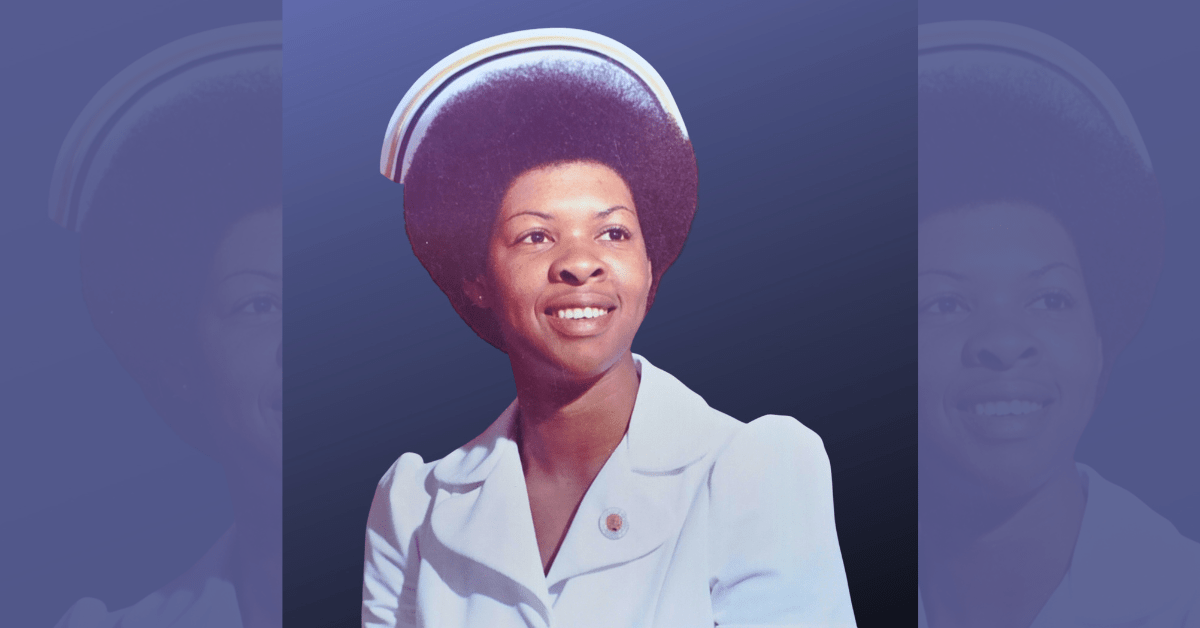
The Shirley Ann Steinback-Hawthrone Scholarship
We are excited and proud to share that a scholarship has been named for our colleague Shirley Hawthorne Steinback. Many of us had the pleasure of working with and learning from Shirley over the course of her thirty plus year career with Kaiser Permanente. She is a pillar of excellence in nursing and dedication to pouring into the next generation of nurse leaders.
The Higher Foundation, in partnership with Sage Consulting Partners, is proud to announce the launch of the SASH Scholarship (Shirley Ann Steinback-Hawthrone Scholarship) — a new community-sourced initiative designed to support the next generation of healthcare leaders and honor a lifetime of service and leadership. The SASH Scholarship will support a Georgia college student pursuing a degree in the field of nursing.
Read, Watch, & Listen

Read
Inspired by true events that rocked the nation, a profoundly moving novel about a Black nurse in post-segregation Alabama who blows the whistle on a terrible wrong done to her patients, from the New York Times bestselling author of Wench.

Watch
On March 10th we celebrate the birthday of Harriett Tubman, nurse, Civil War general and freedom fighter.
Listen
Health Equity Podcast Channel and Healing Circles


Looking Ahead Quarter-2 Theme: Power of Nurses (April, May, June)
Men’s Health Month, Nurses Weeks, and the Voice of Nurses and Shaping Health Policy
Submissions for events and articles aligned with this quarter’s theme are now open. Please email your submissions to Mariah Gillam - mariah@acnl.org by May 15, 2026 (preferred deadline).
Closing Thoughts
As we move forward, let’s continue asking ourselves: Whose voice is missing? Whose experience can we learn from? When we stay curious, humble, and committed to growth, we move closer to a healthcare system that truly serves everyone.
Be intentional with self-care through learning, reflection, and restoration
ACNL DEIAA Committee
Created by Mariah Gillam, BA - ACNL Project Coordinator
Previous Newsletters
2025
January: Shaping the Future of Equitable Healthcare
February: Black Men in Nursing
March: Caring for Incarcerated Populations
April: Perinatal Equity
May: Celebrating AAPI Heritage Month: Honoring a Legacy of Leadership and Resilience
July: Advancing Equity in Migrant and Immigrant Health
December: Celebrating Belonging, Reflection, and Renewal
2024
January: Combatting Misinformation and Disinformation
February: Environmental Health and Justice
March: Women's Health Equity
April: Disability Rights
May: Mental Health Awareness Month
June: Pride Month
July: Advocating for Patient Summer Safety
August: Community Health Nursing
September: Political Action Edition
October: Disaster Preparedness
November: Rural Healthcare
December: Nursing History
2023
June: Resilience and Community Care
August: Civic Health Month
September: Maternity Care
October: Legislative Update
November: Navigating the Digital Frontier
December: Resilience and Community Care


Association of California Nurse Leaders
Email: info@acnl.org
Website: https://www.acnl.org/
Location: 180 Promenade Circle suite 300, Sacramento, CA 95834, USA
Phone: 916-779-6949