
The Community Connection
Behavior Solutions with The Hannigans
Behavior Solutions
Student behavior continues to be one of the most significant challenges facing schools today. According to the National Center for Education Statistics, 32 percent of teachers report that student misbehavior interferes with their ability to teach, while nearly one quarter of schools report that student inattention has a severe negative impact on learning. These are not occasional disruptions. These are daily barriers to teaching and learning.
So the question becomes clear. Do we throw up our hands and complain about student behavior, or do we begin focusing on what we can control and do something about it? This is where the conversation shifts. Student behavior is not just about students. It is about systems. Are we aligned in our beliefs, actions, and expectations when it comes to behavior? Do students experience consistency from classroom to classroom? Do teams respond similarly to common challenges? The reality is simple. We do not get to pick our kids. However, we do get to pick our systems.
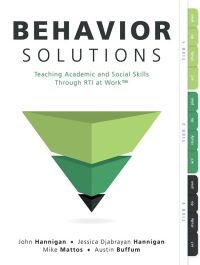
This is where the work of John Hannigan and Jessica Djabrayan Hannigan provides valuable direction. Their work focuses on helping schools build aligned, systematic behavioral supports using a three tiered RTI framework.
At Tier 1, schools establish clear expectations for all students. This includes defining behaviors, teaching expectations explicitly, reinforcing positive actions, and ensuring consistency across classrooms. Strong Tier 1 systems create clarity and prevent many behavior challenges before they escalate.
At Tier 2, schools provide targeted supports for students who need additional help. This might include specific targeted social skills instruction, check in and check out systems, mentoring, or short term behavior plans. These supports are designed to address emerging needs before they become larger concerns. This becomes a collective approach to help target and support the teaching of specific skills students may need to grow with their behavior.
At Tier 3, schools implement intensive individualized supports for students with significant needs. This may include functional behavior assessments, individualized behavior plans, and collaboration with counselors, specialists, and families. These supports are more personalized and responsive to individual student needs. The goal is for your school's highest trained staff members to help with these direct, specific, and targeted interventions.
One thing I have learned in this work is that behavior conversations become far more productive when they shift from frustration to alignment. Instead of asking why students behave a certain way, teams begin asking different questions. What are we teaching? What are we reinforcing? What are we tolerating? What are we aligning? How can our team support our students? and How can our systems be better aligned to support our students? The challenges are indeed tremendous, so why should we work alone in this area? These are not easy conversations. They are necessary conversations.
So the question is not whether student behavior is challenging. The question is whether we are willing to align our systems to better support students and staff. We may not get to choose the students who walk through our doors each day. However, we absolutely get to choose how we respond, how we align, and how we support one another. So the question is simple. Are we going to continue reacting to behavior, or are we ready to build systems that proactively support teaching and learning for everyone?