


Back to School
How to Help Your Child Transition Back to School

Mrs. Urquhart
Julie Urquhart
School Adjustment Counselor, M.Ed., LMHC
Shamrock Memorial Elementary School
SISP (Specialized Instrustional Support Personnel) for School Adjustment Counselors and Social Workers, K-12
Email: Jurquhart@woburnps.com
Location: 60 Green Street, Woburn, MA, USA
Phone: 781-937-8241
Twitter: @MrsUrquhartSac


Welcome Back!
Welcome back and welcome new Shamrocker's! I hope that you have had a wonderful summer! For those who are new to our school, my name is Mrs. Urquhart and I am your School counselor at Shamrock Elementary School. I am eager to support you in all of your social and emotional needs.We are going to have a great school year, learn a lot, work on being our best selves and continue making school a safe and fun place to learn.
My School Counseling Philisophy: To thoughtfully meet students where they are and support overall student success. To help students achieve their academic goals, provide learning and coping strategies, address self-management, social and emotional and mental health challenges, and thrive in the school environment. All children have the right and deserve the opportunity to go forth into society and succeed as human beings. As school counselors, It is our responsdibily to help navigate social issues, mental health concerns, and issues related to personal development to help foster student successs.
A Little About Me:
I am starting my 9th year as Shamrock Elementary School's Adjustment counselor. My husband and I have two young boys, Gavin 10 and Brendan 7 and a 12 year old black lab, "Keeper" that is always under our feet and loves to snuggle! When I am not at work, you can catch me at the fields and courts cheering on my boys or out in the community at various Woburn events. What my husband and I love about Woburn is it very family oriented and there are always fun activities going on throughout the year! :)
My Favorites
- Spending time with my family and friends including my black lab, "Keeper"
- Long walks
- Reading
- Spending time at the fields cheering my boys on in various sports and activities
- Movie and game nights with my boys
- Cape Cod
- Mint Chocolate Chip Ice Cream
- Book: Tuesdays with Morrie & Tuck Everlasting
- Song: Bridge Over Troubled Water - Elvis Presley & My Wish - Rascal Flatts
- Disney Movie: The Land Before Time
- TV Show: Friends
- Sport: Basketball & Baseball
- Greatest Life Influence and Teacher: My Dad. He gave some of the best advice and words of wisdom.
Favorite Quote: "Do not criticize what you don't understand son, you never walked in that man's shoes."
~Elvis Presley


The back-to-school transition can be a challenging time for children, but with the right support and strategies, it can also be a period of growth and excitement. By establishing routines, fostering open communication, preparing for new experiences, encouraging social connections, and managing stress and anxiety, you can help your child navigate this transition with confidence.
Make the First Day of School Easier for Kids
Remind your child that teachers know that students may be nervous about the first day of school; they will make an extra effort to make sure everyone feels as comfortable as possible. If your child seems nervous, ask them what they are worried about and help them problem-solve ways to master the feelings they are experiencing.
Point out the positive aspects of starting school to help your kids look forward to the first day of class. Talk about how they will see old friends and perhaps meet new ones, for example. Ralk about all the new things they will learn and fun school activityies they will experiences.
Find another child in the neighborhood you child can walk to school or ride with. Get there early on the first day to cut down on unnecessary stress.
Consider starting your child on their school sleep/wake schedule a week or so ahead of time so that time change is not a factor on their first couple of days at school.
Summer can look more loose than the school year. Begin practicing home routine/expectations with your child a couple of weeks before school begins. This entails any daily rules/restrictions on electronic devices etc. Practice school year routine and talk with your child about limitations/rules and expectations are put in place during their school year.
Place a fun activity for when your child returns home from their first day of school. Your kitchen is a great way to connect with your child and have thoughtsul conversation. While they are eagerly awaiting their yummy treat, talk to them about their day and ask questions. They will be so excited excited about their treat, they will be more apt to sit and share with you.
What are signs your child is feeling anxious about school?
Children show anxiety in different ways. If you're concerned your child is feeling anxious about school, look for changes in your child's behavior and mood.
Signs of anxiety can include:
Disturbances in sleep
Increased defiance or irritability
Lack of concentration
Less energy
Loss of appetite
Physical symptoms like nausea, stomach aches, muscle tension or dizziness
Refusal to go to school
Sadness or crying
How to Help Your Child Successfully Transition Back to School
*** The following is a compilation of resources that are readily available and obtained through various websights and other resources.
2. Get your family’s calendar organized. All the soccer practices, school holidays, and Add other calandars to your calandar: lunch menus, class assignment sheets, sports practice schedules, apointments etc.
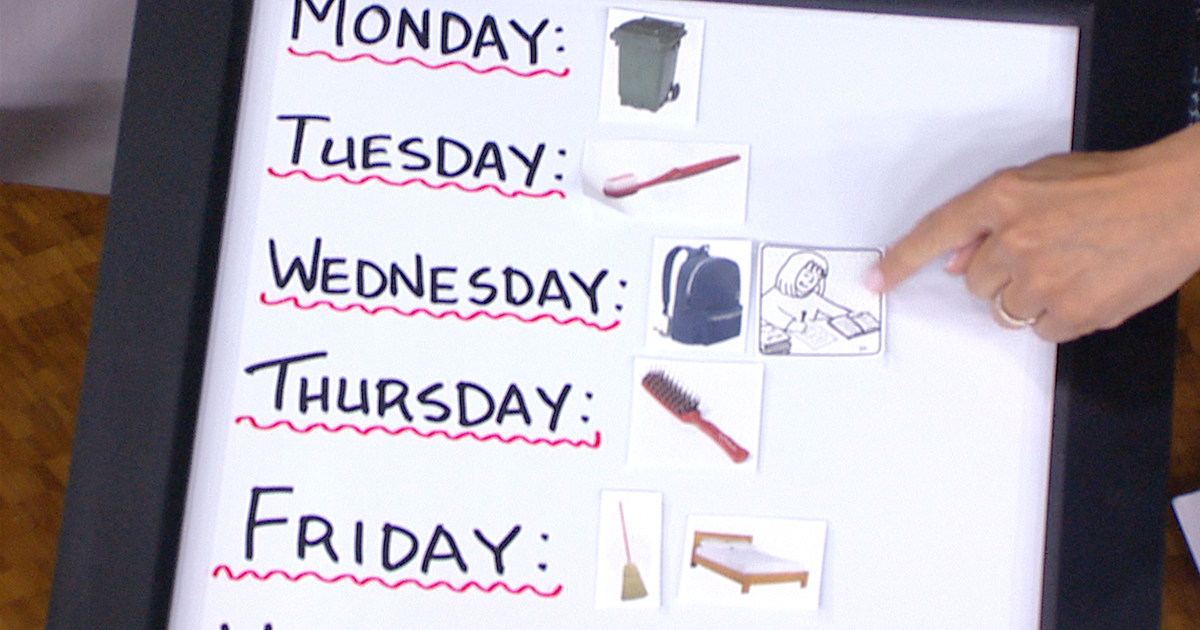
3. Create a structured morning routine. Is there anything more crazy than trying to get out the door while trying to find last night’s homework, pack lunches, and finish your own breakfast? Oh, and did the kids brush their teeth?! Do yourself a favor and write out a morning to do list. You could even laminate for the kids to check off each morning as they complete tasks. This will also help them practice accountability and help make them feel empowered!!
4. Plan out lunches in advance. Batch as much food prep together as possible. Giving out a bag of baby carrots each day? Pretzels? Create each day’s portion as one task and then you only have to grab a bag later – whether staying at home or going to school.
5. Stay positive about any stress or anxiety your children are expressing. They take their cues from you!!!!!
6. Create a launch pad! This is where all the next day’s needed items are gathered such as school bags, coats, shoes, and basketball uniforms or just the needed assignments. When your have a place for everything, your child knows how to stay organized and where to find it the next morning. Do as much the night before as possible.
7. Do a practice run. Try it the morning routine and route to school a few mornings on time. Then you can determine how long it really takes to walk to school or gather everything and get out the door.
8. Let your child know you believe in them! Remind your child that they have faced big changes before and that you are sure they can do this, too. Talk about the strength and bravery that helped them adapt to new experiences in the past, like a new childcare center or school — or trying a new activity or food. This is how children build resilience. The more experience they have working through challenges, the more confidence and skills they develop to take on future difficult situations.
9. Validate feelings before jumping to reassurance. If your child expresses concern about or resistance to returning to their school, it is important to acknowledge, accept, and empathize with their feelings before jumping in to reassure them Labeling difficult feelings helps children understand, gain control over, and work through them in positive ways. (“I know it is a big change to be going back to school. I totally understand why you are not sure you want to go back. You must feel a little scared — and sad to be leaving home, huh?”)
Ignoring these feelings doesn’t make them go away. If children don’t have a healthy way to express their emotions, they are more likely to act out. Once you name a big emotion and talk about it, you can move to problem-solving. (“It may feel scary at first, because it is a big change, but you will see that it is the same fun, amazing place that it always was.”) This would be a good time to look at photos of your child’s past experiences in his program — or pull out old artwork or school projects. (“Remember when you made this?! I can’t wait to see what you build this year.”)
10. Establish a ritual for leaving home. Rituals can help kids cope. You might have your child choose a book that you read part of during breakfast. Have your child make a special bookmark they place in the book to indicate where you left off. Then, when you pick them up at the end of the day or first thing when you get home, finish the book together. This provides a connection from morning to evening that helps children cope with separations.
Create a special goodbye ritual. Come up with a special kiss, hug or mantra you say every time you separate at school. One dad and his child hold each other in a tight hug for a count of five and then say, “See you later alligator” in unison. Doing that every morning eased the separation tremendously.
Lastly.....
Tune in to your own feelings about separating from your child, so you can also manage those emotions. It is natural to feel anxious about separating from your child especially in today's times. Keep in mind that your worry can increase your child's worry (and thus yours, too — it’s a cycle!), making the separation even harder. Children look to their parents for cues for how to make sense of their experiences in the world. If you appear worried, not just with your words but in the tone of your voice or facial expression, your child picks up on this and assumes there is something to be worried about. (This is especially true for kids who are highly sensitive and super tuned in to your emotions and reactions.) When saying goodbye, there is a big difference between, “Oh Sweetie, I promise mommy will come back as soon as possible” (said in a worried tone of voice) and “I can’t wait to hear all about your day when I pick you up after school!”
Most importantly, have faith that, with support from you and his teachers/caregivers, your child can and will adapt. Remind yourself that it is a gift to provide your child the opportunity to learn that they can make it through a challenge and successfully adapt when change is necessary. It will help your child feel less afraid and more confident about tackling other challenges he will face in the future.

RESPECT - September's Character Trait of the Month

5 Great Back-to-School Books for Kids in Grades 1–5
Ruby Lu, Empress of Everything
By: Lenore Look
Illustrated by: Anne Wilsdorf
Age Level: 6–9
Ruby Lu is an exuberant second grader who takes seriously her responsibility to help her cousin transition from China to his new school in America. Both kids end up in summer school, where Ruby has trouble with a long book.
Danitra Brown, Class Clown
By: Nikki Grimes
Illustrated by: E. B. Lewis
Age Level: 6–9
Reading Level: Independent Reader
Zuri and Danitra are best friends, but they have very different responses to school — from first-day jitters all the way to the halfway mark of the school year. Danitra Brown, Class Clown features poems and pretty watercolors, which help to chronicle the girls’ experiences and concerns.
Susan Laughs
By: Jeanne Willis
Illustrated by: Tony Ross
Age Level: 6–9
Reading Level: Beginning Reader
In Susan Laughs, rhyming text and colored-pencil illustrations tell the story of Susan’s everyday life. She behaves and participates in activities just like the other kids. But she does it using a wheelchair — a fact that isn’t revealed until the final spread.
Panda Math: Learning About Subtraction From Hua Mei & Mei Sheng
By: Ann Whitehead Nagda
Age Level: 6–9
Reading Level: Independent Reader
In 2003, panda Hua Mei was born at the San Diego Zoo. In Panda Math, Hua Mei’s growth is shown through basic addition and subtraction while life with her parents at the zoo is presented on opposite pages. Clear photographs and straightforward text give a fascinating portrait of these engaging animals while introducing math functions.
The Best Seat in Second Grade
By: Katharine Kenah
Illustrated by: Abby Carter
Age Level: 6–9
Reading Level: Independent Reader
When not picked as pet helper, second grader Sam decides to take the class hamster on their field trip. Unfortunately, the hamster (named George Washington) gets mixed up with other hamsters at the science museum. Sam ends up saving the day — or at least the hamster. In The Best Seat in Second Grade, children can identify with Sam’s behavior and emotions while enjoying this easy-to-read school story.
How to Ease Your Child’s Kindergarten Jitters

50 Questions To Ask Your Kids Instead Of Asking “How Was Your Day”
- What made you smile today?
- Can you tell me an example of kindness you saw/showed?
- Was there an example of unkindness? How did you respond?
- Does everyone have a friend at recess?
- What was the book about that your teacher read?
- What’s the word of the week?
- Did anyone do anything silly to make you laugh?
- Did anyone cry?
- What did you do that was creative?
- What is the most popular game at recess?
- What was the best thing that happened today?
- Did you help anyone today?
- Did you tell anyone “thank you?”
- Who did you sit with at lunch?
- What made you laugh?
- Did you learn something you didn’t understand?
- Who inspired you today?
- What was the peak and the pit?
- What was your least favorite part of the day?
- Was anyone in your class gone today?
- Did you ever feel unsafe?
- What is something you heard that surprised you?
- What is something you saw that made you think?
- Who did you play with today?
- Tell me something you know today that you didn’t know yesterday.
- What is something that challenged you?
- How did someone fill your bucket today? Whose bucket did you fill?
- Did you like your lunch?
- Rate your day on a scale from 1-10.
- Did anyone get in trouble today?
- How were you brave today?
- What questions did you ask at school today?
- Tell us your top two things from the day (before you can be excused from the dinner table!).
- What are you looking forward to tomorrow?
- What are you reading?
- What was the hardest rule to follow today?
- Teach me something I don’t know.
- If you could change one thing about your day, what would it be?
- (For older kids): Do you feel prepared for your history test?” or, “Is there anything on your mind that you’d like to talk about?” (In my opinion, the key is not only the way a question is phrased, but responding in a supportive way.)
- Who did you share your snacks with at lunch?
- What made your teacher smile? What made her frown?
- What kind of person were you today?
- What made you feel happy?
- What made you feel proud?
- What made you feel loved?
- Did you learn any new words today?
- What do you hope to do before school is out for the year?
- If you could switch seats with anyone in class, who would it be? And why?
- What is your least favorite part of the school building? And favorite?
- If you switched places with your teacher tomorrow, what would you teach the class?
Get your Child Excited about Setting Goals: STRATEGIES THAT TEACH KIDS TO SET GOALS AND TO HELP THEM SUCCEED
1. Define what a goal is. An easy way is to link it to an area of interest. For example, a football player is aiming for a touchdown. It is something to shoot for. Explain goal setting to your child as planning what you need to work on.
2. Share your own goals. Let your children know that you have dreams, and that you recognize that you may need to work on some things in order to achieve them.
3. Help kids create their “dream list”. Help them create a list that includes those things that they actually have the power to make happen. Then spend time together discussing those dreams. Consider what skills are necessary. Does your child need help in order to succeed?
4. Tailor the goal to your child. Have a first time goal-setter work on a goal that can be achieved within a week. Some examples are making their bed every day, reading a book, brushing teeth without being reminded, getting a strike in bowling.
5. Help your child think through steps to success. Some children need to write down steps. The more they think about their goal, and identify what they need to do to achieve it, the greater the chance they will succeed.
6. Track your child’s progress. Use the fridge to show stickers or stars when steps are completed.
7. Celebrate! As goals are achieved, celebrate as a family.
As children work on their plans, it is inevitable for them to experience challenges and perhaps disappointment. Remember that failure is an important and valuable part of learning. In an article in Time, author Rachel Simmons wrote: “Of course kids should be taught to work hard and be resilient.” Simmons concludes, “But fantasizing that they can control everything is not really resilience. We would be wise to remind our kids that life has a way of sucker-punching us when we least expect it. It’s often the people who learn to say ‘stuff happens’ who get up the fastest.”

Work with your Child to Develop Good Homework and Study Habits
Being a successful students isn't magic! But it does require desire, dedication and a lot of work. Active listening, reading comprehension, note-taking, time management, test taking, and memorization are a few study skills for children.
Create an environment that is conducive to doing homwwork starting at a young age and at the very beginning of every school year.
Children need a consistent work space in their bedroom or another part of the home that is quiet, without distractions, and promotes study.
Schedule ample time for homework; build this time into choices about participation in after school activities.
Establish a household rule that the TV and other ELECTRONIC DEVICES stay off during homework time.
Supervise computer and Internet use.
Be available to answer questions and offer assistance, but never do a child's homework for her.
Take steps to help alleviate eye fatigue, neck fatigue and brain fatigue while studying. It may be helpful to close the books for a few minutes, stretch, and take a break periodically when it will not be too disruptive.
If your child is struggling with a particular subject, speak with your child's teacher for recommendations on how you or another person can help your child at home or at school. If you have concerns about the assignments your child is receiving, talk with their teacher.
If your child is having difficulty focusing on or completing homework, discuss this with your child's teacher, school counselor, or health care provider.
For general homework problems that cannot be worked out with the teacher, a tutor may be considered.
Some children need extra help organizing their homework. Checklists, timers, and parental supervision can help overcome homework problems.
Some children may need help remembering their assignments. Work with your child and their teacher to develop an appropriate way to keep track of their assignments.

THE EFFECTS OF TOO MUCH SCREEN TIME
Today’s children have grown up with a vast array of electronic devices at their fingertips. They can't imagine a world without smartphones, tablets, and the internet.
The advances in technology mean today's parents are the first generation who have to figure out how to limit screentime for children. While digital devices can provide endless hours of entertainment and they can offer educational content, unlimited screen time can be harmful.
The Negative Effects of Too Much Screen Time
Whether you keep the TV on all the time or the whole family sits around staring at their smartphones, too screen time could be harmful. Here's what some of the research says:
- Obesity: Too much time engaging in sedentary activity, such as watching TV and playing video games, can be a risk factor for becoming overweight.
- Sleep problems: Although many parents use TV to wind down before bed, screen time before bed can backfire. The light emitted from screens interferes with the sleep cycle in the brain and can lead to insomnia.
- Behavorior challenges: Elementary school-age children who watch TV or use a computer more than two hours per day are more likely to have emotional, social, and attention problems.
- Educational problems: Elementary school-age children who have televisions in their bedrooms do worse on academic testing.
- Violence: Exposure to violent TV shows, movies, music, and video games can cause children to become desensitized to it. Eventually, they may use violence to solve problems and may imitate what they see on TV, according to the American Academy of Child and Adolescent Psychiatry.
Establishing Family Rules With Electronics
Telling your child to turn off his video games while you're sitting in front of the TV won't do anyone any good. It's important for you to set healthy limits on your electronics use for your own sake, as well as your child's sake.
Here are a few household rules you might want to establish to curb screen time:
- No digital devices during family meals.
- No screen time in the car.
- No screens allowed in bedrooms.
- No electronics use during family fun nights.
In addition, consider an occasional digital vacation for the whole family. Create a screen-free night once a week or commit to unplugging one weekend a month. It could be good for everyone's physical and emotional health, as well as your family's relationships.
https://www.verywellfamily.com/the-negative-effects-of-too-much-screen-time-1094877
https://www.verywellfamily.com/technology-vs-parenting-4690680


Additional Resources
https://www.edutopia.org/article/back-to-school-resources-parents/
https://www.pbs.org/parents/back-to-school
https://www.parents.com/parents-struggle-with-back-to-school-too-7644254
https://www.today.com/parents/parents/11-free-back-school-resources-kids-parents-rcna43836
https://www.startearly.org/resources-families/back-to-school-resources/
References
https://inalliancepse.org/50-questions-to-ask-your-kids-instead-of-asking-how-was-your-day/https://www.verywellfamily.com/the-negative-effects-of-too-much-screen-time-1094877
https://www.verywellfamily.com/technology-vs-parenting-4690680