APRIL NEWS 2026
Read about all the learning we are doing this month!
How To Contact Us
HOW TO CONTACT US:
Communication is key to your child's success. Please contact your child's homeroom teacher.
Conferences by appointment: 9:25a.m.-10:00a.m.
Rees Elementary phone number: 281-531-1444
Mrs. Hurtado (One Way Dual Language Teacher)
- monica.hurtado@aliefisd.net
Mr. Garzon (One Way Dual Language Teacher)
- Alfredo.Garzon-Ruiz@aliefisd.net
Mrs. Gomez (Monolingual Teacher)
- jennifer.cubelli-gomez@aliefisd.net
Mrs. Lopez (Monolingual Teacher)
- kaylee.lopez@aliefisd.net
Mrs. Olomi (Dual Language Teacher)
- madina.olomi@aliefisd.net
Mrs. Rodriguez (Dual Language Teacher)
- deyanira.rodriguezojeda@aliefisd.net
Parent Lunch Days /Almuerzo con los padres
ParentLunchDays/AlmuerzoconlospadresParentLunch
Parent Lunch Day for 1st Grade are on Tuesdays. Please read below to see your child's specific lunchtime.
Lunch times for First Grade range from 11:05 - 11:45, depending on the class:
- Gomez & Lopez: 11:05-11:35
- Hurtado & Garzon: 11:10-11:40
- Olomi & Rodruguez: 11:15-11:45
- College or Military Shirt on Wednesdays.
- Rees Spirit Shirt on Fridays.
Student and Staff Holidays
- Monday: blue for Perseverance, bedtime stories with Mrs. Owens
- Tuesday: #AliefProud, 1st grade parent lunch day
- Wednesday: college / military,
- Thursday: blue for Autism Awareness,
- Friday: Rees Spirit Day,
- April 16 Progress Report goes home
Meeting ID: 834 6744 5976
Password: rees123
Reading & Writing
Reading & Writing
Module 8: What Story Teach Us?
Pregunata escencial: ¿Qué necesitan las plantas para crecer y vivir?
Vocabulary: absorbe, vegetation, sprout
Vocabulario: absorver, vegetacion, brotar
Math- Unit 11: Money & Personal Finance
This month, we will start working with on Money
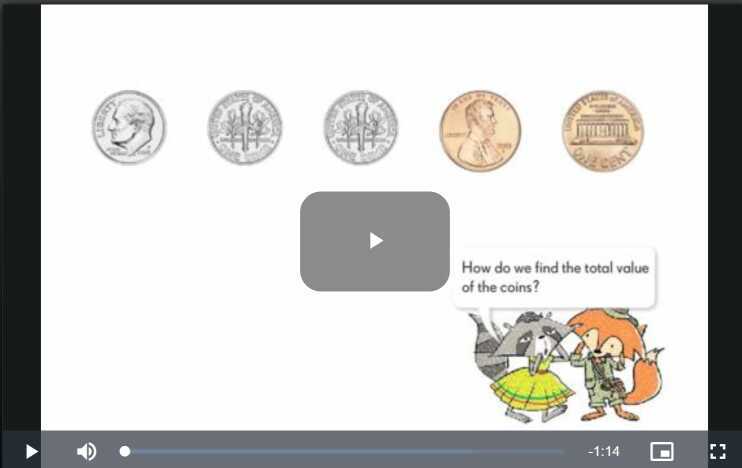
- Students will be taught to count the value of coins by applying the strategies of skip-counting and counting on from the coin of the greatest value by first sorting and then arranging the coins in order. Knowing that the same amount of money can be represented in different combinations of coins and that pennies, nickels, dimes, and quarters can be used in different combinations to buy things is also a focus of this unit.
- 1.4(A) identify U.S. coins, including pennies, nickels, dimes, and quarters, by value and describe the relationships among them;
1.4(B) write a number with the cent symbol to describe the value of a coin.
- 1.4(C) use relationships to count by twos, fives, and tens to determine the value of a collection of pennies, nickels, and/or dimes.
- 1.9(A) define money earned as income;
- 1.9(B) identify income as a means of obtaining goods and services, oftentimes making choices between wants and needs;
- 1.9(C) distinguish between spending and saving; and
- 1.9(D) consider charitable giving.
Personal Finance
On PebbleGo, review and read about:
- What is Money?
- Earning Money
- Saving Money
- Making Choices
- Needs & Wants
- Goods & Services
Math-Unit 12: Numbers to 120
After studying the concept of Money, we will focus on Unit 12: Numbers to 120.
For Unit 12, students will focus on counting, comparing, and ordering numbers to 120, as well as read and write numbers to 120.
Students will use place-value charts to show numbers to 120. They will also learn to compare and order numbers to 120 by classifying them into categories. When students are familiar with counting, comparing, and ordering numbers, it helps them identify the pattern within a number pattern.
Students need to master the following skills:
1.2 (B) use concrete and pictorial models to compose and decompose numbers up to 120 in more than one way as so many hundreds, so many tens, and so many ones.
(C) use objects, pictures, and expanded and standard forms to represent numbers up to 120
(D) generate a number that is greater than or less than a given whole number up to 120
(E) use place value to compare whole numbers up to 120 using comparative language
(F) order whole numbers up to 120 using place value and open number lines
(G) represent the comparison of two numbers to 100 using the symbols >, <, or =
1.3 (A) use concrete and pictorial models to determine the sum of a multiple of 10 and a one-digit number in problems up to 99.
1.5 (A) recite numbers forward and backward from any given number between 1 and 120
(B) skip count by twos, fives, and tens to determine the total number of objects up to 120 in a set
(C) use relationships to determine the number that is 10 more and 10 less than a given number, up to 120

Science/Ciencias
Animal Characteristics
We will be learning
Animal Characteristics
- We will investigate how the external characteristics of an animal are related to where it lives, how it moves, and what it eats
Vocabulary: English: fins, gills, related, characteristics, breathe, diet, external
Spanish: aletas, agallas, emparentado, características, respirar, dieta, externas
Social Studies/Estudios Sociales
Then and Now
Talking About Time- Past and Present
- Use a calendar to describe and measure time in days, weeks, months, and years
use a simple timeline to distinguish among past, present, and future
How do we learn about history?
Earth day
American Inventors and Heroes
identify contributions of historical figures who have influenced the nation.
identify contributions of scientists and inventors such as Alexander Graham Bell, Thomas Edison, and Garrett Morgan