


This is me

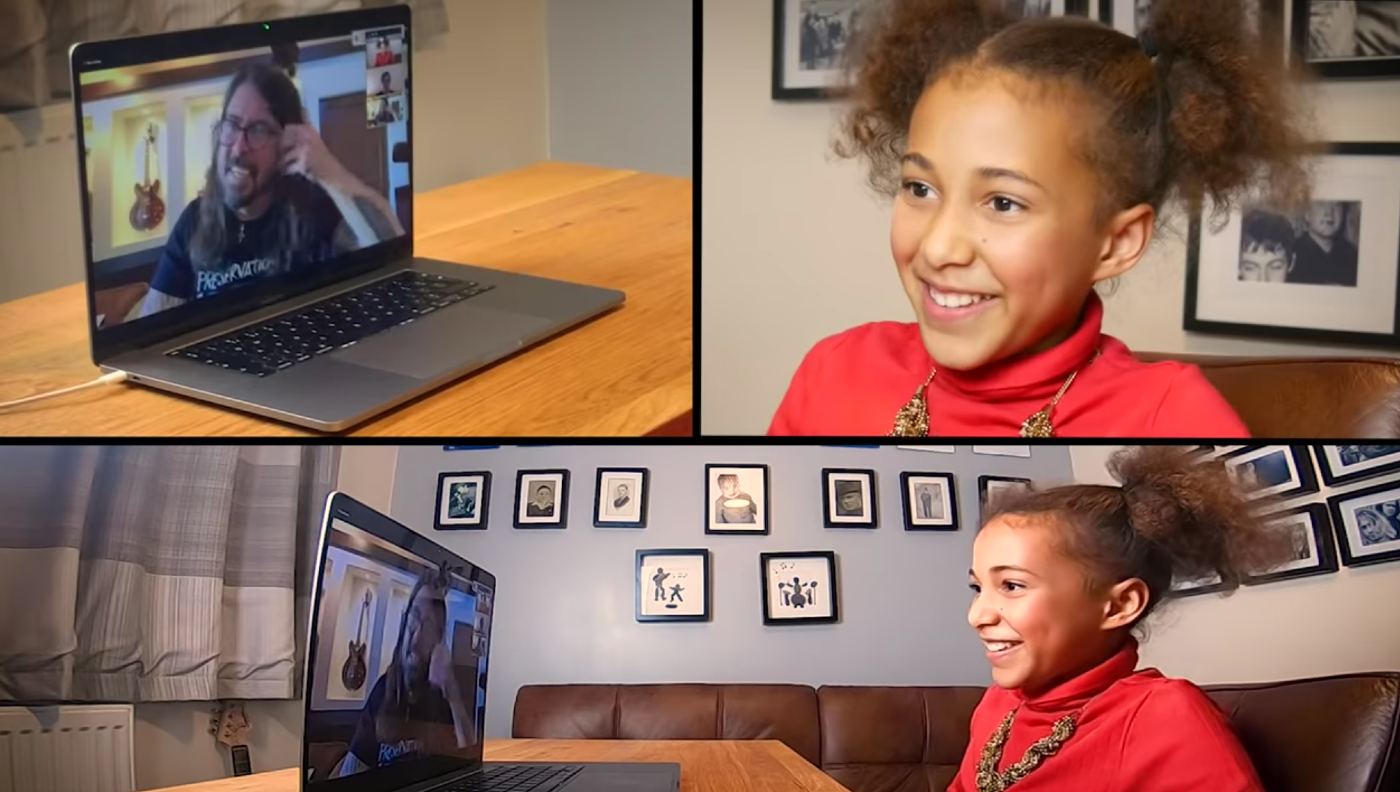
Even when we are distance learning



Book of the Week - The Practice by Seth Godin
The point of The Practice is to offer us a different take on art and creativity. These topics are staples in Godin's work, but this time, he looks at them in a more fundamental way.
The core thesis of the book is this - We all are creative. We all make art. We just aren't in the habit of doing it or even thinking about creativity and art that way. The world has conditioned us to think that only a select few weirdos are creative and produce art.
But that's not true. That's a lie. We need to get into the practice of being creative to turn whatever we do into art.
I'll give you a couple of examples. My former neighbor, Todd, had a plumbing business. He was personable and always stopped by to visit. He didn't do this because he was looking for new customers. He did this because he turned how he interacted with future customers into an art.
When our first winter hit, Todd would fire up his skid steer and go around the entire neighborhood blowing out our driveways.
This was an art! When it came time to get a new furnace, of course I was going to call Todd to do it. If he took care of the neighborhood that well, why wouldn't I call him? Imagine how well he would take care of me when I was actually paying him?
That is taking customer service to a whole new level. That is what Godin means by 'art.' Todd found a way to bring creativity to his plumbing business and transform customer service into an art.
I'd still be using him, if he hadn't moved and sold his business.


Teaching Thoughts
Week #11 – November 16-20
Teaching Thought #45 - Bring in Former Students
A few years ago, I wrapped up one of the best College Comp classes ever. Over the weekend as I examined Synergy for the next batch of College Compers for second semester, I thought about how it was a shame that I was going to be saying goodbye to my previous class since I had just gotten them thinking and then writing at a college level. In addition, these students know the routine, they knew how to be successful, and they knew me.
Then it hit me. I should invite some of those students into my new College Comp class to answer questions and tell the new class what they liked, what they didn’t like, how to be successful, and what to avoid over the next 18 weeks.
Soon I was sending out texts to a handful of students to see if they could come in to my third block CC class. I couldn’t believe it, but I was getting yes after yes from my students.
I told them not to worry since I would be leaving the room so they could be completely honest with the students without worrying about me.
The first time I did this, I was only out in the hallway for 10 minutes. The students ran out of things to say. But the next time I tried it, I actually had to knock on the door and tell them to hurry things up as I had a lesson to teach even if it was the first day of the class.
I think this works well because I’m out of the picture and it’s just student talking to student. They can share real feedback for what worked and what didn’t work.
It’s a practice I’m going to use until the day I retire. Give it a try.
Teaching Thought #46 - Avoid Doom Scrolling
One of my favorite bloggers is Seth Godin. Last summer he had a great post on what he called “Doom Scrolling” -
Being informed is a virtue. It helps us make better decisions and encourages us to take action.
Getting hooked on an endless scroll of media inputs is not the same as being informed. There’s long been a business model of urgent news (“man bites dog!”), but now it’s been leveraged, amplified and optimized to suck people in for hours at a time. And division is much easier to sell than progress.
If it’s not helping you take action to make things better, what’s it for?
In the world of education, it’s easy to get sucked into the negativity. It’s easy to take to social media to complain or to start a blog and let your frustrations fly (Trust me, I know). Avoid that. In all the complaining I ever did on my blog, it never helped me or made me better. It only made me angrier and more frustrated.
Another worry ushered in via social media is always comparing ourselves to other teachers on Instagram or Snapchat. Why is the room so cool? Why are they always able to do such interesting things? How come their lessons always turn out so well? How come they leverage technology so well?
Remember this: rarely do people show anything ‘real’ on social media. You are seeing what they want you to see. Are the capturing moments of when the lessons fail (and no matter how great you are, lessons fail)? Are they capturing the moments when a student is belligerent or doing everything in their power to distract everyone?
No.
So don’t compare yourself to them. Instead, steal their ideas and put your own twist on them.
That is how I avoid the negativity, doom scrolling, and fears of never measuring up to other teachers.
Teaching Thought #47 - Two Keys for Helping Kids
I keep coming back to this: teaching is just like customer service. And what are two keys of customer service? It’s really simple: Show up and be helpful.
Now while that may sound simple, I would submit to you that it’s actually difficult.
I’ll break down why.
Show up. I think this little mantra relates well to two of our core values: “It’s not about us” and “Our work matters.” Showing up is far more than just opening your classroom and having a warm body in the room. I often wonder why so many of my family members can remember at least one terrible teacher who simply ‘showed up.’ My wife had one such teacher who taught Geography. She said anyone who had this teacher did enough crossword puzzles - many of which had zero to do with Geography - knows nothing about Geography despite all the time they spent in that class under the ‘guidance’ of this teacher. My niece’s husband recalls another Geography teacher who would fall asleep in class. The students made it a contest to see who could land spitballs the closest to him while he slept. Again, not a lot of geography getting taught there.
Teaching is more than showing up, which is why I included our two core values. Showing up is actually being alive and present in your classroom. Just like everyone can remember a terrible teacher who wanted their time, I would submit to you that, luckily, everyone can also remember a teacher (hopefully more than one) who changed their lives with their passion, attention to detail, their care, and their mastery of knowledge. This is what I’m talking about when it comes to showing up.
Mr. Zutz made a great point to us as a staff a few years ago. He warned against lecturing. Not that lecturing is inherently bad - in fact, I don’t think it is. But he warned us that when we default to just lecturing we often are just going through the motions or simply showing up because we know the material so well.
Even when I introduce “Young Goodman Brown,” a story I’ve read over a hundred times, or To Kill a Mockingbird, which I’ve read at least 75 times, I always try to find new information and connections to the students’ lives and the world around them to present something old in a new light. That makes all the difference.
2. Be helpful. When I hear these two words, I think of a question I’m often asked by disgruntled or exhausted students: “When am I ever going to use this?”
If I can’t answer that, then why am I teaching it? I’m not being helpful. Students need to know that what they are learning is relevant (more on this in a later teaching thought). If you do this, it will increase engagement and motivation.
Just like when you walk into your favorite local store and see one of your favorite workers there, you know it’s going to be a good experience because they’re there and they are always able to help you. That transforms the customer experience. That is exactly how your students will feel. I would go so far as to say that they are starved for this.
Teaching Thought #48 - Is it a Distraction or an Opportunity?
I’m afraid I fall for too many of the former and not enough of the latter. Why? A lack of vision. It always comes down to vision.
Why do I often get sidetracked during my prep when I have 24 essays piled up waiting for me to read and respond to?
Because I’ve lost track of my overall vision for that day.
This is where a planner comes in handy. I’ve gone through dozens of different types and styles. I’ve used the simple pocket planners our EA used to hand out. I’ve used calendars. I’ve used cheap planners from Walmart. I even shelled out some decent money to get the “High Performance Planner” via Amazon.
But the bottom line is always this - write down a big project or happening for the week. It might be to get all my College Comp I essays written and returned by Friday. Or it might be to get a slideshow ready for the MLK Tech Day done. Or it might be to get these teaching thoughts done by August 1. Whatever it is, I cast a vision for the week.
Why just a week and not a month? I’ve tried that, and I’ve found that if I look out beyond a week, I tend to get too broad and general. Then I can’t seem to get any momentum going. So I keep it to a week. If I keep my vision focused for one week at a time - and I do that for a whole quarter - then I have a lot of happy students who get their work back on time, I am far more productive, and I am growing professionally and personally.
So once I have my weekly vision cast, each day of the week, I write down a 3-5 things that have to get done each day. Now not all of those relate to the overall vision, but most do. And that matters.
Let’s say my vision for the week is to get all 24 College Comp essays, responded to, and entered into the grade book. That means I have to write down each day that I have a goal of getting five essays done during my prep (I don’t grade during class and I try not to grade at home). But, of course, I have other things that must get done during the day. Maybe in addition to getting 5 essays done during my prep, I also have to add in get pictures from the pep fest, don’t forget about the department meeting, and to make sure my learning targets are updated in my room.
This keeps me focused and moving forward. I get the menial tasks done (the department meeting and updating learning target) while I also set a manageable goal of 5 essays a day.
When I don’t have a focus like that, I will sit down at my desk and spend 15 minutes on emails, 25 minutes looking for the perfect video to use as an introduction for “The Yellow Wallpaper,” and visiting with kids in the commons.
Those are all important, but I schedule them in the planner first. Then I make sure to follow through with them and not do them so randomly.
It’s not a perfect process - as I get distracted far more than I still should - but it keeps me focused. The more focused I am, the more I am able to see opportunities and avoid distractions.
Teaching Thought #49 - How long will it take vs. How far can you go?
I stole this concept from an Entreleadership podcast featuring the amazing John Maxwell. As a teacher, this relates well to professional development. I recall a few years ago when we had a professional development speaker come in (I think it was for our MLK Jr PD day). He spoke about mental health, particularly suicide. He even put up his number and other help lines up on the screen. I, like just about everyone around me, took out our pens and wrote the numbers down.
Then to close the session, he had us turn to someone next to us and talk about what their big takeaway was from the session (mine was that he worked with a school that had an elementary student commit suicide. That still shocks me).
I found a young man next to me and asked him what his thoughts were. Without hesitating he said, “I can’t get over how much money all the districts are wasting on this training . . .” It was at this point I basically tuned him out. He had nothing to offer me, other than my gut reactions of - 1. This guy should not be a teacher. 2. I thank God my kids will never have to be in his classes. 3. I bet he is in teaching just to coach. 4. Why is he even here?
Now, after hearing this podcast, I’d add a fifth reaction: he was focused just on how long it will take. Not how far he can go.
What would your classroom or teaching look like if you approached PD (or personal development, even) with the question of How far can I go? Isn’t that the same mindset we’d want our kids to have in our classes? Then why not model it for them?


Podcast of the Week - The Auckland Writers Festival
Friedman's knack for condensing major ideas into such easily digestible statements. Plus, he is so engaging and entertaining. His iconic books The World is Flat and That Used to Be Us.
The title refers to a breakfast meeting Friedman was to have with a friend, who, of course, was late.
As his friend sat down and apologized for his tardiness, Friedman said, "No. Thanks for being late. While I was waiting, I've been eavesdropping on their conversations. Fascinating! I've been people watching the lobby. Fantastic! And best of all, I just connected two ideas I've been struggling with for a month. So thank you for being late."
This is important because Friedman realized people liked this because he was giving them permission to slow down and pause.
How often do we get that in our world today?
Friedman quotes one of his friends: "When you press the pause button on a computer, it stops. But when you press the pause button on a human being, it starts."
So what do we need to slow down and pause to look at? In doing so, what do we need to start thinking about in a new way?





Article of Interest - Leadership Freak
How do we get students to ask questions. They need to feel supported and safe.
In the traditional classroom setting this is difficult, but is it more or less difficult with distance learning?
I have kids reach out to me more now in a variety of ways than ever before. Maybe that's a good thing. I just know I have to strive harder than ever to make them realize it's fine to say, I don't know.
And that starts with me.
I'm going to tape this quote from the article to my door and to my desk -
"Successful leaders build relationships where it’s safe, even desirable, to NOT know."


Chief Inspiration Officer of Room 205
I am married to the most amazing person in the world, Kristie. It was love at first sight. At least for me. And it still is.
We have four wonderful children, Casey, Koko, Kenzie, and Cash. And now we have been blessed with five grandchildren!
I also happen to have the greatest job in the world: teaching English to high school students.
I am in my 23rd year of teaching at Lincoln High School. I graduated from Lafayette High School in Red Lake Falls in 1992. I decided to enter the field of education because of two amazing teachers, Mr. Mueller, my fourth and sixth grade elementary school teacher and assistant baseball coach, and Mrs. Christianson, my 9th grade English teacher.
I attended Northland Community College, and had my life changed by the amazing Dr. Diane Drake. Then I transferred to Bemidji State University in 1995. There I had amazing professors who further inspired me to teach English (Dr. Helen Bonner, Dr. Mark Christensen, Susan Hauser, and Gerry Schnabel). I graduated with my BS in English Education in 1997.
I student taught with the wonderful Lisa Semanko and then began teaching full-time at LHS in 1998.
I took a year's leave of absence in 2001-02 to return to BSU for my MA in English. There I had the privilege to teach and work closely with my greatest mentor, Dr. Mark Christensen. I earned my MA in English in 2006 and was honored with "Thesis of the Year" for my creative non-fiction, braided, multi-genre memoir, "Meeting Myrtle: A Biography."
In 2013, thanks to my dear friend and mentor, Dr. Jodi Holen, I was offered an adjunct teaching position fall semester at the University of North Dakota. Tuesday nights I teach Intro to Education: Teaching and Learning 250 from 5-8. Those three hours fly by in about ten minutes.
Then in 2016 I was blessed to win a WEM award (thanks to a nomination from a former student (and now an elementary school teacher), Ciera Mooney).
In 2017 I became part of the #pineconepd podcast club along with Brian Loe, Jeff Mumm, Kelsey Johnson, Kelly Weets, Josh Watne, Tevia Strand, Megan Vigen, Mariah Hruby, Laura Brickson, Loren Leake, Katie Hahn, Melora Burgee, and new members all the time. This has been one of the best forms of PD I've ever been a part of. They make me a better teacher every time we meet. Please think about joining us in the summer at the Pine Cone Pub from 6:30 - until we've solved all the world's problems. For that evening anyway.
Thanks to the inspiration of Shane Zutz (our former principal) I devised this as a way to distribute my Teaching Thoughts and add more content to, hopefully, help out and inspire others.
Email: kurt.reynolds@myprowler.org
Website: http://teacherscribe.blogspot.com
Location: 101 South Knight Aver Thief River Falls MN 56701
Phone: 218-686-7395
Facebook: https://www.facebook.com/kurt.reynolds.5?ref=bookmarks
Twitter: @teacherscribe