

SCPS Middle School Gifted Services
October 2026
Motivation and Perserverance

From the Desk of Melony Star Kiesau ... Bouncing Back from Blunders
We’ve all had those moments: an answer that missed the mark, a forgotten assignment, or words we wish we could take back. Blunders can feel uncomfortable, especially when we expect a lot of ourselves. But a mistake is one moment—not a measure of our intelligence, character, or potential.
For gifted learners, learning to navigate mistakes is an important part of developing resilience. Perseverance helps us try again, while resilience helps us regroup, adjust our approach, and move forward.
Students, when a blunder happens, pause and ask: “What happened? What can I learn? What can I do next?” Your next step might be correcting an error, making an apology, asking for help, or trying a new strategy. You can take responsibility while still giving yourself grace.
Families and staff can support students by responding calmly, sharing how we learn from our own mistakes, and recognizing thoughtful efforts to make things right.
This month, remember: you don’t have to get everything right to keep growing. What you do after a mistake matters.
Gifted and Talented Education (GATES) - Grade Level Workshops
Curriculum specialists have developed grade-level workshops for secondary gifted students designed to address their academic and developmental needs. One workshop is planned for each grade level each semester, with each session lasting approximately 30–45 minutes. Topics include: 6th - Transitioning to Middle School, gifted self-awareness, self-management, and executive functioning; 7th - Relationships, collaboration, learning habits, and increasing independence; and 8th - Reflection, leadership, contribution, and transition to high school.
Each school's Gifted Resource Teacher (GRT) will facilitate the workshops and work with the principal to determine the most appropriate time and location based on the school's schedule and needs. The goal is to provide this opportunity for gifted students while minimizing disruption to core instruction. You will hear from your Gifted Resource Teacher regarding the dates for your school.
Articles of Interest
Developing Resilience in Gifted Students, published by Nat'l Association for GIfted Children May 2025
When you know you are the best, it is hard not to be. Whether or not gifted students are #1 in content knowledge, critical thinking, reasoning, an artistic ability, or athleticism, they internally know that they are strong in their area of giftedness. They exceed the expectations of many in their area of expertise. They have taken on the identify of being gifted and may have the personal expectations that they should be able to tackle goals and challenges with ease, akin to the notions expressed in Dweck’s fixed mindset (2006). However, inevitably, the best planned goals are met with challenges that become road blocks. Being gifted does not prevent setbacks or complications. However, gifted students are equipped with superior cognitive potential, which can support them to more effectively move past the road blocks to get back on the path to progress. In the book I co-wrote with Emily Mofield, "Teaching Tenacity, Resilience, and a Drive for Excellence", we present ideas for supporting students’ growth in tenacity, grit, and resilience not by avoiding obstacles but by acknowledging the obstacles and considering ways to move through them.
When students avoid apparent obstacles, they stunt their growth opportunities. For example, an artistically-gifted student is invited to create a piece for a competitive, high-tier art show. This is an honor! A great opportunity! The student is excited with this potential opportunity to be recognized at an elevated level but is internally worried that their work might not be good enough. Or, perhaps, they will be laughed at when it comes time for the art show, as their piece is not as impressive as expected. The student begins several works over the coming weeks, discarding drafts again and again as the student is continually dissatisfied with the products. The student artist wants their piece to be beyond expectations. They want viewers to be impressed with their talent and according product. As the art show continues to draw near, the student’s art teacher checks in and asks about their progress, and little is available to share. The student shares that it has been difficult to bring a piece to fruition. The student’s teacher has experience with gifted learners and begins asking supportive questions: "What is inspiring you? Tell me about your process and progress". The teacher introduces a strategy from our text known as PACT, which is an acronym for Problem, Alternatives, Consequences, Try one. To continue this article, click on the link below...
https://www.nagc.org/news/developing-resilience-in-gifted-students

Making a Difference, published by University of Connecticut Renzulli Center
Gifted students are one group of exceptional learners who are not normally considered at risk for academic failure. We often expect the brightest students to also be the most motivated. Unfortunately, many gifted students seem to lack motivation in school. Watching bright students perform below their potential is a source of frustration for many teachers, parents, and counselors.
Why do some gifted students demonstrate low levels of achievement? There are at least four potential underlying causes for underachievement. First, the apparent underachievement problem may be masking more serious physical, cognitive, or emotional issues, such as a learning disability (Moon & Hall, 1998; Reis & McCoach, 2002). Second, the underachievement may be symptomatic of a mismatch between the student and his or her school environment. Third, the underachievement may result from students’ attitudes about themselves and their schooling. Fourth, lack of self-regulation and study skills may hinder some students from achieving academic success. Each of these reasons requires different intervention strategies. Therefore, educators should attempt to isolate the origin of the underachievement. We also recommend that gifted students who are having difficulty with school should be screened for a wide variety of physical, mental, or emotional issues before focusing on motivation problems (Reis & McCoach, 2002; Siegle & McCoach, 2002).
In this article, we focus on four factors that are related to achievement and suggest a variety of strategies that teachers and parents can use to promote motivation and academic success. Students with learning disabilities often exhibit poor academic self-confidence (Baum, 2004; Stone & May, 2002). Further, they benefit from explicit teaching of self-regulation and study strategies (Reis & Ruban, 2004). Therefore, we believe that strategies related to two of the four factors discussed below (self-efficacy and self-regulation) are particularly well-suited for use with high-ability students with learning disabilities. To continue this article, click on the link below...

Grit and Giftedness, published by Institute for Educational Advancement 2018
In today’s world, we’ve grown to expect nearly immediate results in every aspect of our lives. I, for one, have caught myself clicking repeatedly in frustration on a link when it doesn’t load within a fraction of a second. We likely all know someone who has abandoned a new health regimen within a week because they didn’t see the positive changes they were expecting. Most adolescents in developed nations are growing up not ever knowing a world where they don’t have instant access to any video, song, image or fact ever posted. These technological advances are undeniably positive in the grand scheme of things, but they also have caused us to project this expectation of instant gratification onto areas of our lives where immediacy is impossible.
That’s where grit comes into play. Grit, which is defined as “perseverance and passion for long-term goals,” is necessary to overcome this tendency towards lack of patient discipline. Working in the gifted community, I interact with profoundly intelligent, creative and innovative young people on a daily basis. Many of these individuals also possess grit when they have a specific goal they are truly passionate about achieving. They will linger after class until their wind turbine turns smoothly, phrase an idea in numerous ways until their classmates understand their ingenuity, or borrow a logic puzzle to take home so they can finally solve it after hours of trying.
But how do we teach our children or students to have the tenacity to accomplish tasks they’re not as eager or well-equipped to complete? I found four big ways to encourage grit in gifted students as an educator or parent.
- Praise children for their effort, not just the final outcome
Many gifted children are used to being recognized for their great memory or intelligence, but they may become easily frustrated when a task proves to be difficult. Encourage perseverance by applauding hard work and tenacity, not just what they produce on tasks that come easily. Additionally, you can point out this hard work and resilience to children when you see it in Olympic athletes, history lessons, book or movie characters, or friends and family members they admire.
- Focus more on independence than perfection
It’s very tempting to intervene when a child is working through a challenging task, especially if the child is gifted and both of you are used to things coming easily to them. Instead of focusing on perfection as the ultimate goal for a task, lightly coach students in a way that allows them to be independent while still understanding that you’re there for help and encouragement if needed. Perfectionism is common in gifted students so this can be a tough, but healthy, transition to make.
- Empathize and teach self-encouragement
Try to show your child or student how to encourage themselves without disregarding their emotions. After what may seem to them like a failure, say something like, “You might be feeling disappointed, but you should feel really proud of yourself for trying your best. When you’re ready, let’s try again!” Because gifted children often feel different from their peers, knowing someone is able to understand their emotions can work wonders for their self-esteem. Eventually, they’ll be able to recognize their own emotions with clarity and then encourage themselves through trials.
- Model positivity and resilience in your own life
Most children, but especially gifted children, absorb and reflect the behaviors they see in the adults around them. Because of this, stay away from making self-disparaging comments about yourself in front of children and, instead, talk openly about your mistakes and how you recover from them. Not only will this help the children watching you avoid developing a negative self-image or fear of failure, but it will have positive impact on your own well-being! Your ability to model this trait and make it relevant in the lives of children will show them how to lessen their fear of failure in the short-term while still striving for success in the long-term.
What suggestions do you have for teaching gifted children grit?
Sources:

Videos of Interest
Perserverance for Students, published by Mister Brown Kids May 2024

Perservere - Motivation, published by mrSKYee 2022

Artist Chuck Close Writes Note to Younger Self, published by CBS

Real World Math - Local Professionals Using Math Every Day!

Hello there! My name is Tanya Green and I’m a local painter/muralist located in the Fredericksburg/Stafford area. I’ve been working as a full time artist for the past seven years, but prior to pursuing art full time, I was an art teacher in Stafford County Public Schools. I have always loved art and have pursued art related careers since graduating high school. Although I’m not using calculus daily, I do use a lot of math concepts in my work. Read along to find out just how math comes into play in the life of an artist!
Art and Math Connections
Do you use measurements, proportions, or ratios when creating your art? Can you give us an example?
As a muralist I have to do a lot of measuring to be sure that what I design fits appropriately into the space that I’m being asked to paint. I typically paint on walls so it’s important for me to know how wide and how high the design needs to be. I also have to measure and note the location of any objects (windows, doors, fire extinguishers, pipes, outlets, etc.) that are located in the area and that might impede on where design elements are placed. I take a lot of notes! Once I have all of the measurements, I create a digital rendering of the space before starting to design.
This image shows notes I took on a building for a potential mural job.

Another way I use math when creating murals is through the use of ratios. All of the paint that I use is hand mixed. That means that first I have to figure out how much of each base color I need in order to make all the final colors. Some colors are more complex and may require as many as 6 different base colors.
I use a kitchen scale to measure out how many grams of each base color I need to make a final color. Once I know the correct amounts, I find the starting ratios for each color in the formula. That way if I need to make more of one color, I can scale up each base color to make the desired amount of the final color.
Here is a picture of a post-it note I used on-site to help me mix a specific color: - The upper left corner is the name (or number) of the color = 8.3
- The upper right corner is the goal amount of paint I need for an area of the mural (approx. 50 grams)
- Listed below the paint number are the base colors (abbreviated) used in the color formula (i.e. WH = White, MY = Medium Yellow, etc.)
- Right beside the letter abbreviations are the base ratios for each color - The number below the ratios is the total amount of grams when they’re all added together = 6.9375
- To find out how much to scale up the ratios, I take the total goal amount and divide it by the total ratio amount. (50 g divided by 6.9375 = 7.21)
- I then take that number and multiply each base ratio to figure out how much of each paint to measure out. (In this case I multiplied each base ratio by 7)
- Now I know how much of each color to measure out in order to get about 50 grams of paint color 8.3 (In this case, this formula made 48.55 grams of paint number 8.3)
By knowing the base ratios and formulas for each color used in a mural, I can always recreate the color if I need more. It also allows me to control how much paint I make so that way I am not creating too much and creating unnecessary waste.
The image shows the scale with multiple colors measured prior to mixing…and the post it note where I calculate ratios and color amount prior to measuring them out.

Math in Your Career
Do you ever use math when estimating how much time or money a project will require?
Yes. When I am figuring out how much to quote a client on a job, there are a lot of factors I consider. First I need to measure the area to see how much square footage a design might
take up. Then I calculate the total cost by multiplying the total square footage with an amount per square footage. The amount per square foot varies depending on how detailed the design is, how much time I think it will take to complete the job, and how much materials for the job might cost. In order to come up with estimations that reflect my process and work, I am constantly keeping track of how many hours I worked on a job and how much paint I ended up using. After every job, I calculate the total cost/time of the job and compare it to how much I was paid. I then adjust my pricing to better reflect my estimated costs if need be.
Do you use technology or digital tools that involve math in your artistic work? My undergraduate degree is a Bachelor of Fine Arts with a concentration in Graphic Design. Through college, I was trained in various graphic applications like Adobe Photoshop and Adobe Illustrator. Although I’m not technically working as a graphic designer, I still use these programs a lot. For mural work, I typically use Photoshop to adjust the coloring of a reference image and create PNG files. PNG files allow me to remove any background information in a file so that it can be placed, layered, and moved around in order to figure out the final design.
I use Adobe Illustrator to draw out the dimensions of the mural or recreate the building. Depending on the size of the mural, I sometimes have to work in ¼ scale which means I have to translate all of my dimensions down. (Basically dividing everything by 4) Once the building is recreated, I then place images, design elements, and text into the illustrator file to figure out how everything will look all together.
This image shows my computer rendering of Garrisonville Elementary School’s wall in three variations. Top: computer rendering of wall before designing
Middle: Computer rendering of proposed mural design
Bottom: Picture of the final mural after installation

Does my understanding of math ever helped you create a piece of art that would have been difficult otherwise?
Yes. Knowing how to scale up an image using the grid method has helped me draw out large designs while keeping the proportions accurate. Each mural I tackle poses different problems that need to be solved. Some areas are too narrow to project the design or I can’t control the lighting on site in order to see a projected image. No two projects are the same, so I have had to teach myself different methods for scaling up my designs. Because there is so much out of my control when I arrive on site to work, I’ve found prepping my designs beforehand to be the best solution for scaling up my designs. I use the grid method for drawing my designs large. This method is tried and true but you just have to make sure your math is correct so your drawing and proportions are accurate when you begin drawing.
To use the grid method, you draw a grid on the image you want to scale up. You then draw another grid on the large surface you’re going to draw or paint on. The grid on the larger surface needs to have the same amount of rows and columns as the smaller grid. The measurements depend on how big you’re increasing the drawing. For my mural work, I draw out my designs on 4 ft by 8 ft panels of paper. Since my designs are to scale on the computer, I place a grid with 1 ft x 1 ft sections over the area I want to draw. I then create a grid on the paper by measuring out and drawing the lines for each column and row. Once the grid is in place, I can then draw the lines found in each “box” on the grid noting where objects and lines intersect with the grid and relate to one another. I transfer the drawings from the paper onto the wall. Panels are put together like one big puzzle before painting.
This image shows the grid placed on a mural graphic image, a detail of the grid being drawn on the 4’ x 8’ paper, and a drawn out panel placed on site ready to be transferred.

Creative Thinking
Do you think artists and mathematicians use similar kinds of problem-solving skills? Why or why not?
Yes. I imagine that mathematicians and artists use similar problem-solving skills. I don’t know exactly how a mathematician thinks in their specific field, but as I was thinking about how I approach a problem, I thought “Wow, that is kind of similar to the scientific method!” Here is how I approach solving a problem I don’t know the answer to (a little window into my brain):
- Ask a question: How do I make objects in a painting look like they’re receding into the background?
- Examine what you already know: I already know how to mix colors to lessen their saturation and intensity, but is there another technique that painters use to create this effect?
- Research to find new information: In researching ways to adjust painted colors, I stumbled upon the technique called “glazing” where oil painters mix a medium into translucent paint to make it more see-through. If painted on an already painted area, this would hopefully shift the colors to the desired effect.
- Experiment (Trial & Error): What happens if I follow the “How to glaze steps?” Maybe I should create some test swatches and experiment with different color glazes to see how the colors change. Can I achieve the desired effect I am envisioning?
- Reflect on what worked and what didn’t: After doing my test swatches, I noticed that applying an orange glaze to the blue object muted the colors which made it harder to see. I think this could work to make objects recede into the background. I also noticed that the amount of medium mixed with the paint affected how well the glaze worked. At first I didn’t use enough medium, causing the object to be completely painted over. After I added more medium, I was able to create a glaze effect that worked!
- Take notes and document: Taking notes help you recreate desired effects without having to do the work all over again. Also organize your findings so that you can access them easily.
What advice would you give to a middle school student who enjoys both math and art and might want to combine them in a future career?
- Follow your Passions: If you love both math and art, continue to explore all that is available in both areas. The more you explore, the more you can hone in on what aspects you like and don’t like.
- Strengthen Your Skills: “Practice makes better” is what I always say! Seek out experiences inside and outside school that will help your knowledge grow.
- Stay True To Yourself: There are so many voices and perspectives in the art world. Don’t get bogged down by trying to be or create like someone else. You can be inspired by other people, sure. But make sure YOU are not being lost in the process.
Your unique view is valuable.
- Be Open To Anything: If you love math and art, I believe there is a connection just waiting to be uncovered that someone hasn’t yet thought up. If you decide to change course and explore a completely different path, that’s ok! Just be sure to keep an open mind and focus on the good that comes from your journey.
Thank you for taking the time to learn a bit about my art/math brain. If you have any questions or would like to contact me about anything else, please feel free to email me at info@tanyagreenart.com. You can also check out my website (tanyagreenart.com) to learn more about my art. Thanks so much!
Parents, Guardians, Adults . . . Would YOU like to share how you use math in your career?
Use SCPS email to access the form below for October Citizenship Challenge
Checkmates! September Real World Bakery Challenge Winners!
KUDOS to Chloe S. from H.H. Poole MS and Brianna K. from Stafford MS. You "floured" us with your logic without "sugar-coating" your answers . . . others were "well-baked" but YOU were the "icing on the cake!" Great job!
GATES Students Poll! Students Shared their Opening Moves and Strategies!
Thank you to the following students for sharing insightful opening moves and strategies!
Teagan - DSMS
Hillary - GMS
Mathew - HHPMS
Lexi - SHMS
Jamal - SHMS
Frimpong - SHMS
Jasmine - SMS
Our takeaways include:
Study more and take better notes.
Get homework done faster.
Pay better attention in class.
My short-term goals are to make the most out of my sixth-grade year at school, and here’s to how I will actually achieve and accomplish that goal: (1) by following the instructions, (2) by talking to God with my problems and then taking his instructions, and (3)being appreciative of what I do have.
Get good grades.
Advancing in reading and math.Take better notes, ask more questions, and pay attention
Stay on task and allow mistakes to happen.
MIDDLE SCHOOL BOOK REVIEW - Mrs. Fleetwood, Librarian H.H. Poole MS
The Extraordinary Orbit of Alex Ramirez, by Jasminne Paulino
In connecting with the GATES theme, Perseverance for the month of October I would like to introduce to you the book:
Rockets, space, astronauts, NASA! This is what interests and excites seventh grade Alex Ramirez! His dream is to fly into space one day.
BUT… Alex is in a self-contained classroom where he feels the work given to him is less than challenging. He wants to join in Ms. Rosef’s regular Science class where he knows it would get him one step closer to his dream.
The adults surrounding Alex don’t see his capabilities that Alex knows he has. So instead of sitting by quietly, Alex learns to advocate for himself on what he needs and can do.
Along the way, Alex faces challenges with school, friendships, and adult expectations of him, but Alex’s love of space and science becomes a way for him to imagine his future without the limitations others have put on him. Alex doesn’t give up on his dream and continues to strive to make his future everything he wants it to be.

Choose Your Strategy: Battle of the Books and Virginia State Reading Lists
Battle of the Books

Cafe Books

Virginia Readers Choice

Mental Health Awareness is Never a Game!
The 988 Suicide & Crisis Lifeline (formerly known as the National Suicide Prevention Lifeline) provides free and confidential emotional support to people in suicidal crisis or emotional distress 24 hours a day, 7 days a week, across the United States. The Lifeline is comprised of a national network of over 200 local crisis centers, combining custom local care and resources with national standards and best practices.
Suicide is not inevitable for anyone. By starting the conversation, providing support, and directing help to those who need it, we can prevent suicides and save lives.
Evidence shows that providing support services, talking about suicide, reducing access to means of self-harm, and following up with loved ones are just some of the actions we can all take to help others.

988 Lifeline Chat and Text
988 Lifeline Chat and Text connects you with caring crisis counselors for emotional support.
To chat with a crisis counselor online 24/7/365, please fill out the form below.
To text with a crisis counselor, send a text to 988 on your phone.
For Veterans and Service Members: Chat with the Veterans Crisis Line
Haga clic aquí para acceder al chat en español.
For Deaf/Hard of hearing: ASL now
RACSB Emergency Line: (540)373-6876
National Suicide Hotline: (800)273-8255 or 988
Mental Health Crisis Text Line: Text HOME to 741741
Opportunities, Challenges, and Competitions
MOOCs: Your Launchpad to Learning
MOOCs, or massive open online courses, are free online classes that are accessible to anyone with an internet connection. These courses are available through platforms such as edX and prestigious universities including Harvard and MIT. They provide an opportunity for learners to explore topics of personal interest that may not be addressed in middle school or even high school curriculum. For example, MIT offers the opportunity to try out some of their undergraduate courses, like introductory computer science and programming courses, through their OpenCourseWare platform. There are MOOCs available to learn about math, writing, languages, entrepreneurship, and more!
While open online courses may provide gifted learners with opportunities for deeper learning on subjects of their choice, few are developed specifically for children. It is important for parents and students to select any courses together.
Virginia State House of Delegates Page Program - Applications due October 17, 2026
Each year, the Speaker of the Virginia House of Delegates appoints 13- and 14-year-olds from across the Commonwealth to work in the House Clerk’s Office as House Pages during the Regular Session of the Virginia General Assembly. They assist the Delegates and staff in the House Clerk’s Office in performing a wide variety of daily duties required for the successful operation of the House. This program is highly selective and requires that participants are able to keep up with their school coursework independently during mandatory evening study halls overseen by certified teachers and at home on the weekends. In order to participate, students must be 13 or 14 years old when the legislative session begins (second Wednesday in January).
Congressional App Challenge - Submissions due October 30, 2026
Members of the US House of Representatives challenge students in their districts to submit original apps that they have created and coded using any coding language and on any platform (PC, tablet, mobile, etc.). Student-created apps can be about any topic and can be created by individuals or teams of 2-4. Click here to learn more and register for the challenge.

App and PC Challenges
Grades 3-8 - This applet allows you to individually practice working with relationships among fractions and ways of combining fractions.
Grades 3-8 - This is a fun, interactive game that exercises your skill with factors and multiples.
Grades 3-12 - Using this interactive tool, you can practice arithmetic and algebraic skills, and investigate the important concept of equivalence.
Grades 6-8 and 9-12 - The Advanced Data Grapher can be used to analyze data with box plots, bubble graphs, scatterplots, histograms, and stem-and-leaf plots.
Grades 6-8 and 9-12 - Use tiles to represent variables and constants, learn how to represent and solve algebra problem. Solve equations, substitute in variable expressions, and expand and factor.
Science Contests/Challenges
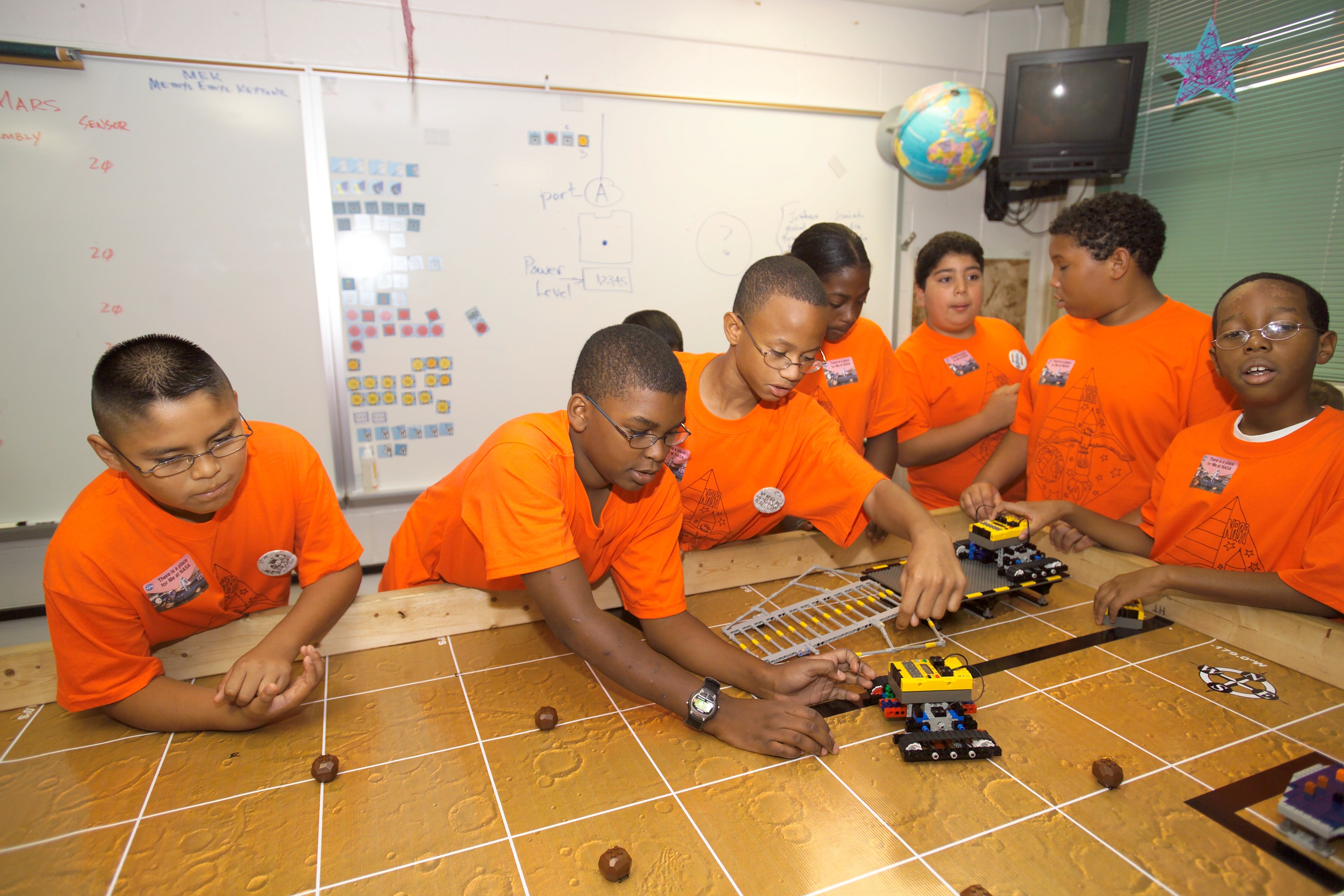
NASA Games, Articles, and Videos for Grades 5-8
Awesome Websites for Kids!
NASA: Students, Find Your Place in Space

Parents & Educators Place in Space NASA


Image Archive: Vera C. Rubin Observatory

Shenandoah National Parks VIRTUAL VISITS!
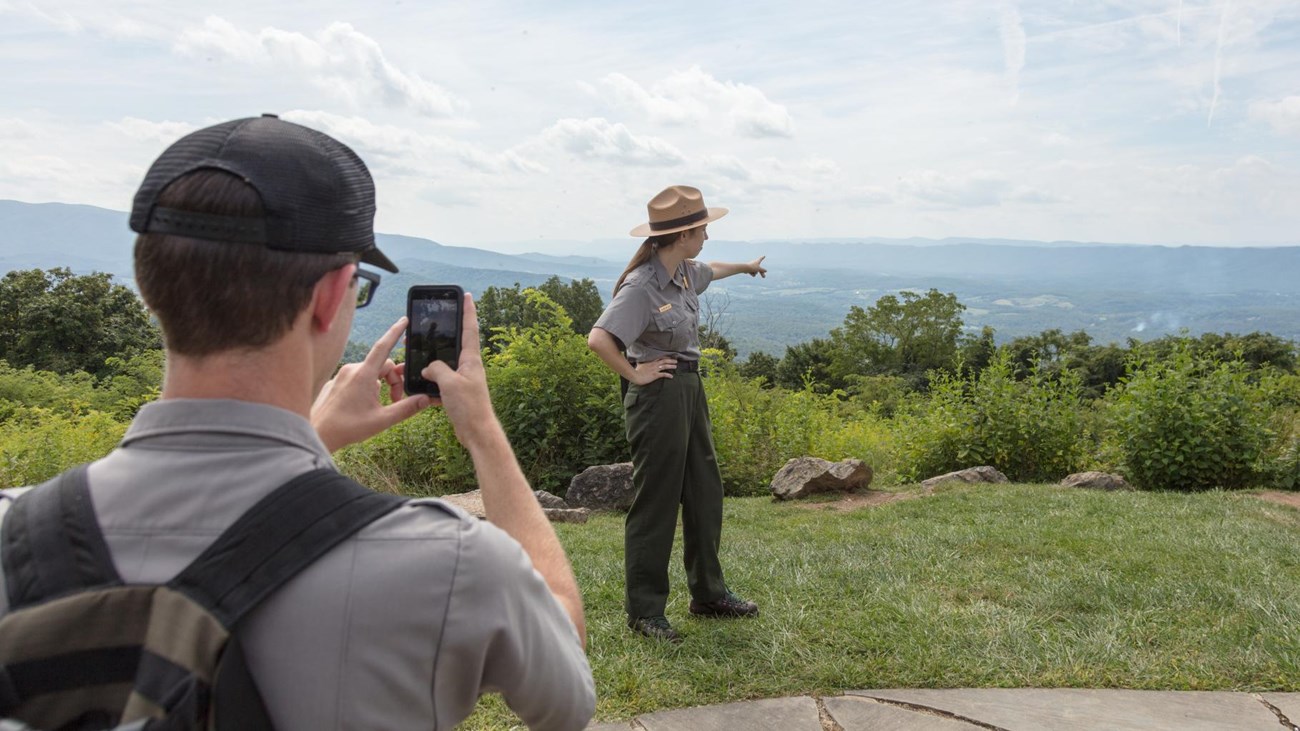
While it may be hard to replicate the whisper of wind winding through trees or the roar of a waterfall as the mist moistens your face, there are still ample opportunities to experience Shenandoah from the comfort and safety of your own living room (or couch, or bedroom, or back porch, or...). Take some time to virtually explore the Park and then download the virtual passport stamp to add to your collection! For more information, click on the link below!

National Geographic Kids - Weird but True!
Fun Facts About Everything! Click on links for exciting options!


National Oceanic and Atmospheric Administration NOAA - Just for Kids
Discover Your World in the link below!


Association for Library Service for Children (ALSC)
The Notable Children’s Digital Media list includes real-time, dynamic, and interactive media content for children 14 years of age and younger that enables and encourages active engagement and social interaction while informing, educating, and entertaining in exemplary ways. - Find out more in the link below!

CRRL Teen Times: Puzzles, Chess, Art, and Book Clubs


Always call ahead to make sure events are taking place - (540)- 372-1144
Chess Time
Casual chess for all experience and grade levels.
Every Wednesday from 5:30-7:30 pm at Fredericksburg branch
Second and Fourth Wednesdays from 4-6:00 pm at Porter branch
Hybrid Teen Book Group
Hybrid book group for teens and tweens in grades 7-12. Read one (or more!) books from our monthly selection, then join us for a discussion.
Second Thursday of the month from 5:30-6:30 pm at Porter branch
Teen Anime & Manga Club
First Thursday of the Month from 3-4:30 pm (Porter Branch)
Teen Game Night
Games, crafts, and more!
First Monday of the month (closed Labor day) from 5:00-6:00 pm (Salem Church branch)
Second Monday of the month from 4:30-5:30 pm (Howell branch)
Third Thursday of the month from 6-7:00 pm (Porter branch)
Crochet for Beginners
Every Monday from 4-5:00 pm at Salem Church Branch
Materials provided for learning basic stitches. Bring your own supplies for any crochet (or knitting) projects. All levels welcome.
Comic Creators Roundtable
First Thursday of the month from 6-7:00 pm at IdeaSpace
Investigate various creative and marketing themes, including dedicated sessions for collective cooperation.
Other Events
October 6: Teen Council Presents: Scarily Bad CGI Movie Night
6:30-7:30 pm
Bring your favorite movie snacks, pillows, and blankets!
Grades 6-12
Showing: Spookley the Square Pumpkin (G)
October 13: Teen Council Presents: Spirit on a Budget Costume Contest
Fredericksburg Branch
6:30-7:30 pm
Bring your best costume-or your worst! Prizes will be awarded by Teen Council.
Grades 6-12