
KISD Secondary Science Newsletter
Nov-Dec 2024

Killeen ISD cultivates scientific excellence through inquiry and engineering practices, empowering each student for life!
Hello, science friends!
With holiday season just around the corner, it’s a great time to pause and reflect on all the things we’re grateful for. In the busyness of everyday life, it’s easy to overlook the blessings we have. But you are a blessing to each of our students. Even if they don’t always show it, they appreciate you. And what a gift it is to share our passion for science with them! I’m truly thankful for all you do to inspire a love of science in students each and every day.
Sandra
Content
Science and Engineering Practices-Deeper Dive
Developing and Using Models
Students currently learn to represent the natural world using models and analyze models for advantages and limitations as scientists. The science TEKS being implemented in 2024 expand student expectations to include developing, using, and analyzing models as engineers. Recognizing the purpose of the work is the key to distinguishing scientific practice from engineering design; scientists explain phenomena, and engineers solve problems related to phenomena. Scientists use models to explore the interdependence of parts within a system and to develop explanations about the phenomenon observed. Engineers use models, specifically prototypes, to test their designs related to solving an engineering problem. In both science and engineering, students are now asked to develop models and use them as evidence to support a claim or to justify a solution.
Adjusting Practice
While students are learning and asking questions about new science ideas, teachers can encourage them to develop models that will help them understand or explain a phenomenon or provide a prototype of a design that can be tested. Teachers should continually ask questions such as “What does this model allow me to see?” and “What does this model not allow me to see?” Students should be encouraged to share the limitations and advantages of the model when using it as evidence to support their explanation or solution.
Reflection Questions for Students
1. How does creating a model help me explain my understanding?
2. How does creating and using a model help me apply my understanding to new situations?
3. How do the models that my peers and teacher create help me better understand what I’m learning?
Recurring Themes and Concepts-Closer Look
Consistency
Science Express: Learn and Turn!
Learn and Turn: Science Instructional Tools for Planning
Spiraling
WHAT: Spiraling occurs when teachers continue to revisit key ideas throughout the instructional sequence with increasing complexity to reinforce previous learning and make connections to new learning.
WHY: By revisiting TEKS frequently, students gain a deeper understanding of key concepts and can better apply their knowledge to current units and real-world scenarios. Spiraling also improves student retention and understanding, supporting struggling learners by allowing multiple ways to view content and make connections.
HOW: Identify standards to be spiraled using your Progress Check and Benchmark data. Identify when to spiral using the Unit Pacing Calendar, Unit Maps, upcoming Benchmark Blueprints, and the Year-at-a-Glance. Spiraling does not stop or take time from Tier 1 instruction. Rather, it should be intentionally embedded to connect to current unit lessons through warm-ups and whole- and small-group mini lessons.
NOW WHAT? After collecting formative and summative data, it's important to identify where spiraling for those standards will--or will not--occur. If spiraling of specific or challenging skills does not occur later in upcoming units (or occurs too far in the future), teachers can begin to intentionally embed warm-ups and whole- or small-group instruction that puts previously taught concepts back in the focus of students.
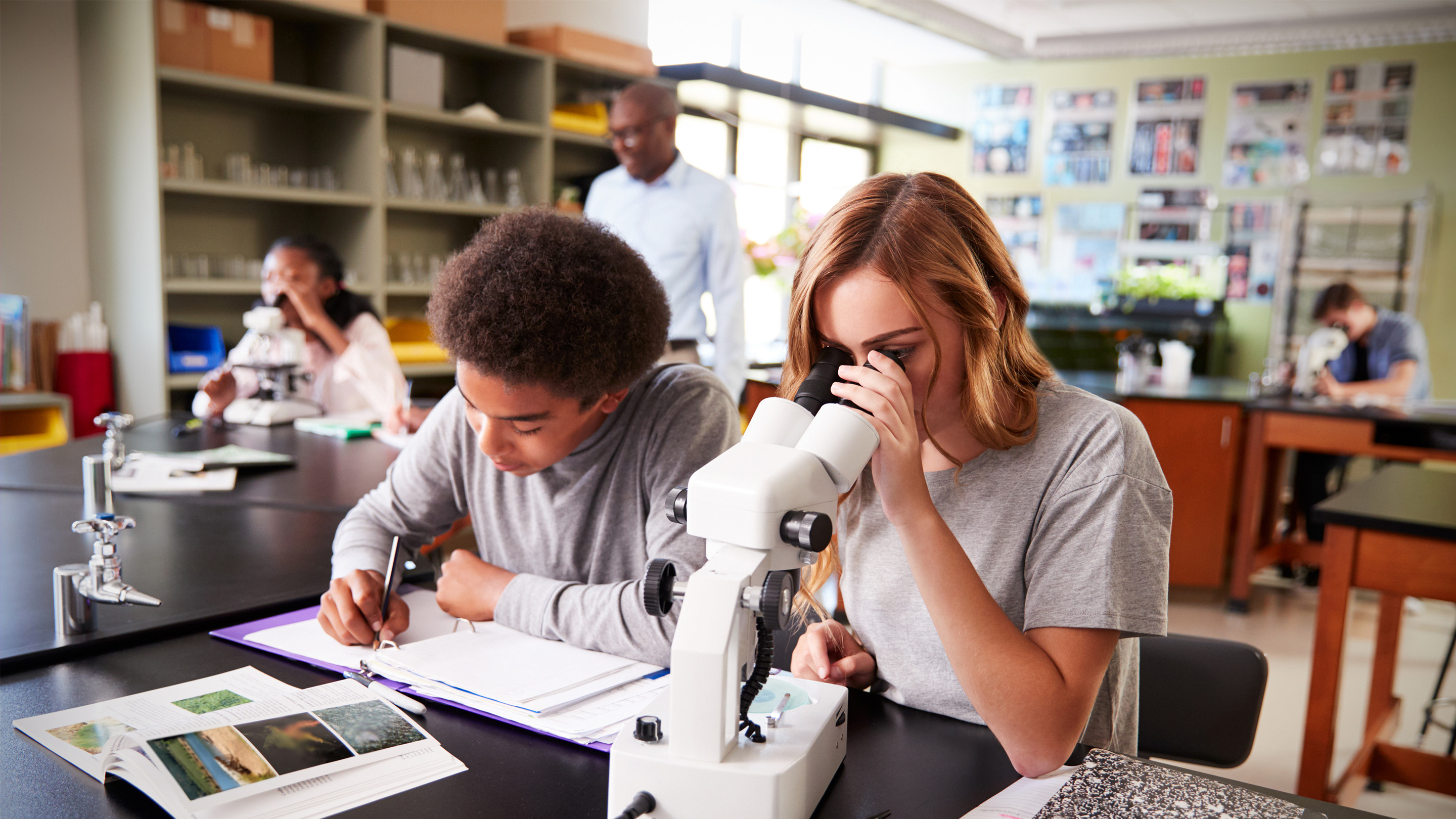
Coaching
Instructional Insights
Science Instructional Look Fors
The following actions and strategies can be observed during class, incorporated into lesson plans, or reflected in student work. This is Part 1 of an observation tool designed for campus leaders and teachers to guide and enhance effective science instruction.
Instructional Focus:
Learning Experiences are . . .
- Aligned to the standards associated with the content focus of the lesson
- Centered on at least one phenomenon or problem
- Motivated by students figuring out the phenomena or solving the problems
- Structured to facilitate students making connections to and building understanding of the current content or phenomenon
- Based in real-world situations that engage learners in experiences specific to the phenomenon/problem
- Grounded in scientifically accurate information and data
Data Protocols and Data Analysis Tool
Explore and Elevate - Oct 11 PD
MS Science Teachers Analyzing Data
MS Science Lab Safety Training
HS Science Lab Safety Training
Thank you to Mr. Devers for offering our Lab Safety Training!
If you missed the Lab Safety Training, no worries, we are working on a video to ensure you are trained!
Instructional Strategy of the Month
Think-Pair-Share
Scaffolding Think, Pair, Share can help facilitate deep discussions and drive thinking from ALL students. This handy resource is designed to help students master the WHAT, WHY, and HOW of the process.
Previous KISD Secondary Science Newsletters
September 2024: https://secure.smore.com/n/5vb9h
October 2024: https://secure.smore.com/n/1jray
Hello, I am Sandra Marcussen the District Instructional Specialist for Secondary Science. I'm excited to help you in any way that you need. You can reach me at sandra.marcussen@killeenisd.org, text at 254-371-9692 or call my desk phone at 254-336-0300.
