
Smore logo
remove_red_eye 978
page background

Science

June 15th - 19th

ScienceJune 15th - 19th
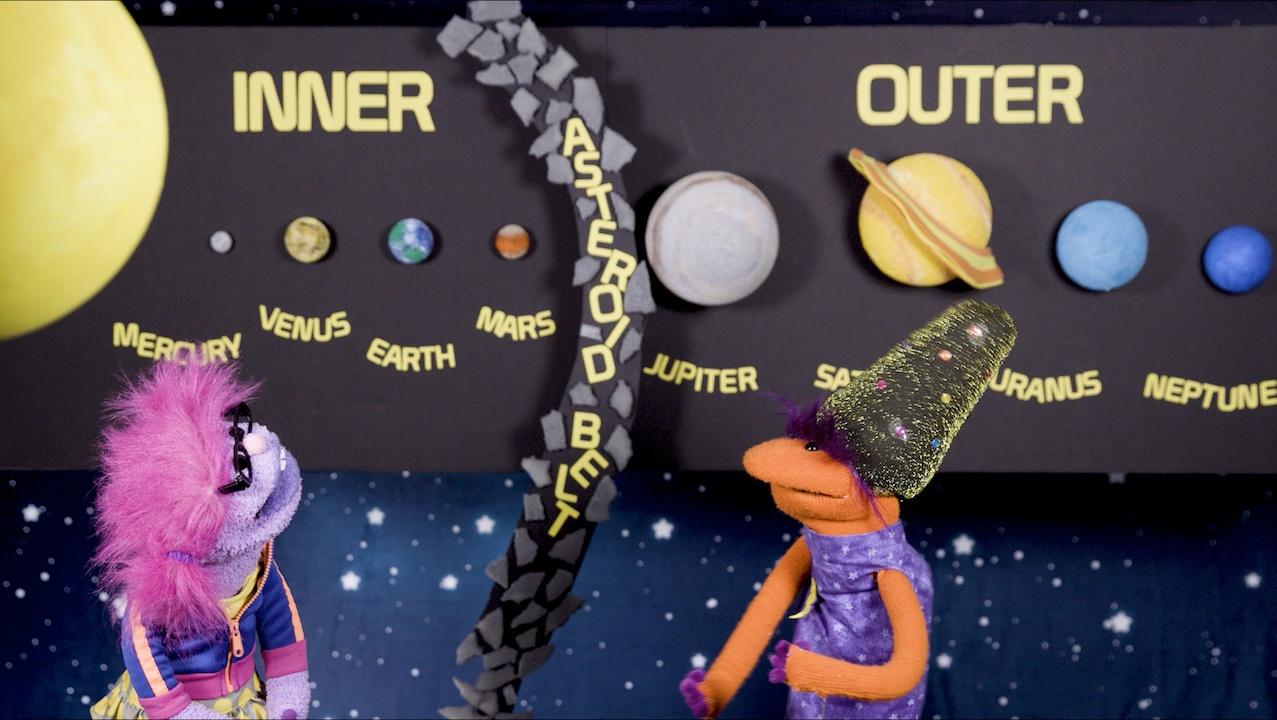
Image of Planets

Kindergarten - 2nd Grade Task Kindergarten - 2nd Grade Task

Inner and Outer Planets | Education Through Puppetry | PBS LearningMedia

Inner and Outer Planets | Education Through Puppetry | PBS LearningMedia

Do you know that inner and outer planets have different traits? Follow Astrid’s musical adventure in space and compare and contrast the planets for yourself.

launch florida.pbslearningmedia.org
pdf
insert_drive_file
Planet Design Activity Grades K-2.pdf
PDF-Planet Design Activity Grades K-2
Download
199.3 KB

3rd - 5th Grade Task 3rd - 5th Grade Task

VIdeo -Outer Space: "We are the Planets," The Solar System Song
Outer Space: "We are the Planets," The Solar System Song by StoryBots | Netflix Jr
pdf
insert_drive_file
Planet Design Activity Grades 3-5.pdf
PDF Planet Design Activity Grades 3-5
Download
429.4 KB

Then and Now: See a Satellite Tonight Then and Now: See a Satellite Tonight

Image of Earth with orbiting satellites
zoom_out_map

What are those bright lights traveling across the night sky? A plane? A spaceship? Aliens! No, they are satellites. Satellites orbit the earth during the day and night every day.

There are over 2,000 satellites orbiting the Earth right now (UCS, 2020). That’s a lot of traffic around our planet. We have our best views of these satellites just before sunrise and just after sunset. The angle of the Earth at these times allows sunlight to hit the satellites reflective panels. This creates the appearance of a bright light moving across the sky.

The former Soviet Union (Russia) launched the first satellite into space on October 4, 1957 igniting the space-race. Recently, SpaceX (United States), launched the Falcon 9 rocket containing 60 Starlink satellites. These Starlink Satellites are first of the 1,584 satellites to improve internet connection. (Space.com, 2020)

So, make a date to “See a Satellite Tonight”. It’s fun for all ages!


Webpage Sources: Union of Concerned Scientists & Space.com

Agriculture Spotlight: Can Astronauts Grow Plants in Space? Agriculture Spotlight: Can Astronauts Grow Plants in Space?

NASA's Matt Romeyn works in the Crop Food Production Research Area of the Space Station Processing Facility at the agency's Kennedy Space Center in Florida. Credits: NASA/Cory Huston

NASA's Matt Romeyn works in the Crop Food Production Research Area of the Space Station Processing Facility at the agency's Kennedy Space Center in Florida.

Credits: NASA/Cory Huston

Growing Plants in Space

Astronaut Scott Kelly nursed dying space zinnias back to health on the International Space Station. He photographed a bouquet of the flowers in the space station's cupola against the backdrop of Earth and shared the photo to his Instagram for Valentine's Day 2016. Credits: NASA/Scott Kelly
zoom_out_map

Astronaut Scott Kelly nursed dying space zinnias back to health on the International Space Station. He photographed a bouquet of the flowers in the space station's cupola against the backdrop of Earth and shared the photo to his Instagram for Valentine's Day 2016.

Credits: NASA/Scott Kelly

Astronaut Serena Auñón-Chancellor harvests red Russian kale and dragoon lettuce from Veggie on Nov. 28, 2018, just in time for Thanksgiving. The crew got to enjoy a mid-afternoon snack with balsamic vinegar, and Auñón-Chancellor reported the lettuce was "delicious!" Credits: ESA/Alexander Gerst
zoom_out_map

Astronaut Serena Auñón-Chancellor harvests red Russian kale and dragoon lettuce from Veggie on Nov. 28, 2018, just in time for Thanksgiving. The crew got to enjoy a mid-afternoon snack with balsamic vinegar, and Auñón-Chancellor reported the lettuce was "delicious!"

Credits: ESA/Alexander Gerst

The first growth test of crops in the Advanced Plant Habitat aboard the International Space Station yielded great results. Arabidopsis seeds - small flowering plants related to cabbage and mustard - grew for about six weeks, and dwarf wheat for five weeks. Credits: NASA
zoom_out_map

The first growth test of crops in the Advanced Plant Habitat aboard the International Space Station yielded great results. Arabidopsis seeds - small flowering plants related to cabbage and mustard - grew for about six weeks, and dwarf wheat for five weeks.

Credits: NASA

Space Adventure HOME
Click the button to go back to the home page.
Loading indicator

close

Created with

Communicate quickly and effectively with interactive newsletters.

Smore empowers educators to connect with their community, streamline school communications,
and increase engagement.

Create a newsletter