

FEBRUARY EDTECH UPDATE
February 2026 - EdTech Tips, Teaching Strategies & More..

Black History Month
Learning about black history is good for all students, not just African American students. It helps give a full and honest view of African Americans and it helps fight xenophobic views. These things benefit all students and makes schools a place where all children can feel valued, appreciated and safe. But we need to move beyond the “heroes and holidays” approach to multicultural education and cultural responsiveness. Engage students in seeing concepts, issues, themes and problems from different points of view. Pick a focus and go deep with it.
Here are some resources to help you do just that:
- Black History Month – Morningside Center for Teaching Social Responsibility
- Creative Resources for Teachers Celebrating Black History Month -Education Week
- Putting the Movement Back into Civil Rights Teaching – A Resource Guide for Classrooms and Communities
- Discuss Black History All Year Long – Learning for Justice
- Black History Month – Library of Congress, et al.
- Black History Month Resources – Archives.gov
- National Park Service – Black History Month
- National Museum of African American History and Culture
- Black History Month Lessons & Resources – National Education Association
- Black History Month Resources – ReadingRockets.org
- 6 Teaching Tools for Black History Month – Edutopia
- Resources for Educators: Elementary and Early Childhood – Teaching for Change
- 28 Days of Black History Month (newsletter) – Anti-Racism Daily
- Zinn Education Project. promotes and supports the teaching of people’s history
While the above resources are good. It is also important to teach about the history of the Black community, both past and present, here in Eugene. This contextualizes the information for students and reminds them that Black history happens everywhere, every day, even here in their hometown.
Key Aspects of Eugene Black History:
- The Ferry Street Village (1940s): Because of "sundown town" discrimination and deed restrictions that barred Black people from owning or renting within city limits before 1965, a community known as the "Ferry Street Village" or "across the bridge" was established by Black families in the 1940s on the north bank of the Willamette River.
- Displacement (1949): In August 1949, Lane County officials demolished this community, displacing over 100 people to make way for the Ferry Street Bridge, forcing residents to relocate to areas like West 11th Avenue and Glenwood.
- The Mims House: Built in the 1940s by C.B. and Annie Mims, this house in the Ferry Street area served as a safe haven, boarding house, and social hub for Black travelers, performers (like Louis Armstrong), and University of Oregon athletes. It is now listed on the National Register of Historic Places.
- Early Settlers: Wiley Griffin is recognized as one of the first Black residents to settle in Eugene, arriving around 1891 and working as a janitor and driver.
- Civil Rights & Activism: In the 1960s, activists like Willie Mims played a key role in local social justice, including supporting the first Black Panther Party in Oregon and confronting racist local policies.
- Commemoration: Today, the Strides for Social Justice app provides walking tours of significant Black history sites, and efforts are ongoing to create monuments honoring the displaced Ferry Street community.


Beyond the Scantron: Why It's Time to Ditch the 100-Question Final
Last week, my high school daughter walked through the front door after basketball practice and dropped her backpack with a heavy thud. She let out a sigh that only a teenager during finals week can produce. When I asked her how her finals went her demeanor went from, solemn and mopey to animated and angry. She went on to tell me about one of her final exams: a 100-question multiple-choice test.
I sat there for a second and thought: What are we doing? We are living in an era of unprecedented digital creativity, where students have the world’s information at their fingertips, yet we are still asking them to sit in a silent room and bubble in circles for two hours. Is a marathon of "A, B, C, or D" really the best way to see what a student has learned over the last five months?
The Problem with just giving a Mega-Multiple-Choice Test
While multiple-choice tests are easy to grade, they often fail the very people they are meant to serve. They often tests only lower-level cognitive skills, fail to show student reasoning, and expose learners to hundreds of false, potentially misleading, answers.
Here are some of the reasons large multiple-choice assessments are often ineffective:
Memorization: These tests primarily assess factual recall. They tell us if a student can remember a date or a definition, but they don't show us if the student has a deep understanding or the ability to apply that knowledge to the real world.
Multiple Guess: With 100 questions, the probability of "falling into" a correct answer increases. A student can achieve a decent score without true proficiency, which completely distorts the data.
Passive Learning & "Cramming": We’ve all been there. You memorize the facts, take the test, and "brain dump" everything the next day. It encourages short-term retention rather than long-term mastery.
Neglecting Higher-Order Thinking: It is incredibly difficult to measure analysis, synthesis, and evaluation through a Scantron. We should be teaching students to think, not just to pick the "least wrong" option.
The Danger of Distractors: Think about this: a 100-question test contains 300+ wrong answers. This can actually reinforce misconceptions and introduce faulty information into a student’s memory.
No Insight into Process: As an educator, a red "X" doesn't tell me why a student missed the concept. It doesn't show the "work" or the thought process, making it impossible to address specific learning gaps.
Strategy vs. Knowledge: Often, these tests measure who is the best at "test-taking strategies"—like eliminating outliers—rather than who has actually mastered the subject matter.
A Better Way
If we want to see what students actually know, we need to give them the space to create. Check out these 20 creative digital project ideas from Ditch That Textbook. Not only do they give you some incredible digital alternative ideas to the traditional final exam, but they also share the tools and resources needed to implement them.
The Bottom Line
When we replace 100 bubbles with a digital project, we aren't just making school "fun"—we are asking students to analyze, create, and communicate. Let's move away from the "guess and stress" culture of finals week and move toward something that actually prepares them for the future.


Beyond the Screen: Moving from Digital Delivery to Active Creation
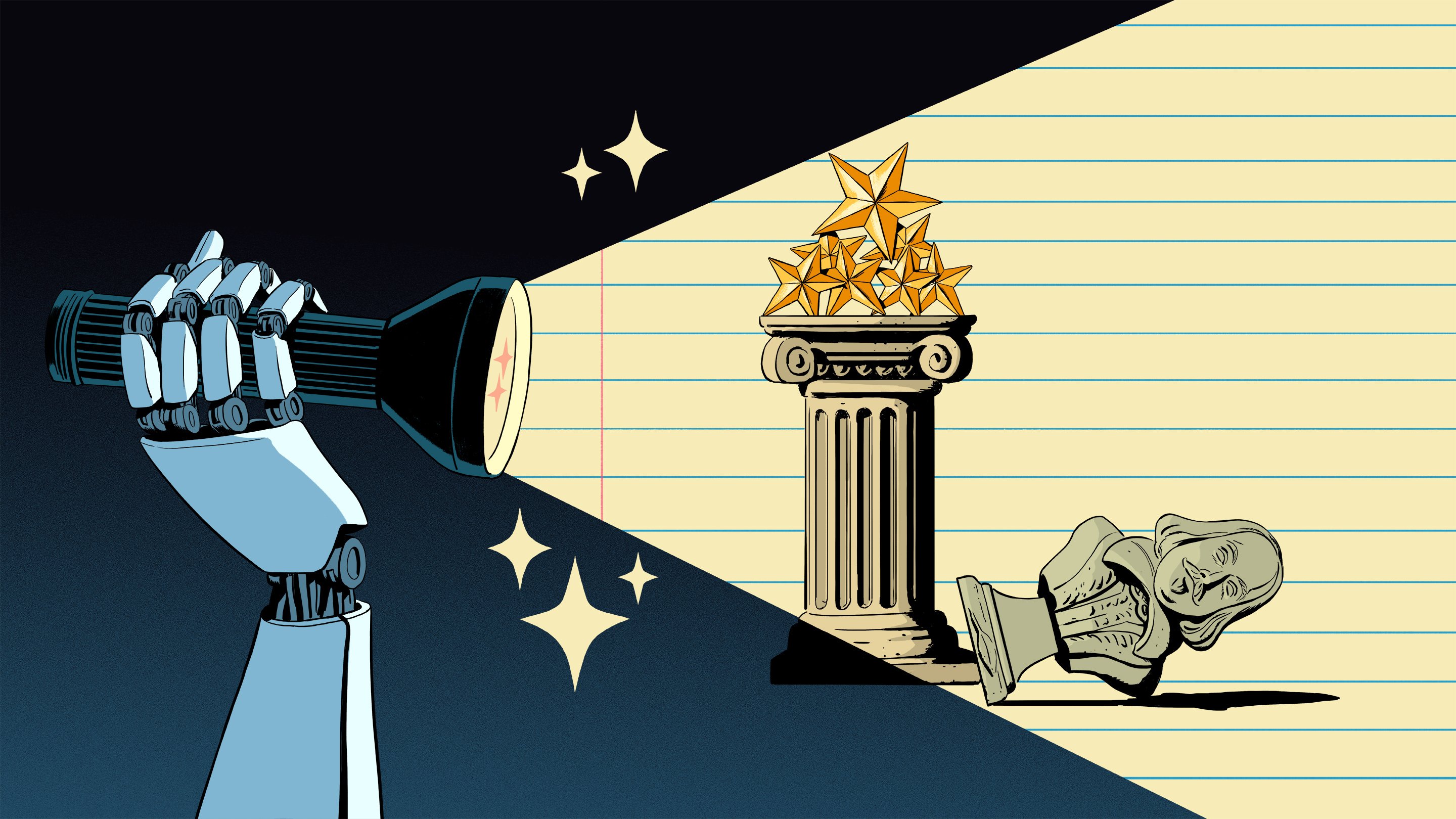
Educational Technology seems to be under attack on multiple fronts these days. Fueled by concerns over "brain rot," declining attention spans, and stalled cognitive development, you are seeing multiple states ban cellphones in the classroom, schools reversing course on their 1:1 deployments and teachers/schools going completely analog to combat the use of AI. Many teachers are not yet past the tech fatigue they experienced as a result of the move to online learning and have yet to re-engaged any more than what is required. While others have become overly reliant on apps and digital curriculum in the wake and have yet to find a healthy balance. So rather than face the task of fixing an antiquated and broken system, some would prefer to blame the shiny object and use screen time as the scapegoat for all the ills of the educational system.
To move forward, we must acknowledge the poor practices that exist and embrace a model where technology is used not as a delivery device, but as a powerful instructional tool for active creation.
Check out the entire article here 👉 Beyond the Screen



The Winter Olympics
Get ready for the Winter Games! This #WinterOlympics Explore Board is packed with interactive activities: Watch math & science Listen to podcasts Create trading cards & art Try STEM challenges Start exploring today: https://virtualescaperooms.org/activities/winter-olympics-explore-board

Snowman Warmup

2026 Starter Pack

Eric Curts
💎 New EduGem: www.edugems.ai/gem/alternat... 🎚️ Alternate Assessment - Create high-quality alternate versions of your existing quizzes or tests for retakes, make-ups, or differentiation (lower level, higher level, accommodations)

Learn & Laugh with Mr. Gaff

Incredibly Shareable Wayground


SO COOL.....
1. Makers Making Change - provides a unique opportunity for teachers and schools to integrate engaging STEM learning with real-world social impact.
2. Brilliant - Once the virtual classroom is created, teachers assign problem-solving based courses in math, science, and computer science to their students for enrichment, warm-ups, or supplementary learning.
3. Retro Report - Retro Report is an independent nonprofit newsroom that offers a library of over 250 videos (and growing!) and classroom resources free to educators.
4. EdLight is designed to analyze handwritten student work, highlight gaps, and suggest next steps. It is often positioned as a math support tool. This is especially when teachers are working with paper based assignments or whiteboard work.
5. Goblins - Let students speak and draw their thinking naturally. They’ll get 1-on-1 live math help that sounds just like you.
6. Recess Reset provides a turn-key solution to help students regulate their nervous systems and get ready to learn without the struggle. Built by former teachers in partnership with Stanford University, it helps you move beyond behavior management to start building self-aware classroom communities.





Curriculum Administrator - Educational Technology
Email: huntley_ju@4j.lane.edu
Website: https://sites.google.com/view/huntley-edtech/justin-huntley
Location: 200 North Monroe Street, Eugene, OR, USA
Phone: 541-790-7587
Twitter: @JustinHuntley

