remove_red_eye 2.4K
page background

March DEI Newsletter

ACNL | 2025

March DEINewsletterACNL | 2025

Caring for Incarcerated Populations: The March DEI Committee Newsletter

Caring for incarcerated populations presents unique challenges and opportunities for healthcare professionals committed to equity and justice. This often-overlooked group faces significant barriers to quality care, including limited access to preventive services, mental health support, and chronic disease management. Moreover, systemic inequities, such as racial and socioeconomic disparities, are magnified within correctional settings, further complicating the healthcare landscape.


As nurse leaders, we play a critical role in addressing these disparities, advocating for humane treatment, and ensuring that care delivery upholds the principles of dignity and equity. This month's newsletter delves into the complexities of healthcare for incarcerated individuals, highlighting innovative approaches, policy implications, and the vital role of nursing leadership in promoting health equity within correctional environments. Together, let us explore how we can extend compassionate, evidence-based care to this vulnerable population and fulfill our shared commitment to holistic health for all.


The DEI Committee Members:

Anitra Williams

Christina M. Oldini

Janette Moreno

Kimberly Long

Karen Mitchell-Keels

Make'da Traynum

Marshall Blue

Nicole Barnett

Sharon Goldfarb

Sheree Criner

Yury Nevarez


Newsletter produced by Vanessa Kerr and Sharon Goldfarb.

Incarceration Rates by Country 2024

Click on a country for details. Incarceration Rate (per 100k population) Incarceration is the state of being confined in prison, typically as punishment for a crime. Every country in the world has a prison system of some sort, though the exact nature of that system-as well as the number of prisoners incarcerated within it-varies tremendously from country to country.

launch worldpopulationreview.com
Cut-rate care: the systemic problems shaping 'healthcare' behind bars

Cut-rate care: the systemic problems shaping 'healthcare' behind bars

In correctional healthcare systems, care is secondary to controlling costs and avoiding lawsuits -- a problem plaguing both private and public healthcare delivery. What will it take to get people the care they need?

launch prisonpolicy.org
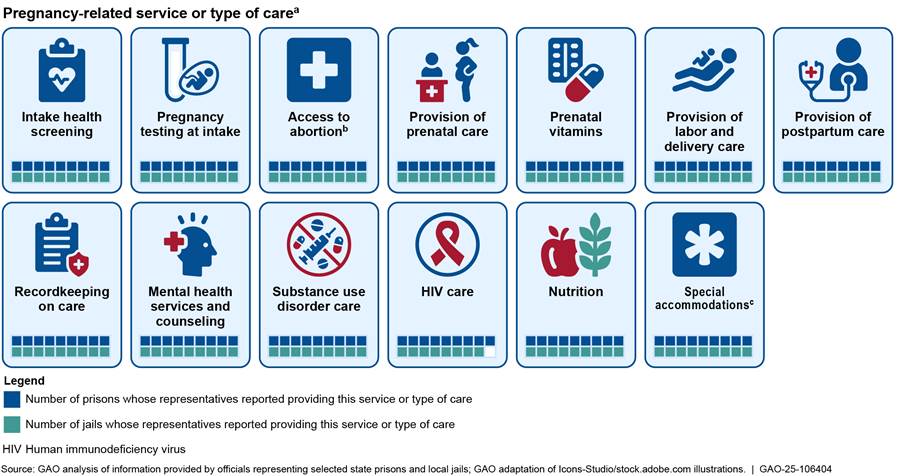
PREGNANT WOMEN IN STATE PRISONS AND LOCAL JAILS:

PREGNANT WOMEN IN STATE PRISONS AND LOCAL JAILS:

Report to Congressional Requesters October 2024 GAO-25-106404 United States Government Accountability Office View GAO‑25‑106404. For more information, contact Gretta L. Goodwin, 202-512-8777, GoodwinG@gao.gov Highlights of GAO‑25‑106404, a report to congressional requesters October 2024 Pregnant women in STATE PRISONS AND LOCAL JAILS Federal Assistance to Support Their Care According to HHS, the U.S.

launch files.gao.gov
Incarcerated Populations and Healthcare: Myths and Facts

Incarcerated Populations and Healthcare: Myths and Facts

A CU Anschutz researcher dispels major myths surrounding health in the carceral system in the United States - and the far reaching impacts it creates.

launch news.cuanschutz.edu
Care of Incarcerated Patients

Care of Incarcerated Patients

The United States has the highest incarceration rate of any nation in the world. Approximately 870 of every 100,000 U.S. citizens are currently in jails or prisons. U.S. inmates are disproportionately young males, racial and ethnic minorities, and persons of low socioeconomic status.

launch aafp.org

TBI and Correctional Facilities

This page provides information on TBI management in correctional and detention facilities.

launch cdc.gov
zoom_out_map

Access To Long-Term Nursing Care For Justice-Involved Elderly

With the United States’ population rapidly aging, one facet remains largely unseen: Incarcerated people get old too. By 2030, one in three incarcerated people will be considered geriatric, as compared to one in five Americans overall. Unprepared for this challenge, our prisons have already begun to resemble nursing facilities, ill-equipped to address this public health crisis. Policy makers can protect the ethical and effective delivery of care to elderly incarcerated people by decarcerating frail patients with low public safety risk. Forming partnerships with community resources may be necessary to ensure that nursing home care is available to patients unable to remain in jails and prisons.


Read more here.

Multi-Level Barriers to Prison Mental Health and Physical Health Care for Individuals With Mental Illnesses

People with mental illnesses are overrepresented in the U.S. prison population. It is well established that incarceration for this population poses physical and mental health risks including greater likelihood of victimization and suicide compared to the general prison population. Yet, research is less clear about how staff and services shape these prison experiences. The aim of this study was to examine how people with mental illnesses experience incarceration through interactions with correctional officers and treatment staff and their use of physical and mental health care services.


Read more here.

Mental Health Treatment While Incarcerated

Mental Health Treatment While Incarcerated

Mental Health Treatment While Incarcerated Where We Stand NAMI believes that all people with mental health conditions who are incarcerated deserve access to quality mental health treatment. NAMI supports public policies and laws that expand and improve access to mental health care within prison and jail settings.

launch nami.org
What to expect from correctional nursing

What to expect from correctional nursing

American Nurse Journal, the official, clinically and career-focused journal of the American Nurses Association (ANA), is a fresh voice of nursing across America

launch myamericannurse.com
Inadequate Health Care: A Significant Problem Affecting Incarcerated Women

Inadequate Health Care: A Significant Problem Affecting Incarcerated Women

The United States prison system is generally built on a male-specific model, leaving many correctional facilities significantly unprepared to meet the unique biological, psychological, and social health needs of women. This has a negative impact on the health of female inmate populations and presents a challenge that must be addressed.

launch sph.umich.edu

Addressing Barriers to Healthcare in the Correctional System: The Role of Nurses and Nurse Leaders

Individuals within the correctional system encounter numerous barriers to accessing quality healthcare, exacerbating existing health disparities and perpetuating cycles of inequity. From systemic obstacles to the lack of adequate resources, the challenges are multifaceted and urgent. Nurses and nurse leaders are uniquely positioned to address these challenges and advocate for improved health outcomes for incarcerated populations.


Many incarcerated individuals lack timely access to healthcare services, including preventive care, screenings, and treatment for chronic illnesses. Long wait times, insufficient staffing, and restrictive policies often delay critical interventions. Chronic conditions like diabetes, hypertension, and asthma are common among incarcerated individuals, often going untreated or inadequately managed. Infectious diseases such as hepatitis C, tuberculosis, and HIV also disproportionately affect this population due to crowded living conditions and limited preventive measures.


A significant proportion of incarcerated individuals suffer from mental health conditions and substance use disorders. Yet, mental health services in correctional facilities are often underfunded, leaving many without proper diagnosis or treatment. Incarcerated individuals frequently encounter stigma and dehumanizing attitudes, both within and outside the correctional system. This can deter them from seeking care and undermine their trust in healthcare providers. Marginalized groups, including Black, Indigenous, and People of Color (BIPOC), are overrepresented in the correctional system, reflecting broader societal inequities. These populations often enter incarceration with pre-existing health disparities that the correctional environment exacerbates.


Another pressing concern is the rapidly growing aging prison population. As sentences lengthen and individuals age behind bars, correctional facilities are increasingly confronted with the challenges of managing geriatric care. Older incarcerated individuals often present with complex health needs, including mobility impairments, cognitive decline, and age-related chronic conditions such as arthritis, heart disease, and dementia. Correctional facilities are often ill-equipped to address these needs, creating significant gaps in care. The lack of accessible infrastructure, trained geriatric staff, and continuity of care for aging prisoners underscores the urgent need for systemic reform.


Nurses and nurse leaders can drive meaningful change in the correctional healthcare system by addressing these barriers and promoting equity, compassion, and advocacy. Nurse leaders can advocate for systemic reforms that prioritize the health and well-being of incarcerated populations. This includes lobbying for increased funding for correctional healthcare, improved staffing ratios, and expanded access to mental health services.


Many incarcerated individuals have experienced trauma, which influences their health and behavior. Nurses trained in trauma-informed care can foster trust, reduce retraumatization, and create a supportive environment for healing. Implementing routine health screenings, vaccinations, and education programs can address chronic and infectious diseases more effectively. Nurses can also empower incarcerated individuals with knowledge and skills to manage their health post-incarceration.


Providing culturally sensitive care is essential for addressing the diverse needs of incarcerated populations. Nurse leaders can organize training programs to ensure healthcare teams understand and respect cultural differences. Nurses can partner with community organizations to bridge gaps between correctional and community healthcare. Transition programs that support individuals re-entering society can improve continuity of care and reduce recidivism. Nurse leaders can spearhead research initiatives to better understand the unique health needs of incarcerated populations and identify evidence-based interventions. Continuous quality improvement efforts can enhance care delivery within correctional settings.


Caring for incarcerated populations, including the aging prison population, is a moral and professional imperative for nurses and nurse leaders. By addressing barriers to care, advocating for equity, and fostering compassion, the nursing profession can transform the correctional healthcare system into one that upholds dignity and promotes health for all. Together, we can ensure that no one, regardless of their circumstances, is left behind in the pursuit of health equity.

Previous Newsletters

February: Black Men in Nursing

January: Shaping the Future of Equitable Healthcare

December: Nursing History

November: Rural Healthcare

October: Disaster Preparedness

September: Political Action Edition

August: Community Health Nursing

July: Advocating for Patient Summer Safety

June: Pride Month

May: Mental Health Awareness Month

April: Disability Rights

March: Women's Health Equity

February: Environmental Health and Justice

January: Combatting Misinformation and Disinformation

December: Resilience and Community Care

November: Navigating the Digital Frontier

October: Legislative Update

September: Maternity Care

August: Civic Health Month

ACNL logo
open_in_new zoom_out_map

Association of California Nurse Leaders

Email: info@acnl.org
Website: https://www.acnl.org/
Location: 180 Promenade Circle suite 300, Sacramento, CA 95834, USA
Phone: 916-779-6949

Kimberly Long
Kimberly is using Smore to create beautiful newsletters
Loading indicator

close