
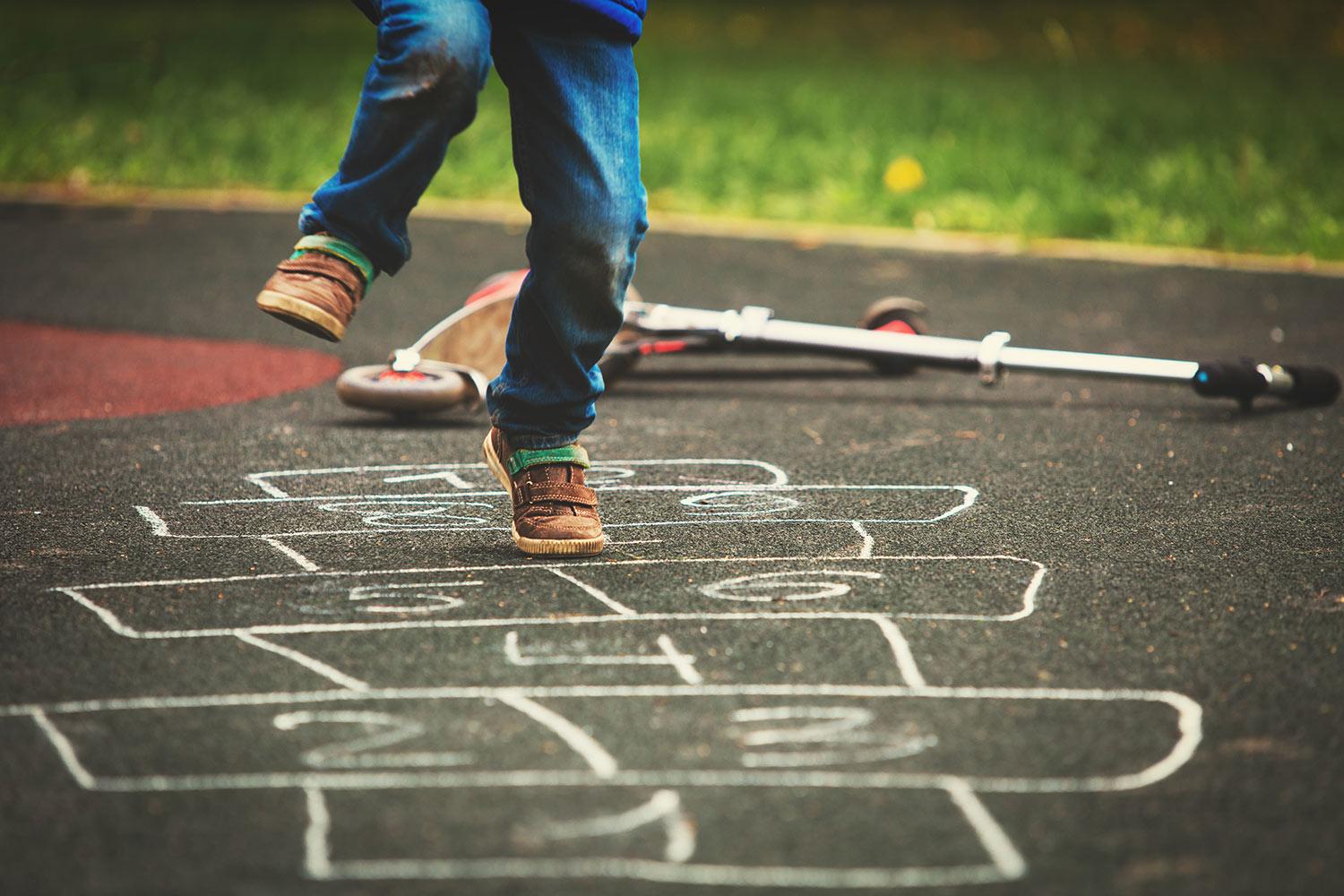


Motor skills encompass a range of abilities, from basic movements like sitting and running to fine motor tasks like writing and cutting. They are categorized into large (gross) motor skills and small (fine) motor skills.
- Large motor skills involve bigger muscle movements needed for activities like running, jumping, climbing, and riding a tricycle. These skills develop rapidly in early childhood (ages 3–5).
- Small motor skills focus on hand and finger coordination, essential for tasks such as holding a crayon, cutting with scissors, and tying shoelaces. Developing these skills requires strengthening hand muscles through play.
Both types of motor skills are crucial for a child’s physical development and daily activities. They are interconnected and typically develop simultaneously. Following are activities that encourage the development of these critical skills.


Registration is NOW open. Please allow 4-6 weeks for applications for the next school year to be reviewed and to receive a response from Central Registration. Applications will be reviewed in the order they are received. You will receive an email once the review is complete with additional details.


Tips for Developing Motor Skills
The development of motor skills is essential for a child’s growth in multiple ways:
- Physical Health: Enhances strength, coordination, and agility while promoting overall fitness and preventing obesity.
- Cognitive Development: Supports learning by improving spatial awareness, problem-solving, and understanding of the environment through movement.
- Independence: Enables children to complete daily tasks on their own, such as dressing, eating, and grooming.
- Social Interaction: Encourages teamwork, communication, and cooperation through activities that involve peer engagement.
Click photo above or link below for strategies to foster development of motor skills in young children.

Supporting Development of Fine Motor Skills At Home
Fine motor skills are an important group of skills that relate to how a child uses the smaller muscle groups in their bodies – like those in their hands, fingers, and wrists – to perform tasks.
Think of things like tying shoelaces, cutting paper with scissors, even writing their own names. Something as simple as grabbing your car keys before the school run uses your fine motor skills!
But these are only a few of the many reasons why developing fine motor skills are a major focus in early childhood development. (Click the links to read more.)

Benefits of Gross Motor Activiity
Gross motor skills significantly impact academic success by enhancing key cognitive and behavioral abilities:
- Focus & Attention: Physical activities improve concentration, aiding tasks like reading and problem-solving.
- Memory: Practicing motor skills strengthens neural connections, boosting recall.
- Executive Functioning: Activities develop planning, organization, and self-regulation, essential for academic tasks.
- Classroom Participation: Confidence in movement encourages active engagement in learning.
- Brain Development: Physical activity supports cognitive growth, improving overall performance.
Parents can play a vital role in helping their children develop gross motor skills. By providing opportunities for physical activity, practicing motor skills, encouraging outdoor play, using play-based activities, providing appropriate equipment, modeling physical activity, and seeking professional help if needed, parents can support their child's overall physical development.
The video here, 45 GROSS MOTOR ACTIVITIES to try at home will help to imact your child's gross motor skills.

"How Do You Dance?" by Thyra Heder
How Do You Dance? explores dance in all of its creativity, humor, and—most of all—joy, in a picture book celebration of personal expression that will inspire young and old readers alike to get up and get moving.

"Marc Brown's Playtime Rhymes" by Marc Brown
A lively collection of the artist's 20 favorite read-and-play-along finger rhymes complements such entries as "The Itsy-Bitsy Spider" and "I'm a Little Teapot" with pictorial instructions for correlating finger movements.


