
Smore logo
remove_red_eye 343
page background

The Coaching Corner

The CoachingCorner

πŸ‚ Believe in the Magic of the Season! πŸ‚ πŸ‚ Believe in the Magic of the Season! πŸ‚

zoom_out_map

zoom_out_map

zoom_out_map

πŸ‚πŸOctober Choice Board πŸ‚πŸ
πŸŽ‰K-2 Hispanic Heritage Choice Board
🎊3-5 Hispanic Heritage Choice Board

πŸ“šLet's Fall in Love With Reading & Writing! πŸ“šLet's Fall in Love With Reading & Writing!

Becoming Lifelong Readers and Writers


In our work with students, we encourage students to become lifelong readers and writers, but what does that really mean? Our goal for students is to establish the essential foundations of literacy development and to learn the many purposes of reading and writing. We must continue to have high expectations, encourage success, and support students in achieving their goals. As educators, we want literacy to become an integral part of their daily lives therefore we must build an effective writing and reading process over time.


Connecting Reading and Writing


Reading and writing may be taught as separate subjects, but students must understand the profound connection between them. Smith (1988, 35) calls this stance, reading like a writer to write like a writer. Research suggests that when writers read, they notice aspects of text that then become possibilities for their own writing. As students enjoy reading stories, have them pay attention to craft, structure, and language conventions. Have conversations surrounding what students notice about how the author wrote their story and how students can use this as inspiration for their own writing. As students compose stories, have conversations about what they read that can spark a new story idea!

Building an Effective Process Over Time
The writing and reading developmental characteristics along a grade level continuum. The goal is to achieve consistent progress by knowing where to meet students and knowing where to take them. Students will need time and explicit teaching.
zoom_out_map

The Workshop Model

Reading and writing workshops are deliberately designed to offer a simple and predictable environment so that the teacher can focus on the complex work of observing students' progress and teaching to their needs.


  • Each session begins with a mini lesson. Students sit with a long-term partner while in the mini lesson.
  • The mini lesson ends with the students being sent off to their own independent work.
  • As students work, the teacher confers with them and/or leads small groups.
  • Partway through independent work time, the teacher stands and delivers a mid-workshop teaching point.
  • The workshop ends with a share.

πŸ“‚ Resources to Support Students During Independent Work πŸ“‚ Resources to Support Students During Independent Work

BHH Reading
Reading Strategies-Interactive Bookmarks
Create a Writing Office for Your Students
If you would like to see a sample, please stop by my office in the 3/4 grade pod room 2.
Sample Writing Revision Choice Board

πŸŽƒ Pumpkin Spice Makes Math Very Nice! πŸŽƒ Pumpkin Spice Makes Math Very Nice!

πŸ—“ Let's Talk Number Corner!

Number Corner is an essential component of the Bridges in Mathematics curriculum. Daily routines build community and opportunities for social-emotional learning, with workouts focused on the critical areas of study at each grade level. Number Corner is also a place to provide access and equity to each and every student by celebrating multiple strategies for solving problems.


⏰ Pressed for time? Refer to the FTS Modified NC Calender and consider some of these tips:


  • Have pairs of students update the workouts listed on the Daily Planner instead of doing them with the whole class. See this short video on what an update might look like!
  • Instead of having one helper for the day or week, consider pulling sticks to engage more students in each day’s workouts. Pair students up so they have someone to talk to about the information and double-check their work. This practice helps a lot with pacing!
  • Make sure the board is accessibleβ€”low enough for students to reach without a stool. See the photo gallery for some clever ways teachers have used easels, backs of bookshelves, and portable cork boards. Gallery of Number Corner Displays
  • Print and use the Key Questions from the Resources tab each month, to promote inquiry and discourse. Click on your grade level for October: K, 1, 2, 3, 4, 5.
  • Use the Think-Pair-Share strategy with whiteboards to monitor student understanding of the concepts. Use the suggested Support & Challenge ideas in the Teacher's Guide to advance student learning.
  • If you can’t get to the Computational Fluency workout during your Number Corner time, consider introducing the game teacher vs. students and putting it out as an additional Work Place.
  • Post the Word Resource Cards near the board where your materials are kept to help support the precise math language we want to model and have students use.
Number Corner Preview Monthly Videos
In order to support effective planning for Number Corner, The
Math Learning Center has created a set of Number Corner preview videos,
one for each grade and month of the program.

How Did You Grow as a Mathematician? How Did You Grow as a Mathematician?

Select, Reflect, Answer
Are you in need of a math exit ticket after any lesson? This is it!

πŸ‚πŸ Classroom Management πŸπŸ‚ πŸ‚πŸ Classroom Management πŸπŸ‚

Tic-Tac-Toe
Try this interactive and fun strategy that your whole class can participate in that will promote teamwork!

🍁 Leaves are falling. Science is calling! 🍁 🍁 Leaves are falling. Science is calling! 🍁

Mystery Science-Fall Lesson Collection
15 Ready to Go Fall Lessons and Activities!
Who can get enough of the colors of autumn?
Kids always want to know the "why" -- this great set of activities helps students deduce all kinds of answers to why the leaves turn colors.
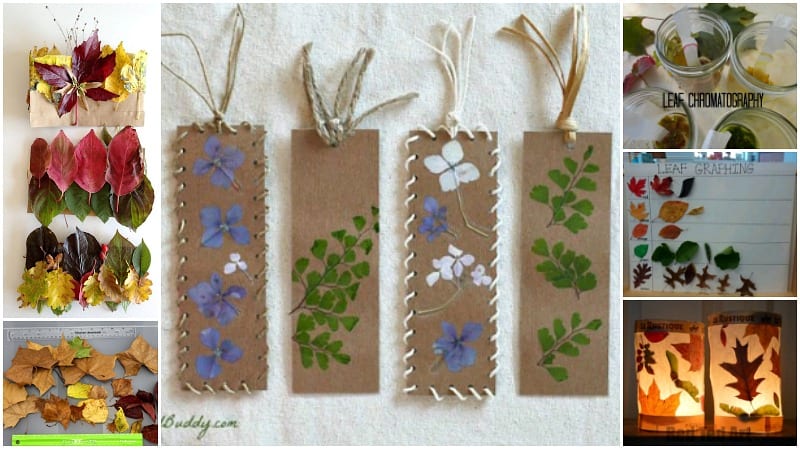
12 Leaf Projects to Teach Great Lessons in Your Classroom

12 Leaf Projects to Teach Great Lessons in Your Classroom

launch weareteachers.com
Fall Science Activities
Kick it off with leaves, but don't stop there. This blog is filled with activities from weather stations to density columns.
Did you know...?
Equinox comes from the Latin words for 'equal' and 'night'? Meaning that on the equinox, the day and night is roughly equal in length. Read more about it here!

Wait, don't 🍁 yet! We still have to get our groove on... Wait, don't 🍁 yet! We still have to get our groove on...

Earth, Wind & Fire - September (Official HD Video)
zoom_out_map

Ms. Nanette Taddeo

As the instructional coach, I am committed to supporting all of you so you can best support your students. My coaching philosophy is built upon the importance of open communication, fostering positive relationships, collaboration, equity, and reflection. My chief responsibility is to support the teachers with the shared goal of supporting students. Coaches examine data, do research, and work alongside teachers to increase student achievement. The teacher will always be the expert in the classroom and serve as a very valuable resource in our school community. There is no ask too big or too small if the final goal is student success!

Email: ntaddeo@freeholdtwp.k12.nj.us
Website: https://sites.google.com/freeholdtwp.k12.nj.us/talkwithtaddeo/home
Location: Freehold, NJ, USA
Twitter: @MsTaddeo

Loading indicator

close

Created with

Communicate quickly and effectively with interactive newsletters.

Smore empowers educators to connect with their community, streamline school communications,
and increase engagement.

Create a newsletter