

Global School Play Day
is Friday, February 6, 2026

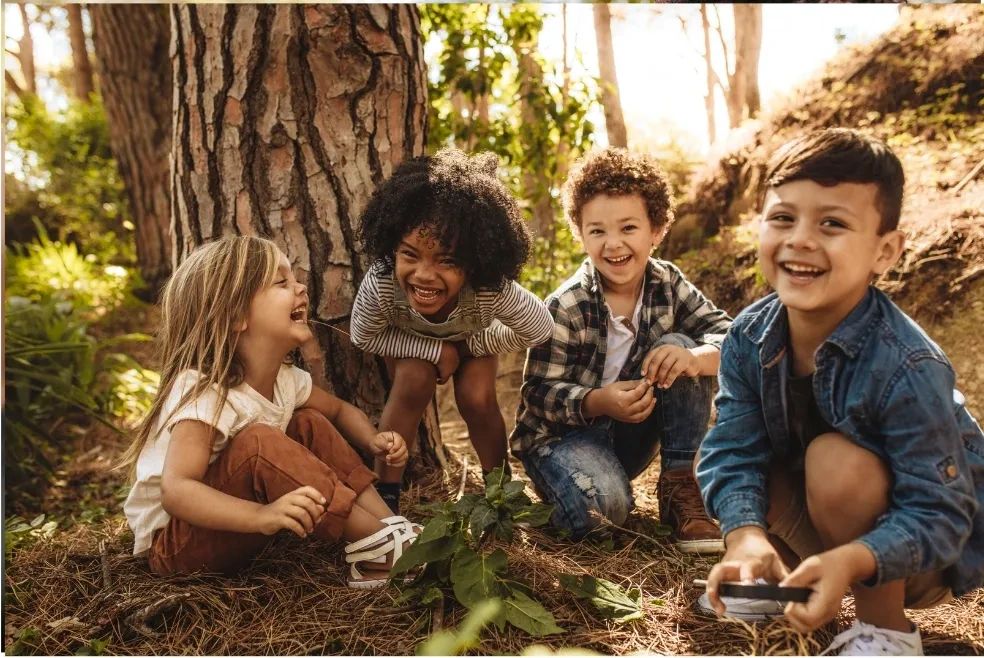


What is "Global School Play Day?"
Play has significant psychological and cognitive impact on children.
Positively, play...
- develops physical fitness,
- refines physical (gross motor and fine motor) skills,
- provides practice for social and emotion development (requires cooperation, problem-solving, work in close proximity, requires emotional regulation, etc...)
- at times requires high levels of strategic thinking,
- and assists in developing skills to navigate risk and fear.
In other words, play can be considered the "work" of children.
Current research bears out significant negative impact on a child’s cognitive, social, and emotional development when play, especially unstructured play, is absent from children.
Research findings illustrate that a decline in play is closely correlated to
- a decrease in empathy,
- increase in anxiety and depression,
- a decline in creativity,
- and deficits in socialization skills.
Simply put, Global School Play Day started in 2015 with the intent to set aside one day (or portion of the day) for students to engage in unstructured play. It is an opportunity to introduce and inspire us to consider the necessary benefits of play.
On Friday, February 6th, 2026, Boone Meadow will once again participate in Global School Play Day. Team Meadow supports this opportunity to engage with our students in another way that taps into their creative minds and friendships. This day will provide us (Team Meadow) the opportunity to:
- let kids be kids!
- observe and interact with students as they engage in authentic social exchanges,
- use this time to witness how your children navigate peer relationships,
- expand our understanding of your child as a person that has academic, social, and emotional aspects of their well-being,
- witness how they interact, show empathy, assist one another, problem-solve, and create
- glean more insight and information in order to provide more feedback to you (parents/guardians) that we are often unable to provide from our typical school day programming.
Our staff was inspired to consider participation years ago when we viewed a TedTalk by Dr. Peter Gray. In this TedTalk, Dr. Gray shares his research on the impact of decreased play. I have provided a link to the TedTalk below. He definitely provides some interesting food for thought.


What can my child bring for GSPD?
Keep in mind, no electronics or handheld electronic games.
Appropriate (non-violent, school appropriate) items include:
- Legos and other construction/engineering items (Lincoln Logs, K'nex, marble runs, Tinker Toys, Magna-Tiles, Snap Circuits, racetracks, Zoob toys, etc...)
- Cards and card/dice games (Uno, Tenzi, SET, Shut the Box, Yahtzee, Rummikub, etc...)
- Dominoes
- Board games (Monopoly, Sequence, Operation, Life, Risk, Chutes and Ladders, CandyLand, Trouble, Sorry, etc...)
- Art supplies and other items to build, create, and construct
- Stuffed animals/puppets/paper bags for puppet shows,
- Etc...

