


Smore logo
remove_red_eye 226
page background
Logo

Mathematical Monthly

November 2023

Mathematical Monthly November 2023
Happy November!


This year, we will be continuing with our newsletter through the Smore platform. Within it we will include some updates, ideas for the classroom, as well as highlight some of the great work being done in the district. Of course, if you have any ideas as to what may be helpful in future newsletters, please let us know.


You may have noticed that the Big Ideas' Benchmarks are no longer on the Scope and Sequence. If you find these helpful, you may still use them, however as a team, we will be exploring other data options based off of teacher feedback over the last few years.


Next month we will be beginning our first ST Math Challenge. Please see the link below for more information.


Happy Mathing!

Lauren, Jen, Anna, Kevin, and Liz

Which One Doesn't Belong? Which One Doesn't Belong?

What's Happening Around Weymouth? What's Happening Around Weymouth?

zoom_out_map

Collaborative work on Illustrative Math

zoom_out_map

Students collaborating on a thinking task

zoom_out_map

Coaches hanging out with JiJi

The coaches went to an ST Math PD and learned some new ideas to encourage students to meet their puzzle goal.

zoom_out_map

ST Math Progress Tracker!

zoom_out_map

5th graders measuring to find 10 times the length of a classmate

zoom_out_map

4th graders solving a clue-based task together

ST Math November Challenge ST Math November Challenge

This month kicks off our first ST Math Challenge of the year! We will be doing a building-based challenge for most puzzles within each grade level! This year we have a special JiJi activity for the winning rooms!

ST Math Puzzle Club ST Math Puzzle Club

Looking for a way to help students track puzzles and increase motivation? Try the ST Math Puzzle Club! Students put their puzzle piece on the Puzzle Club display once they hit their weekly goal (40 puzzles for k-1 and 60 puzzles for 2-5). They could even become ST Math helpers with a special lanyard when they meet their goal!

Task Ideas Task Ideas

Check out these activities to help support instruction! The grade level is an estimate, however you may find that other grade level activities would work for you as well, so take a peek at them all!

Kindergarten Kindergarten

Data Shapes

Data Shapes

Sara and Will were sorting some pictures of shapes on cards. 'I'll collect the circles,' said Sara. 'I'll take the red ones,' answered Will. Can you see any cards they would both want?

launch nrich.maths.org

First Grade First Grade

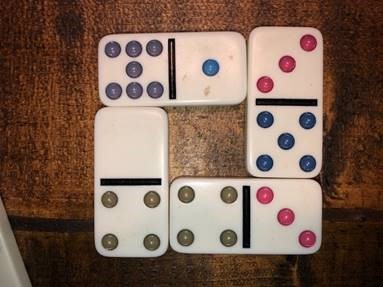
Domino Window 1 | Open Middle®

Domino Window 1 | Open Middle®

Directions: Use four of these dominoes to form a square with the same number of dots on each side. Source: Joshua Nelson

launch openmiddle.com

Second Grade Second Grade

Five Steps to 50

Five Steps to 50

Use five steps to count forwards or backwards in 1s or 10s to get to 50. What strategies did you use?

launch nrich.maths.org

Third Grade Third Grade

Reasoned Rounding

Reasoned Rounding

Four strategy dice games to consolidate pupils' understanding of rounding.

launch nrich.maths.org

Fourth Grade Fourth Grade

Multiplication Decisions | Open Middle®

Multiplication Decisions | Open Middle®

Directions: Using the digits 5, 6, 7, and 8 exactly once and picking one of the expressions below, create the greatest product possible out of the two expressions. Source: Howie Hua

launch openmiddle.com

Fifth Grade Fifth Grade

The Calendar Problem - Math For Love

The Calendar Problem - Math For Love

Once the students understand the question, let them work in pairs to try to figure it out. The teacher can circulate through the classroom, asking students to explain their ideas, and, as necessary, providing hints to students who are having trouble finding traction with the problem. Hint 1.

launch mathforlove.com
Math Resources by Standard
Check out this document for additional ideas to incorporate in your classroom

Here are some ideas for home that you can share with families.

Kindergarten

Students in Kindergarten, have been learning that the numbers zero through ten can describe amounts. Your student counts objects, one at a time, and names the number of objects in a group. In addition, your student represents numbers by coloring boxes in grids, called five frames and ten frames, and by writing numerals. Finally, your student writes the numbers 1 to 10 in order and is learning to compare them.


Use the following activities to model, count, write, and compare numbers with your student.

  • Use objects in your home to talk about numbers. Ask, “How many forks do I have? May I please have four grapes? How many socks are you wearing?”
  • Toss coins on a table so that the coins fall in a random arrangement. Ask your student to count the coins and say the number. Repeat
  • Play a game using fingers on one hand to count and to name numbers. One player holds up one or more fingers, or a fist for 0, and the other player says the number. Take turns.
  • Help your student form groups of 1, 2, 3, 4, 5, 6, 7, 8, 9 and 10 objects.
  • Invite your student to use pieces of paper to write and label the number in each group. Then challenge your student to order the numbers by placing the pieces of paper in a row.
  • Place a number of small objects, such as paperclips or beans in each of your hands. Invite your student to guess which hand has more.

First Grade

Students in First Grade are continuing to learn more about addition and subtraction, and the relationship between these operations. In order to dive deeper into understanding how addition and subtraction relate they will solve for a missing addend, find the missing part of a subtraction equation, find the missing whole of a subtraction equation, and study fact families. In addition, students solve word problems when given how many more or how many fewer, and will determine whether equations are true or false.


There are many situations at home that you can use to practice modeling addition and subtraction:

  • To practice fact families, have your student roll a set of dice to find the sum. For example, “You rolled a 3 and a 4. What is the sum? What equations are in the fact family whose parts are 3 and 4 and whose whole is 7?”
  • Show your student a number of objects. Ask, “How many more would we need to make 10?”
  • To practice comparing numbers, use a deck of playing cards or number cards. Each of you show one card (as when playing “War”) and ask, “How many fewer (or more) is my number than yours?

Second Grade

Students in Second Grade are learning strategies to add and subtract numbers within 20. Students will learn to use objects, such as linking cubes, to add and subtract. They will also learn how subtraction is related to addition so they can use addition equations to help solve subtraction problems.


There are many situations at home that you can use to practice addition and subtraction.

  • Use objects around the house, such as toys, books, and crayons. When tidying up around your home, help your student practice using the following activities. Use no more than 20 objects in all in each activity: Give your student various groups of objects to add and subtract. For example, place 4 books and 5 toys in an area. Ask, “How many objects are in each group? How many are there in all?”
  • Show your student a group of objects. Then, subtract a number of objects from the group. Ask, “How many are left?” Have your student write an equation to show the subtraction problem.
  • Help your student practice using strategies to add and subtract. For example, draw a number line with the numbers 0–20. Have your student use the number line to add and subtract groups of objects you provide.

Third Grade

Students in Third Grade are learning strategies for multiplying by 3, 4, 6, 7, 8, and 9, and for multiplying three factors. These strategies include how to use equal groups, number lines and arrays to multiply. In addition, students will learn how to use the Distributive Property (with addition or subtraction) to multiply, and how to use a problem-solving plan to solve multiplication word problems.


How we practice multiplication with our students?

  • Create a number line outside with chalk. Have students jump the number line to model multiplication facts.
  • Have student model multiplication facts using a graphic organizer where they will review commutative property, repeated addition, groups, bar models, arrays and fact families.
  • Count items when you are shopping. Racks and shelves are great models for practicing multiplication strategies. Check out the shelves at a grocery store, a convenient store, a department store or even a shoe store. Pick a shelf that displays a row or rows of an item. Ask your student how many rows of items there are. Then ask, "How many items are in each row?" Find out how many products and any given item has.

Fourth Grade

Students in Fourth Grade are learning how to multiply one-digit numbers by tens, hundreds, and thousands. Students will estimate products by rounding, then they will multiply using a strategy: distributive property, expanded form, or partial products. In addition, students will continue to deepen their understanding of multiplication by solving word problems using a problem solving template.


How can we practice multiplying by one-digit numbers?

  • At home, look through advertisements for items that have a three-digit price. Have your student point out the digits in each place value. Then, have them use partial products to find the total cost of several of the items. Remember to select a single-digit number of items. For example, your student might select a $425 TV. Guide your student to find the total cost of 3 TVs. Ask, “What is the product of 3 and 4 hundreds? What is the product of 3 and 2 tens? What is the product of 3 and 5 ones?” Then, have your student add the partial products. Continue by asking, “Can you find an item that costs about 3 times as much as your item? Is there an item that costs about 8 times as much?” •
  • Ask your student to name an item that might have a four-digit price. Look up the cost of the item online. Roll a number cube (die) and have your student estimate the total cost of that many of the item. Then, have your student choose a strategy to multiply. Have your student compare the total cost with the estimate and explain whether the answer is reasonable.
  • Have your student create a word problems involving multiplication. Then have them solve using more than one strategy.

Fifth Grade

Students in Fifth Grade are learning about number properties and order of operations. Your student will learn about the Commutative Property, Associative Property, Addition Property of Zero, Multiplication Properties of Zero and One, and Distributive Property.


How can you help your student practice these skills using real-life situations?

  • Have your student find ticket prices for different events in your area. The ticket prices should have multiple prices (e.g., adult/child prices, sections with different pricing). Have your student write an expression to represent the cost for your family to attend the different events. Create additional scenarios by having your student invite different numbers of friends or by changing the prices.

Assessment Reminders Assessment Reminders

Assessment Calendar

Something to Think About... Something to Think About...

zoom_out_map

This year we wanted to focus on fluency as it is something we often talk about for a number of reasons. It has always been a hot topic in math and it is something that we see students struggle with daily.


First, it is important to talk about the meaning of fluency. Sometimes when we hear fluency we think speed, however fluency is much more than this. The components of fluency are efficiency, flexibility, and accuracy. Students need to be able to select appropriate strategies, adjust strategies, apply strategies to a new problem type, solve accurately, and do so in a reasonable amount of time.


Often times fluency is thought of as an outcome of mastery/automaticity. However, fluency is more than this as well. "Fluency is a way of thinking and reasoning. It cannot be 'mastered.'" Fluency is also way more than basic facts; fluency applies to all operations, basic facts, equivalents & comparisons, algorithms & procedures, equations & formulas, and conversions.


When we think of fluency in this broader way, we can see all that goes into it and can better create a classroom culture that works on all of these components to truly support fluency.


In future newsletters, we will explore strategies and activities to build fluency. If you are interested in reading more about this topic, "Figuring out Fluency" by Jennifer Bay-Williams and John SanGiovanni is a great resource.

Check it Out! Check it Out!

zoom_out_map

Number of the Day is a great activity that helps students build number sense as they think about the relationships between numbers, compose and decompose numbers, and find ways to represent numbers, etc. Take a look at these templates for some ideas. There are also other links on the "Math Resources by Standard" document.

The Math Coaches
The Math Coaches are using Smore to create beautiful newsletters
Loading indicator

close

Created with

Communicate quickly and effectively with interactive newsletters.

Smore empowers educators to connect with their community, streamline school communications,
and increase engagement.

Create a newsletter