Smore logo
remove_red_eye 199
page background

ESOL Insight of the Month

Differentiating assessments for our ESOL students

ESOL Insight ofthe MonthDifferentiating assessments for our ESOL students

ESOL accommodations for assessments

All of our ESOL students are eligible for certain accommodations for assessments. These are for all assessments throughout the year, not just SOLs. If you have an ESOL student in your class, you should have been notified of the accommodations that they are entitled to for assessments. If you are unsure, please reach out to the ESOL teacher in your school.


Generally, our ESOL students get the following accommodations (although these may differ slightly from student to student);


* Small group

* Read Aloud (except for a Reading assessment)

* Flexible schedule

* Dictionary (may be English, or Bilingual - dependent upon the student)

Do I need to adapt class assessments for my ESOL students?

Yes!


Many of our ESOL students, especially those who are EL level 1 or 2, should have all class assessments adapted to meet their language ability. Differentiated assessments should look different for a newcomer or an EL level 2 versus an EL level 3 or 4. As students are able to comprehend more language they should have fewer accommodations. We need to ensure that class assessments are assessing only the specific class skills - not English language ability.


For example, a Social Studies assessment should be assessing Social Studies knowledge, not the student's ability to read and understand a text in English. Therefore, when creating class assessments, determine exactly what skills you are assessing. Then, look at how you can take out other elements from the assessment so that you can assess only these key skills for the ESOL student.

Suggestions for how to adapt your assessments.....

1) Check the wording of your questions. Ensure they are clear - try to make the questions as short as possible.


2) Think about the vocabulary that you are using. Are there cultural things that an ESOL student may not know? Will this get in the way of them demonstrating the skills that you are assessing?


3) For multiple choice questions, reduce the answer choices to 2. This means the ESOL student only needs to decipher two possible answers and then decide the correct one.


4) If you are asking the students to write a lengthy answer, allow them to write in their home language if they choose. The ESOL student may be more able to explain their knowledge in their home language (if they are literate in their home language). You can then ask the student to use Google Translate to translate their answers into English (or ask an ESOL teacher to help if that is not possible).


5) For written or multiple choice assessments, use graphics to help the students understand what you are asking. Adding pictures, breaking up the text into text boxes and highlighting important words will allow the student to focus their energy on showing you what they know, rather than trying to understand the questions.


6) Think about other forms of assessment that you could use instead. Perhaps you could assess skills through presentations, projects or with rubrics.


7) Are there non-verbal ways in which you could assess the skills? Could the student draw and label pictures to demonstrate their knowledge instead of answering multiple choice questions?

Are you looking for more ideas? Are you looking for more ideas?

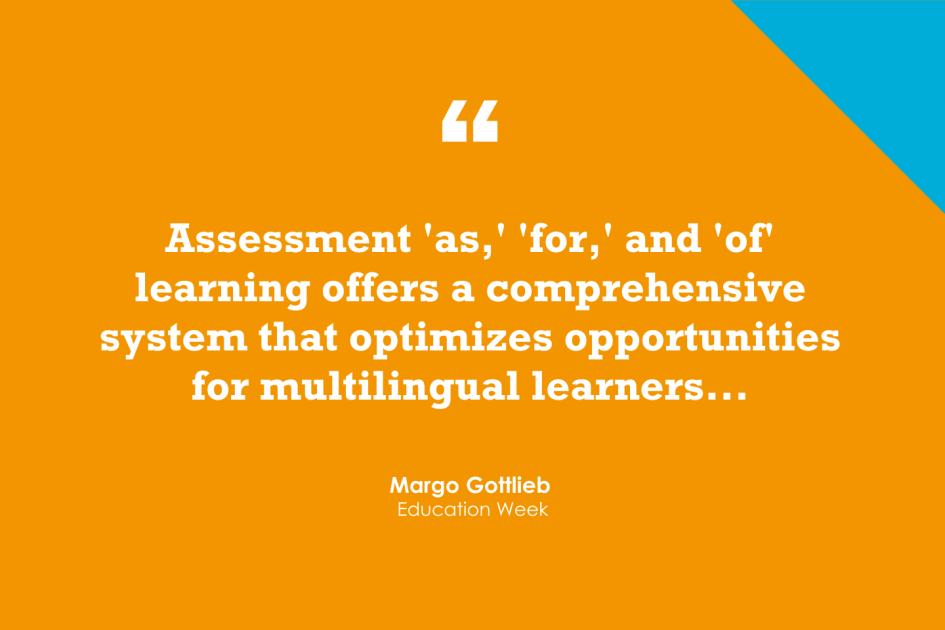
Assessment Strategies for English-Language Learners (Opinion)

Assessment Strategies for English-Language Learners (Opinion)

This week's new question-of-the-week is: What are effective assessment strategies for multilingual learners? Assessment is a key element of teaching-we need to know where our students are in the learning process, how effective our instructional strategies have been, and if there are additional challenges we need to be aware of as we plan future lessons and student support.

launch edweek.org
Using Informal Assessments for English Language Learners

Using Informal Assessments for English Language Learners

Informal assessments (also called authentic or alternative) allow teachers to track the ongoing progress of their students regularly and often. While standardized tests measure students at a particular point in the year, ongoing assessments provide continual snapshots of where students are throughout the school year.

launch colorincolorado.org
https://youtu.be/3SCcbU5HNkc
Message the ESOL team with any questions or suggestions
Loading indicator

close

Created with

Communicate quickly and effectively with interactive newsletters.

Smore empowers educators to connect with their community, streamline school communications,
and increase engagement.

Create a newsletter