
Early Learning Center News
February 9th, 2024
Explore. Learn. Create.
Dear ELC Families,
Kindness Counts. Nice Matters. Do Good Things.
These are the themes in the ELC during the month of February.
The children are reading books about kindness and sharing. They are identifying emotions and talking about feelings. Sharing, making friends, paying attention, expressing emotions and dealing with challenges successfully are critical to lifelong learning, success and happiness. Current research regarding social skill development in early childhood has shown that a strong social and emotional foundation helps boost children's learning and academic performance. When children are able to manage their emotions, get along with others and persevere through challenges, their minds are free to concentrate on learning new things from parents, teachers and peers.
Research also shows that children who enter kindergarten with good social and emotional skills may be more likely to attend college, earn a degree, and enjoy stable employment prospects later in life. Also, strong social and emotional skills at kindergarten entry help to lower children's risk of mental health problems in adulthood.
Social-emotional skills can be taught. In the ELC, our mixed-age Montessori classrooms provide the children opportunities to learn from peers which has strong effects on academic, interpersonal and social development. Everyday, children are naming and discussing emotions, reading books with social emotional themes, talking about right and wrong, identifying good choices, encouraging saying please and thank you, and showing ways to help each other.
Thank you for sharing your children with us,
- Catherine
Catherine Bailey
Director of Early Learning
Phone: (904)827-2835
Red Classroom
Mark your calendar!
Important dates for February
February 12-16: Spirit Week (daily themes were posted to Transparent Classroom)
February 14: Classroom Valentines Day Party (class list was sent home in your child’s backpack and posted on Transparent Classroom)
February 21: Safety Fair
February 23: Donuts with Dad
What we've been up to...
This month’s theme is kindness/emotions, recycling, and domestic pets. Students are learning how to identify and explain their emotions. Students are learning the importance of caring for those around them, caring for animals, and caring for the environment. Throughout the month we will read multiple books that focus on spreading kindness to those around you and using manners when giving and receiving, focusing on using words such as please and thank you. Maintaining a focus on kindness throughout the month will help the students learn to communicate effectively, listen attentively, and understand the perspectives of others.
Culture and Science
At the beginning of each month the students participate in changing the calendar. When changing the calendar, students are able to practice recognizing, identifying, and sequencing numbers 1-30. The teacher leads a discussion about important dates throughout the month, such as peer’s birthdays, special family events, and holidays. Daily, students practice naming and spelling the month, naming the day and date, and discussing the weather. During this activity students begin to develop a sense of time and feel a sense of preparedness and excitement about their daily and monthly activities, excitedly anticipating special events.
Ways to support this learning at home:
- Frequently use vocabulary such as yesterday, today, and tomorrow during discussions about daily and weekly activities.
Explain important upcoming events, mark them on your calendar, and discuss how many days or weeks your child will have to wait until the event.
When dressing your child in the morning, explain the weather and how the clothing you/ they are choosing is appropriate for the weather.
Practical Life
This student is sorting flowers by color using a pincer grasp (thumb and primary finger). This activity helps the child name colors, learn to sort items by color, develop hand-eye coordination, and develop visual discrimination. Students start to recognize that items can be classified according to various qualities, such as color, shape, size or texture.
Ways to support this learning at home:
Point out similarities or differences among common items in the house
Encourage your child to put away their toys by category (for example: “Put all your blocks in the blue bin.” “Put all your dolls in the red bin.”, etc.)
Play games with your child such as catch or kicking a ball to continue to develop their hand-eye coordination.
Sensorial
These students worked together on the Red Rods activity. This is a grading activity where students build a “stair” sequencing the rods by length. During this activity, students are able to perceive the differences in length through their handling of the rods, experiencing the difference in weight, how each one must be handled, and how the rods vary length compared to their own bodies. The red rods introduce the mathematical concept of length and is a prerequisite for the Number Rods, where students are introduced to numbers and quantity.
Ways to support this learning at home:
Use descriptive language to describe items, such as long or short, big or small, and heavy or light.
Encourage your child to make comparisons (For example: “Your hair is longer than mine” “I am taller than you.”, etc.)
Encourage your child to grade by size when playing, such as lining up their toy cars from biggest to smallest.
Mathematics
This student is using Numbers and Counters to determine odd and even numbers. As the student sets up the numbers and counters, she is demonstrating her ability to sequence numbers 1-10, quantify to 10, and associate quantities with their numeric symbols. Once she has set up the numbers and counters correctly, she is able to determine with numbers are odd and which are even by visually identifying the paired and unpaired counters. During this activity, the student is working with multiples of two which prepares her for skip counting and future work with divisibility and remainders.
Ways to support this learning at home:
Incorporate counting into games such as playing hide and seek, encouraging your child to count to 10 (or beyond) before they come searching for your hiding place.
Split items evenly between yourself and your child. For example, place four crackers on a plate and then give your child two crackers and keep two crackers for yourself. Explain that you both have the same amount of crackers and why that was possible.
Food Preparation
Every Monday, students are shown how to prepare their daily snack for the week. This week students skewered grapes. Food preparation activities promote independence, concentration, development of fine motor skills, and healthy eating habits. Earlier in the day, students practiced ABAB patterning in the classroom. They were then later able to apply this previously learned concept of patterning to their food preparation. This allows students to begin to form connections between the classroom and their everyday lives.
Ways to support this learning at home:
Involve your child in preparing their snack or simple meals at home (buttering their bread, pouring their own drinks, etc.)
Discuss what you are eating for dinner each night, naming each food item, discussing how it is healthy and helps the body, and how you cooked and prepared the meal.
Incorporate academic skills into meal/ snack time, such as counting the number of crackers your child wants.
Blue Classroom
What we've been up to...
We celebrated the 100th day of school! It seems like just yesterday it was the first day of school. Time really flies by when you're having fun! We have been focusing on being kind and helping each other. As you have probably noticed if you've been to the classroom lately, the children have also used the hearts that were sent home to hang on the wall outside of our classroom door with things that they have done where they showed kindness. The children got so excited and were truly motivated to do more acts of kindness. There are so many hearts, so if you haven't seen them yet, please stop by and take a little time to read what our kiddos have been up to! We have also introduced Black History Month! We have read some history books on Black History, such as "I am Harriet Tubman" and "The Rosa Parks Story".
Mark your Calendar!
2/12 - 2/16: Spirit Week (See photo below)
2/14: Valentine's Day Celebration
2/19: NO SCHOOL
2/21: Safety Fair: Unfortunately, this event is not open to families.
Please be sure to send your child to school with comfortable shoes and proper clothing as this event is outdoors.
2/23: Breakfast with Buddies
Sorting Shapes
Calendar Time
Delight with Dinosaurs
Dot to Dot Art
Stacking Practice
Pre-braille Fun
PBIS Information
February-Critical Thinking & Problem Solving---
Gathering information to think through and determine the best choice.
Coming to a solution by working together.
Being open-minded.
Listening to others.
Treating each other fairly.
How Parents and Support People Can Encourage Critical Thinking in Their Student By Lucy Mitchell, LCSW
According to the Cambridge Dictionary, the definition for critical thinking is as follows: the process of thinking carefully about a subject or ideas without allowing feelings or opinions to affect you.
It is important to teach young people the skills to be able to think critically about a variety of areas that will impact their day-to-day life. We understand that children often carry many of the beliefs of their parents and this is the foundation of their thought process. The skills of critical thinking allow young people to take ideas and looking at the factual components and not allow opinion and feeling to affect them. It requires analysis, communication, inference, observation, and problem-solving.
One way students demonstrate critical thinking related to school activities is in just determining what to attempt to participate in, weighing their ability to perform at the levels required, and their desires to participate at a level expected.
We encourage students to become involved in school and boarding activities by thinking about the activities offered, communicating with students, staff and parents about what the activity is, taking time to watch the activity and then by making a commitment to participate in the activity.
Physical Education / Health
February is American Heart Month, a time when all families are encouraged to be educated and focus on their cardiovascular health.
Facts about Heart Disease in the United States
Heart disease is the leading cause of death for men, women, and people of most racial and ethnic groups in the United States.
High blood pressure, high blood cholesterol, and smoking are key risk factors for heart disease.
Diabetes, unhealthy diet, physical inactivity, and overweight and obesity can also put people at a higher risk for heart disease.
Can Kids Get Heart Disease?
Kids usually don't have any symptoms of heart and blood vessel problems. But by starting heart-healthy habits right now, kids can reduce the chance they will ever need to worry about cardiovascular disease.
What Should You Do?
Have a chat with your child. Discuss how their heart work and why it is important to keep their heart healthy. Encourage them to eat healthy, exercise, and maintain a healthy weight.
Signed Stories to share with your child!
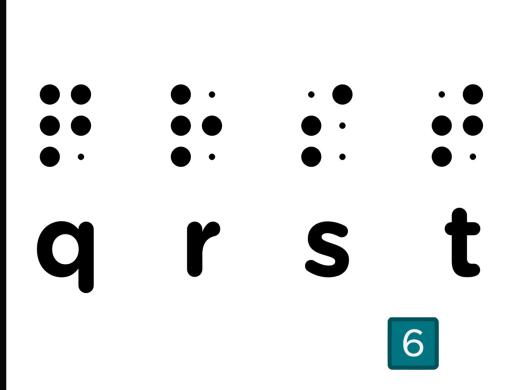
Learn & Practice Braille with your child!
PEW Dates for the 2023-24 Academic School year
Parent Engagement Workshops (PEW) are learning opportunities open to ALL FSDB parents, guardians and caregivers. During PEW, we discuss current and relevant information about our school, parenting strategies, helpful resources, and much more.
ELC Healthy Student/Staff Protocol
It is the responsibility of our entire community to protect the health and safety of our students, staff and families. ELC families must support the following guidelines in order to promote the health and well-being of our entire community. Please contact Catherine with any questions.
All children and staff who meet any of the criteria below should stay home or will be sent home. We understand this may be inconvenient, but it is necessary to minimize exposure to the spread of COVID-19 and other illnesses. Staying home when sick or keeping your child home is a responsibility we take very seriously. Please DO NOT send your children to school if they are showing any signs of illness. This is more important now than ever before.
● Fever or chills
● Cough
● Sore throat
● Congestion or runny nose
● Nausea or vomiting
● Diarrhea
● Red or inflamed eyes or discharge from eyes or ears
● Any contagious disease, such as chicken pox
● Any contagious bacterial infections such as strep throat
Parent Responsibilities and when your child can return to school:
All parents are encouraged to be on the alert for signs of illness in their children and are required to keep them at home when they are sick.
Any child with a temperature of 100.4 or above will not be permitted to attend school and will be sent home. Your child can return to school once he/she has been fever-free without the use of any fever reducing medication for 24 hours.
Any child who has been vomiting or had diarrhea should stay home for 24 hours after the stomach distress has stopped.
Contact Us
Early Learning Center
PH or Text: 904-827-2835
Gore Hall Office (if you cannot reach anyone in the ELC)
904-827-2520
Health Care Center
PH: 904-827-2410
VP: 904-201-3910
Transportation
PH: 800-992-8747
Parent Services
PH: 904-827-2212
VP: 904-201-4540
Campus Police
PH: 904-827-2315
207 San Marco Avenue,
St. Augustine, FL, USA
The Florida School for the Deaf and the Blind (FSDB) does not discriminate on the basis of age, race, color, sex, religion, national origin, political opinion, affiliation, marital status, genetic information, disability, veteran status or any other basis as mandated by federal and state law in its educational programs, services or activities, or in its hiring or employment practices. FSDB also provides equal access to the Boy Scouts and other designated youth groups as required by law.
Contacts for questions, complaints, or requests for additional information are as follows:
Student Discrimination/Harassment
FSDB Boarding Program Administrator
PH: 904-827-2603
Requests in writing can be sent to:
Florida School for the Deaf and the Blind
207 San Marco Avenue
St. Augustine, FL 32084