Smore logo
remove_red_eye 30
page background

Ms. Engwer's PreK/K Newsletter

November 2024

Ms. Engwer'sPreK/K NewsletterNovember 2024
HAPPY HALLOWEEN!

What's Happening?! What's Happening?!

Wow! I can't believe it is already November. Time flies when you're having fun! In October, we completed our unit on the Zones of Regulation, but that doesn't mean we won't revisit it daily. Every morning, we have a Zone check in and discuss feelings/emotions regularly. Social emotional learning (SEL) is a crucial part of K-12 education that helps students develop the skills and confidence they need to succeed in school and in life. SEL can help students:

  • Build healthy relationships
  • Manage their emotions
  • Develop empathy
  • Work cooperatively
  • Communicate effectively
  • Make responsible decisions
  • Be resilient in the face of adversity and
  • Become confident learners.
zoom_out_map

ELA/Reading ELA/Reading

Kindergarten completed Unit 1 and began Unit 2, this week, in the Phonics to Reading Curriculum. Unit 2 focuses on short i, as well as letters Nn, Cc, Ff, Dd. Each lesson builds off the previous lesson, so that students can start to decode words and read before learning all the letters/sounds. Each lesson incorporates decodable texts and high frequency words (sight words). These decodable texts will be sent home for added practice. A list of sight words will also be send home for additional practice. The Unit also focuses on initial, medial, and ending sounds. Isolating these sounds will help students decode and read words more accurately and fluently.

For handwriting, students will continue practicing learned letters through Phonics to Reading and the Handwriting Without Tears program.


Pre-Kindergarten is following the same sequence of letters as Kindergarten. We are focusing on Uppercase letter formation and letter-sound using the Lively Letters Program and Handwriting Without Tears. Whole group instruction is used for introducing letters, then small groups for differentiation based on grade and skill level.

PreK will also be working on the theme of Our Community throughout the month of November. Different focus areas (Places We Go, People We Meet, Things That Move, Going Green) will be discussed using a variety of literary texts and activities.

zoom_out_map
zoom_out_map
zoom_out_map

Math Math

Kindergarten will complete Chapter 2 on Geometry and Patterns and have their first Math Assessment. We will then move on to Chapter 3: Positions. We will focus on position words, such as above, below, under, over, between, etc. The concepts of Left and Right will be of significant importance in this unit.


PreKindergarten will also focus on positional words, especially left and right. Their unit will also incorporate distance, measurement, and maps. Instruction, when appropriate, will be whole group. Areas of counting and number recognition are included daily.

Important Dates Important Dates

November 4: PTG Meeting @ 5pm & School Committee @ 6pm

November 5: NO School (Teacher In-Service Day)

November 11: Veteran's Day- NO School

November 14: MA MoCA Field Trip

November 26: Trimester 2 Begins

November 27-29: Thanksgiving Break; HAPPY THANKSGIVING! 🦃

Attendance in PreK/K Attendance in PreK/K

I want to give another BIG SHOUT OUT to all PreK/K Families and Students! We had great attendance, AGAIN, for the month of October! Our students earned an extra special (music, art, gym) to "cash in" in November. Keep up the great work getting those kiddos to school!

Importance of Independance Importance of Independance

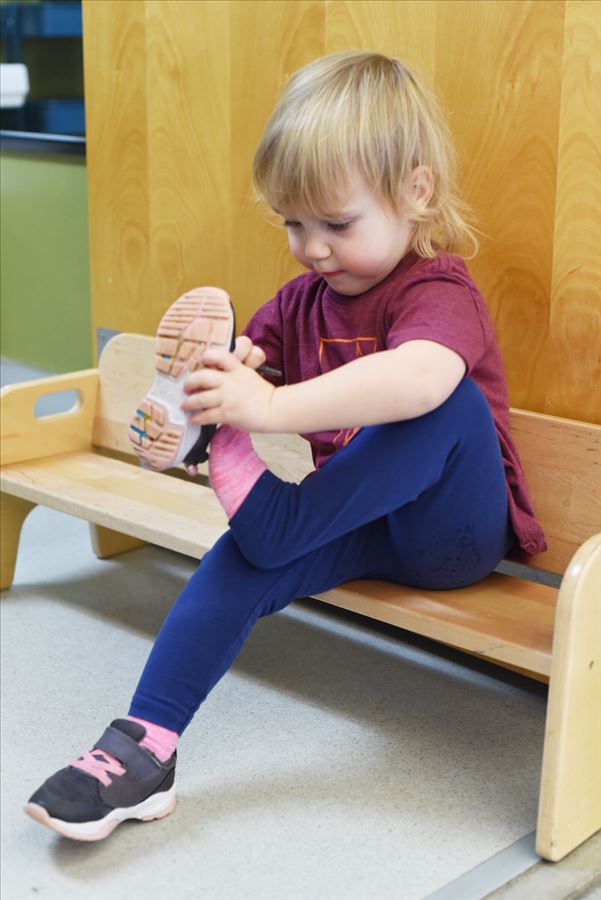
Independence is an important part of child development because it helps children build self-esteem, confidence, and a sense of control. It also helps children develop other skills, such as problem-solving, decision-making, and resilience. Independence skills are a daily part of our classroom environment. We encourage "try first," then ask for help. Whether it be opening a snack, picking up toys, sweeping up crumbs after eating, etc., we always urge students to be independent and self-sufficient. 🙂

Parents can help their children develop independence, at home, by:

  • Teaching them skills and explaining consequences
  • Allowing them to take on more responsibility as they become more comfortable with tasks and
  • Showing them how to do a task, and then letting them try it on their own.
The Children's House

The Children's House

Have you noticed that all babies and young children tend to want to do things by themselves? This tendency is the beginning of independence, which promotes confidence and self-esteem as well as motivation and perseverance. It fosters self-reliance, allowing your child to feel they have control over their life.

launch traversechildrenshouse.org
zoom_out_map

Ms. Christina Engwer

PreKindergarten/Kindergarten Teacher

Emma. L. Miller Memorial Elementary School

cengwer@savoyelementary.com

Christina Engwer
Christina is using Smore to create beautiful newsletters
Loading indicator

close

Created with

Communicate quickly and effectively with interactive newsletters.

Smore empowers educators to connect with their community, streamline school communications,
and increase engagement.

Create a newsletter