

Vitamin C in Skincare


Why is Vitamin C skincare the hot new trend ?"
A Dermatologist Favourite
Yes, filled with brightening and tightening properties, Vitamin C skincare has been popularly recommended by several dermatologists across the globe to people. A suitable combatant for fighting common issues as dull complexion and ageing, Vitamin C helps the skin through the neutralisation of open radicals.
If you are aware, free radicals accelerate the process of ageing as they enter our skin by breaking down collagen and reducing elasticity because they cause oxidative stress in our skin cells. Vitamin C ensures that they cause less damage to our skin.
The Vitamin C and Oxidization Connection:
A simple example of oxidization is the change of colour of an apple to brown after it is cut. Now, to prevent this, you must have heard of the trick of covering the apple with lemon juice or citric acid. The same process will be taking place with your skin.
Is Consuming Vitamin C Not Enough?
Well, when we are sharing its benefits, people might ask, why to use Vitamin C serums and not consume it naturally or through supplements. For overall health, indeed, Vitamin C is a superpower ingredient.
But as per studies, it is considered that 4-5 servings of fruits are essential to ensure enough vitamin C in our bodies, hence, supplements is an option one can avail amidst the busy lifestyle. Moreover, as you consume, vitamin C rich fruits and vegetable such as oranges, lemons, grapefruit, spinach and broccoli, Vitamin C skincare is still essential to directly reap the benefits.
Hence, Vitamin C skincare is a trend in 2021 and serums have become a beauty staple for spotless and glowing skin.
Eating an orange doesn’t necessarily give you the same skin-loving benefits as a serum, says Susie Wang, cofounder of 100% PURE. That’s because topical Vitamin C works much faster than downing a glass of OJ. “Ingesting Vitamin C boosts the immune system and, although this helps bolster collagen and elastin production, it’s not targeted and works a lot slower since our body only accepts a certain amount of Vitamin C,” Wang says.
Vitamin C actually is the “powerhouse ingredient"
What type and what % is impotant?
Finally, take note of the type of Vitamin C in the formula. “Make sure the concentration and type of Vitamin C is listed. L-ascorbic acid or tetrahexyldecyl ascorbate are the most active types,” says dermatologist Erum Ilyas of Montgomery Dermatology. “Also make sure the concentration is listed as between 10 to 20 percent. If this is not the case, Vitamin C can be very unstable on exposure to light and essentially be useless. That’s money wasted.”
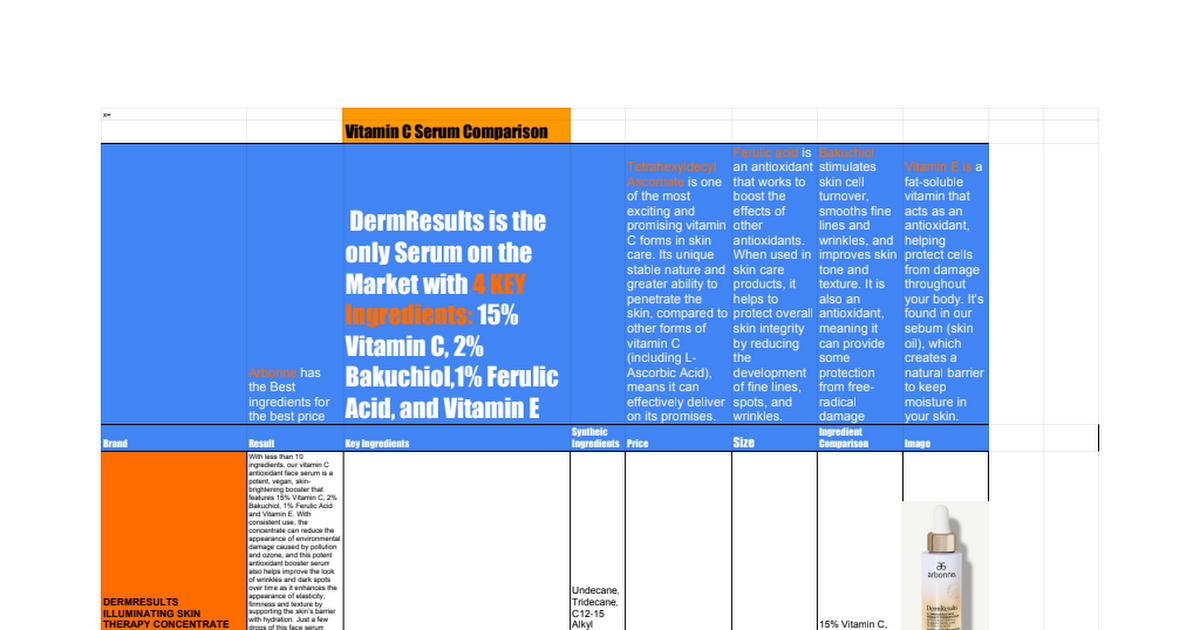
Why does Arbonne choose Tetrahexyldecyl Ascorbate over Ascorbic Acid?
Only when formulated and packaged properly is vitamin C able to deliver on its promises of far-reaching skin benefits.
The most common form of vitamin C used in skincare is L-Ascorbic Acid. It’s a cost-effective form of vitamin C, making it attractive for the bottom line. However, among industry insiders and experts, it’s known for being notoriously unstable and prone to oxidation. This is especially true when packaging exposes the formula to light and air. If you’ve purchased a vitamin C serum in the past and found that it turned brown, that is an indicator that it has oxidized and is no longer good to use. This is why many vitamin C serums are unreliable and sometimes unable to deliver the glowing results we’ve come to expect from our vitamin C serums – leaving us with irritation and buyers remorse.
Many forms of vitamin C require water-based formulas. This makes it difficult for the serums to successfully penetrate beyond the skin’s protective water barrier. Most water-soluble forms of vitamin C are also highly acidic, which can disrupt a healthy skin barrier and cause major irritation.
When exposed to water, Pure Vitamin C can degrade causing it to lose its effectiveness. A water-free formula (like DermResults Concentrate) helps keep high concentrations of Pure Vitamin C stable and effective.
So before you give up hope on finding the best vitamin C serum, let us introduce you to a version of vitamin C that goes by the name of Tetrahexyldecyl Ascorbate or THD ascorbate. This is a more stable and dependable form of vitamin C that truly outshines its not-so-charming relatives (we’re looking at you L-ascorbic acid)
Tetrahexyldecyl Ascorbate is the most promising vitamin C derivative created so far. It penetrates skin deeper than all other forms of vitamin C (including L-Ascorbic Acid!) so it does a better job at fighting free radicals, boosting collagen and brightening the skintone.
Does the human body produce Vitamin C?
Just as Vitamin C is an essential part of your diet, it is also an important step in your skincare routine. The human body does not produce its own Vitamin C but relies on obtaining it through nutritional and topical applications.Daily use of a balanced and stabilized Vitamin C facial serum will ensure that your skin soaks up all of the perks of this powerful ingredient.
What Is Tetrahexyldecyl Ascorbate?
Tetrahexyldecyl ascorbate also known as THD ascorbate is an oil-soluble, vitamin C ester that’s extremely stable in comparison to its more common vitamin C relative L-ascorbic acid. Tetrahexyldecyl ascorbate has gained quite the reputation and cult following for its outstanding ability to penetrate the skin. What makes tetrahexyldecyl ascorbate truly an A-list player is its gentle, yet result-driven nature, making it compatible with most skin types, even sensitive.
What Are The Benefits Of A Tetrahexyldecyl Ascorbate Serum?
A Vitamin C serum using tetrahexyldecyl ascorbate helps to support a healthy-looking glow — without having to worry about your formula oxidizing and causing skin issues. Tetrahexyldecyl ascorbate works as a powerful antioxidant. It helps to protect your complexion from free-radicals, which can cause a breakdown in collagen and cause premature signs of aging such as fine lines and wrinkles. However, the benefits don’t stop there. Let’s dive into all of the ways vitamin C can benefit your skin needs and concerns below.
What Does Vitamin C Do For Your Skin?
Why is vitamin C touted as one of the best skincare ingredients to include in an effective skincare routine? Because vitamin C helps to promote the appearance of a brighter, more even-looking skin tone and reduces the appearance of wrinkles and fine lines. As you can see there are many benefits, and with the numerous forms of vitamin C available on the market today, there’s no need to settle for just any vitamin C. We should reach for the best vitamin C serum for our skin health — one that we can depended on to deliver results – without negative side-effects or chance of oxidation. This is what makes tetrahexyldecyl ascorbate so exciting!
Here are some of the top reasons why you should consider incorporating a Vitamin C serum with tetrahexyldecyl ascorbate into your skin care routine.
The Best Vitamin C For Wrinkles
Wrinkles and fine lines are inevitable, but we can make a concerted effort to keep them at bay. A great way to start is by eating a healthy diet and pairing it with well-formulated skincare products designed to support optimal skin health — without the use of questionable ingredients (toxins are so 2000). Tetrahexyldecyl ascorbate’s benefits help to visibly firm, minimizing the appearance of wrinkles and fine lines – while protecting skin from free-radicals.
The Best Vitamin C For Acne
This may come as a surprise, since vitamin C isn’t the first ingredient we think of when it comes to managing breakouts or acne. However, research has demonstrated that vitamin C has blemish-busting benefits, which makes it a powerful tool in keep your skin looking its best. Many people find that over time their skin becomes irritated and sometimes allergic to ingredients in conventional acne treatments, especially people with consider their skin sensitive or during pregnancy. Pregnancy acne is very common and many ingredients used in conventional acne products need to be avoided during this precious time. That’s where tetrahexyldecyl ascorbate comes in handy. This gentle vitamin C ester helps to minimize the appearance of breakouts and any visible marks that may be left behind.
The Best Vitamin C For Dry Skin
Dry skin is predominantly a skin issue that comes with age or during significant changes in the body, such as pregnancy. Often times, people find that their skin is oily or normal in some areas, but have dry skin around the eyes and cheeks due to the fact that there are less oil glands. Many forms of vitamin C exfoliate the skin, however, if you have dry skin you want to avoid using a vitamin C serum that exfoliates, as that can cause irritation and perpetuate chronic dryness. However, tetrahexyldecyl ascorbate is not known to exfoliate the skin and because it’s an oil-soluble ingredient, it can be combined with moisture replenishing oils that help to soften dry skin, while delivering all of the glow-inducing benefits of a vitamin C serum.
The Best Vitamin C For Sensitive Skin
Finding a vitamin C for sensitive skin can be challenging. The search for result-driven products that respect your sensitive skin barrier can feel like searching for a needle in a haystack. Tetrahexyldecyl ascorbate is renowned for being a gentler form of vitamin C that’s suitable for sensitive skin. As always, we recommend getting a sample and patch-testing before investing in a full-size product — just to be on the safe side. No skincare formula, no matter how gentle or natural, is compatible with everyone. You are unique and so is the way your skin responds to products.
The Best Vitamin C For Under Eye Wrinkles
The skin around the eyes is much thinner and more sensitive when compared the skin on the rest of your face. It’s normal to have dry skin around the eyes due to the fact that there are less oil glands. That’s why we recommend a vitamin C oil that incorporates tetrahexyldecyl ascorbate when caring for the sensitive eye area. This helps to replenish moisture to dry skin around the eyes, as well as reduce the appearance of under eye wrinkles and improve the look of skin tone.
The Best Vitamin C For Pregnancy Skin Care
There are numerous skin changes that one goes through during pregnancy. Unfortunately, not all women experience the pregnancy glow. Hormone-related hyperpigmentation, also referred to as melasma or mask of pregnancy, is a very common skin change during this precious time. Skin can also become sensitive, dry and prone to breakouts. That’s where a gentle vitamin C serum using tetrahexyldecyl ascorbate comes in handy, helping to not only reclaim that natural glow, but also reduce the appearance of dark spots and blemishes.
This training has been produced by an Arbonne Independent Consultant, and has not been prepared or provided by Arbonne. Any opinions expressed are made by and the responsibility of the Independent Consultant and should not be construed as a representation of the opinions of Arbonne. earnings.arbonne.com