


Tips for Classroom





Book of the Week -
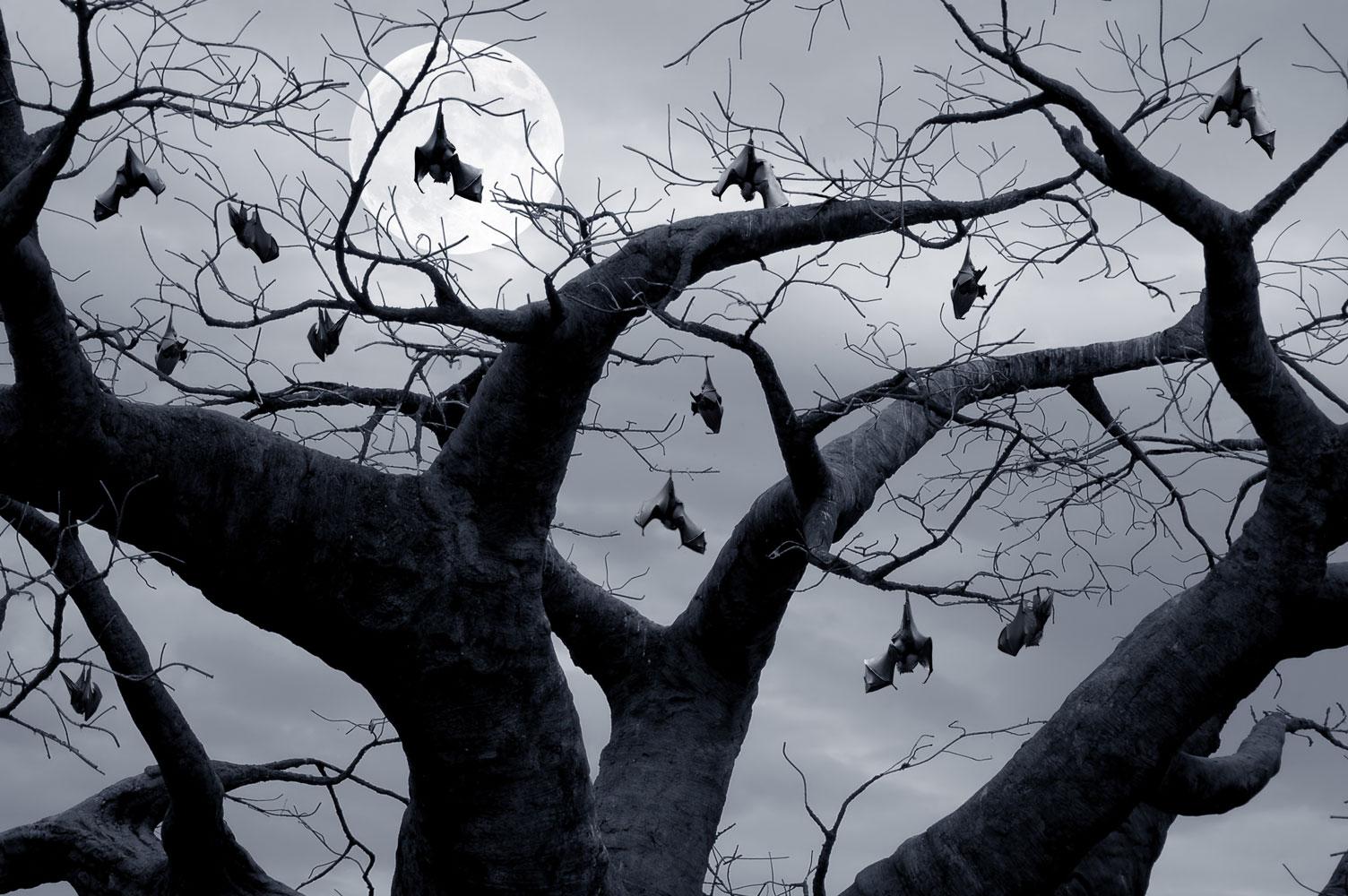
This is a classic, story-within-a-story novel that has such a punch in the middle section of the book, that such a scene is worth the price of the book alone, but Langan follows that up with an even more horrifying scene in the final third of the book that just sets this apart as a horror novel.
If you were to combine the very best of H.P. Lovecraft's 'elder gods' mythos, with Arthur Machen's iconic "The Great God Pan," with just a little bit of Algernon Blackwood's "The Willows" thrown in for good measure, you'd get The Fisherman.
If I ever teach a 'dark' literature class, this will be one of my first purchases.


Teaching Thoughts
Week #8 – October 27-30
Teaching Thought #32 - Replace a focus on grades with a focus on growth
One of my favorite bloggers and podcasters is Tim Elmore. This blog post is so vital for us today: Five Destructive Parenting Habits We Must Replace.
I Thought I’d focus the next four teaching Thoughts on what we can do when a students’ parent doesn’t equip them with the skills or mindset they need.
Elmore notes another destructive habit that parents tend to inflict on their student is focusing solely on the grade. That reminds of how a few years ago, one of my all-time favorite students texted me during his senior year at NDSU. He said, “Why do I get the worst grades in all of the classes that I love so much and learn the most in?”
I responded with this - “That’s because you had the most room to grow and improve. Don’t focus on the grade. Who cares about that. Focus on what you learned and how that will change your life.”
Elmore offers this for teachers when it comes to evaluation: I changed the way I spoke to my kids about their report cards when my daughter turned 12. Prior to that time, I was like most parents. If she made three A’s, two B’s and a D . . . I focused on the D. I talked to her about her weaknesses. It was not fun. Once I began gazing at her high grades and talking about what she liked about those classes, we both had a better attitude with which to conquer the D. Too often, we’re misguided and create stress in our children. We measure the wrong things. Our focus should be on strengths, not struggles: where are they growing and thriving? This is where they’ll likely spend time in their careers. Let’s obsess over growth, not grades.
Grade-obsessed Parent: Why didn’t you make all A’s? What’s this C doing on your report card? You’re not going to get that scholarship!
Growth-obsessed Parent: Let’s explore the subjects where you were strong. Wow—look how you’ve grown! I love how you’ve improved in science.
Teaching Thought #33 - Replace clutter with simplicity
One of my favorite bloggers and podcasters is Tim Elmore. This blog post is so vital for us today: Five Destructive Parenting Habits We Must Replace.
I Thought I’d focus the next three teaching Thoughts on what we can do when a students’ parent doesn’t equip them with the skills or mindset they need.
One thing parents love to do is keep their kids busy. And I’m speaking from personal experience here. So I’m not pointing fingers at anyone else other than myself.
A couple of years ago, grandma Gail came over to visit Cash and Kenzie. As we were visiting, she noted how sad it was that when she drove here she didn’t see any kids out playing.
And it’s true. Or at least it was as our neighborhood at the time was an older one. We were the first family to move it with kids in at least a decade. Today, the entire neighborhood has changed. Kids play all the time outside.
But this is a criticism I hear often. It’s all about kids these days. But if you’re going to complain or criticize kids today you have to start with their parents first.
You want to know why you never (or rarely) see kids playing a pick up game of baseball or just riding bikes all around town like we did in the 1970’s? It’s because they are busy! I mean busy. If I wanted Cash and Kenzie to be busy from 8 in the morning (speed and agility at the high school) to 7:30 at night (tennis practice), I could do it in a heartbeat.
So that’s what happened to kids these days. They aren’t allowed to be kids! We packed their schedules just as full as our work schedules!
Elmore offers this for teachers when it comes to schedules: According to Dr. Robert Leahy, the average teen today has the same level of anxiety as a psychiatric patient did in the early 1950s. Stress levels have continued to climb for more than seventy years. This is absurd. Part of our problem is the complications we face daily. Noise. Screens. Busyness. Information. Pings. I believe humans are not hardwired to consume the volume of data we do each day. We need margins for our mental and emotional health. What if you became more intentional about clearing the calendar and creating space for unsupervised play or relaxation? What if you made your students choose one or two activities and not do them all? Research tells us that when our days have margins we actually develop empathy and creativity.
Cluttered-life Parent: Quick, suit up or we’ll be late for your soccer practice, piano lesson and karate match. Hurry, we don’t have time to mess around.
Simplified-life Parent: Let’s plan to participate in just one extra-curricular activity this fall. It will leave time for family, house chores and unscheduled fun.
Teaching Thought #34 - We must replace unctrollables with controllables.
One of my favorite bloggers and podcasters is Tim Elmore. This blog post is so vital for us today: Five Destructive Parenting Habits We Must Replace.
I Thought I’d focus the next two teaching Thoughts on what we can do when a students’ parent doesn’t equip them with the skills or mindset they need.
Early on in my career - in fact it was my first time teaching College Comp I. I just finished grading my first batch of final research papers. Students were tasked with reading two novels from the former College Prep novel list. They had to read them and then write an 8-12 page research paper analyzing how three themes worked in each novel.
One student chose Of Mice and Men and The Grapes of Wrath. He had no problem with Of Mice and Men, but when it came time to tackle The Grapes of Wrath, well, that coincided with his senior year of baseball. When I communicated with his coach, he warned me that the student tends to procrastinate and become overwhelmed.
I sat down with the student and asked him how it was going. It wasn’t good. He was spending his time focusing on baseball and not enough time with The Grapes of Wrath. To help him, I suggested he switch from The Grapes of Wrath to The Jungle. They have the same themes and both work well with Of Mice and Men. The Jungle just happens to be a bit shorter and more engaging.
Well, it helped, but only a bit. When it came time to submit his final paper, it was a disaster. He did fine on the parts that analyzed Of Mice and Men, but the parts on The Jungle were under developed and not analyzed at all. It was as if he didn’t even read the novel, which he apparently didn’t.
I returned their papers and sent students on their ways. That was a mistake. I only did that because that’s what my college professors always did on our last day of class.
I didn’t realize that this student ran home and vented to Mom about his bad score on the paper. That warranted a phone call in which she made several excuses for him and ended with, “I just don’t want that to be his final memory of high school.”
I felt bad and changed his grade. That was the last time I’ll ever let a parent shame me into changing a grade. If I had made a mistake, I’d have gladly made the change and corrected it. But I didn’t do anything wrong! I even let him change his second book!
I let a helicopter mom get to me. I wish I would have had Elmore’s advice for teachers when it comes to identity: Stanford psychologist Dr. Carol Dweck taught me this. In her book, Mindset, she suggests we naturally tend to have a “fixed mindset.” We assume if we make a bad grade in math, we’re just not good at math. It’s a fixed fact. Or, we just aren’t good readers, or good communicators. She says we must cultivate a “growth mindset” in our students. We must treat our brains like a muscle that can grow. Then, parents and instructors must focus on encouraging variables that are in their control, not out of their control. Instead of flattering them for their beauty, we affirm their integrity, which is much more in their control. When we encourage controllable qualities, we empower our young to grow and encourage good priorities. What gets rewarded gets repeated.
Fixed-mindset Parent: You’re just not good at math; you just aren’t a natural student. Your sister is the smart one in the family.
Growth-mindset Parent: You may not be good at math . . . yet, but one day you will be. And I do appreciate your honesty and I love the empathy you show your friends.
Teaching Thought #35 - Replace emphasizing behavior with emphasizing belief
One of my favorite bloggers and podcasters is Tim Elmore. This blog post is so vital for us today: Five Destructive Parenting Habits We Must Replace.
I Thought I’d focus this teaching Thought on the final practice for what we can do when a students’ parent doesn’t equip them with the skills or mindset they need.
In giving feedback to our students, we have to get students to realize that criticism isn’t personal. It is temporary as it’s our intention that students improve. The only way to do that is to get feedback. And often that feedback isn’t always positive.
That reminds me of something my high school football coach, Bryan Thygeson, told me once. He had been on me all practice, yelling at me repeatedly.
Finally, I had it. I said, “Do I do anything right? All you do is yell at me.”
It was at this moment that he uttered words I can still hear today. He said, “That’s because I’m trying to make you better Reynolds. When I stop yelling at you, that’s when you have to worry. That means I believe you can’t get any better.”
After that it became my question to be yelled at more than any player in this history of Red Lake Falls’ football!
Feedback ceased being about me. It was all about getting better. And it still is.
Elmore offers this for teachers when it comes to feedback:I recently met with a focus group of parents. While they were all very engaged in their role as moms and dads, one reality surfaced that surprised me. It was the level of anger they expressed toward their kids—short tempers, bursts of emotion, sometimes loud yelling. This tends to equate to punishing our children when they misbehave instead of disciplining them. We look backward and retaliate instead of looking forward and incentivizing better behavior. When offering feedback, my kids respond far better when I speak from “belief” in them. This means I convey the Thought: “I know you’re better than what you just did.” When I correct students because I’m convinced they’re capable of more, I call out the best in them, rather than the worst. Too many kids are fragile and need us to get this one right.
Behavior-based Parent: I can’t believe you did that. What is wrong with you? You never get that task right!
Belief-based Parent: I’m giving you this feedback because I know you’re capable of exceeding my expectations. I’ve seen what you can do.


Give this a try in your classroom . . . Padlet
I know Padlet has been around forever - at least in terms of technology tools - but I just discovered they have a new app that allows you to download it to your computer! Amazing!
There are just so many ways to use Padlet in the classroom. Below are a few examples.
And if you have never used it, I included a tutorial video to get you started.





Chief Inspiration Officer of Room 205
I am married to the most amazing person in the world, Kristie. It was love at first sight. At least for me. And it still is.
We have four wonderful children, Casey, Koko, Kenzie, and Cash. And now we have been blessed with five grandchildren!
I also happen to have the greatest job in the world: teaching English to high school students.
I am in my 23rd year of teaching at Lincoln High School. I graduated from Lafayette High School in Red Lake Falls in 1992. I decided to enter the field of education because of two amazing teachers, Mr. Mueller, my fourth and sixth grade elementary school teacher and assistant baseball coach, and Mrs. Christianson, my 9th grade English teacher.
I attended Northland Community College, and had my life changed by the amazing Dr. Diane Drake. Then I transferred to Bemidji State University in 1995. There I had amazing professors who further inspired me to teach English (Dr. Helen Bonner, Dr. Mark Christensen, Susan Hauser, and Gerry Schnabel). I graduated with my BS in English Education in 1997.
I student taught with the wonderful Lisa Semanko and then began teaching full-time at LHS in 1998.
I took a year's leave of absence in 2001-02 to return to BSU for my MA in English. There I had the privilege to teach and work closely with my greatest mentor, Dr. Mark Christensen. I earned my MA in English in 2006 and was honored with "Thesis of the Year" for my creative non-fiction, braided, multi-genre memoir, "Meeting Myrtle: A Biography."
In 2013, thanks to my dear friend and mentor, Dr. Jodi Holen, I was offered an adjunct teaching position fall semester at the University of North Dakota. Tuesday nights I teach Intro to Education: Teaching and Learning 250 from 5-8. Those three hours fly by in about ten minutes.
Then in 2016 I was blessed to win a WEM award (thanks to a nomination from a former student (and now an elementary school teacher), Ciera Mooney).
In 2017 I became part of the #pineconepd podcast club along with Brian Loe, Jeff Mumm, Kelsey Johnson, Kelly Weets, Josh Watne, Tevia Strand, Megan Vigen, Mariah Hruby, Laura Brickson, Loren Leake, Katie Hahn, Melora Burgee, and new members all the time. This has been one of the best forms of PD I've ever been a part of. They make me a better teacher every time we meet. Please think about joining us in the summer at the Pine Cone Pub from 6:30 - until we've solved all the world's problems. For that evening anyway.
Thanks to the inspiration of Shane Zutz (our former principal) I devised this as a way to distribute my Teaching Thoughts and add more content to, hopefully, help out and inspire others.
Email: kurt.reynolds@myprowler.org
Website: http://teacherscribe.blogspot.com
Location: 101 South Knight Aver Thief River Falls MN 56701
Phone: 218-686-7395
Facebook: https://www.facebook.com/kurt.reynolds.5?ref=bookmarks
Twitter: @teacherscribe