Dear Students, Parents, and Teachers,
This newsletter is designed to support students and their families as they prepare for life beyond graduation. Inside, you'll find valuable resources, tools, and information to help bridge the gap between school and adulthood. Together, let's empower students and families for a smooth and successful transition into the next chapter of their lives.


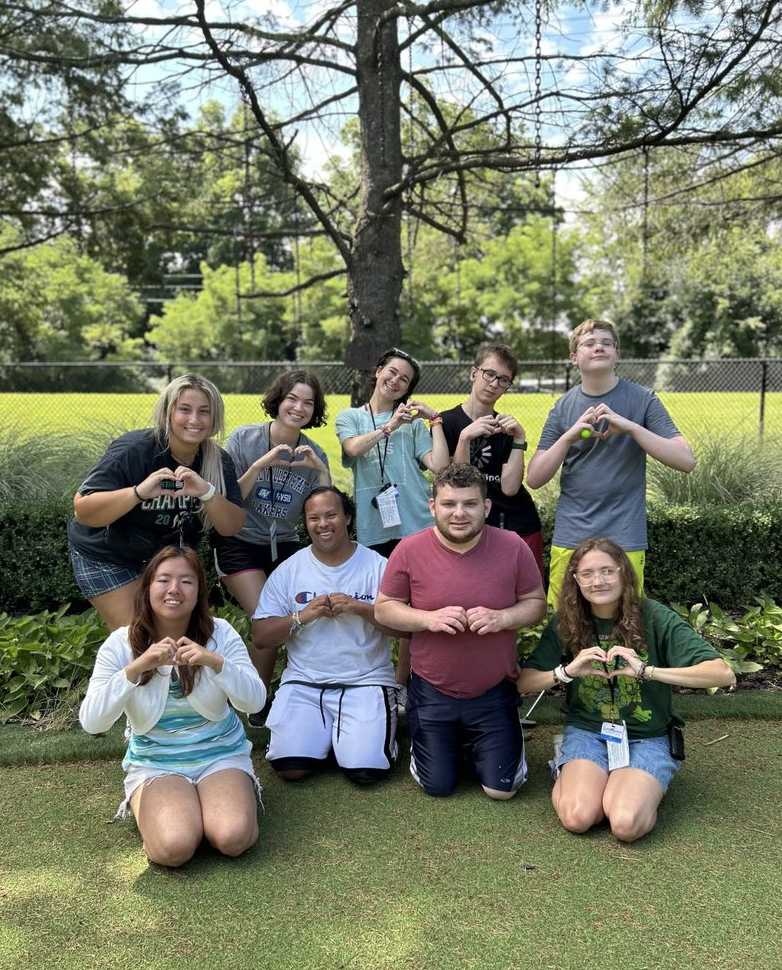
As the 24/25 Project SEARCH program year wraps up our interns are actively applying and interviewing for jobs in the community.
One of our interns has already accepted a position in the Environmental Services Department at our host business Corewell Health Hospital Dearborn! We are so proud of our interns!
If you are interested in the Project SEARCH program for the 2025-2026 school year, or simply want more information about the program please contact the instructor Erin Fogarty at fogarte@dearbornschools.org for more information.

SCHOOLCRAFT COLLEGE
The Disabilities Support Services office assists the College in ensuring equal access to programs and activities by facilitating accommodations and by providing encouragement and support for individuals with disabilities. Schoolcraft College strives to make all of its web resources accessible to individuals with disabilities.
- Students must provide verification of their disability to the Disability Support Services (DSS) office. This can be a recent Individualized Education Plan (IEP) or 504 Plan from high school or the Disability Verification Form.
- The Disability Verification Form is to be completed by a fully licensed health care professional who has first-hand knowledge of the student’s disability, such as the treating or diagnosing physician, psychiatrist, psychologist, social worker, counselor, therapist or other qualified medical professional who is licensed to diagnose.
- Documentation can be submitted:
- In person: McDowell Student Center, Room 175
- Email: dss@schoolcraft.edu
- Fax: (734) 462-4489
- Once the documentation has been verified, the student can schedule an appointment with a Disability Support Services Advocate in-person or via Zoom by contacting DSS office via phone (734) 462-4330 or email dss@schoolcraft.edu
- During the appointment, the student and the Disability Support Services Advocate engage in an interactive process to explore the nature of the disability, the functional limitations, and select appropriate and reasonable accommodations.
- Students will contact their instructors at the beginning of each semester to notify them of their intention to use accommodations
- Students will meet the standard for classroom behavior and academic requirements
Jessica Pettifurd
Disability Support Services Advocate
734-462-7439
jpettifu@schoolcraft.eduJoanne Dawson
Disability Support Services Advocate
734-462-7448
jdawson@schoolcraft.eduDonna Burgess
Disability Support Services Representative
734-462-7428
dburgess@schoolcraft.edu

7 Things To Know About College Disability Services
Colleges don’t have the same legal obligations as high schools
- This means colleges don’t have to provide the same level of support and services a student might have gotten in high school. For instance, they don’t have to provide specialized instruction or tutoring
Students must register as a student with disabilities to get accommodations
- The process of applying for accommodations happens separately from the college application process. It usually begins after your child has been accepted and has enrolled in college
- Colleges usually have instructions for how to register for disability services on their website. Perspective students should look for the instructions on the page for the school’s disability services office. (The name of the office might not have the word disability in it. You can also look for words like access, equity, or accommodations.)
The requirements for documentation in college are changing
- You will need to provide evidence of a disability to get accommodations. Colleges have typically required the most recent high school evaluation report. But lately, some have moved away from that
- Many colleges also have a requirement for how recent the evidence must be. Often, the requirement is three years or less. But that’s also changing at some colleges
There are no “case managers” in college
- You may have a dedicated contact person at the disability services office. That will continue for as long as your child is seeking accommodations. But this person doesn’t function in the same way as a high school case manager
- First, this person will work with you to determine “reasonable” accommodations. These might be academic, such as the use of a note-taker for lectures. Or they might be non-academic, like having a single dorm room
- This person will write an “accommodation letter” listing the ones you are entitled to get. The letter will be addressed to the faculty in your courses for that semester
- The process for informing professors about a student’s accommodations varies At some colleges, the disability services officer will email them. But it’s more typical for students to give the letter to professors and also explain their accommodation needs
Different schools offer different levels of support
- All colleges that get federal funds must ensure equal access to students with disabilities. That means they have to provide reasonable accommodations
- Accommodations aren’t the same as modifications
- Here are some other typical accommodations in college:
Having a note-taker for class lectures
Making audio recordings of lectures
Using a laptop computer in the classroom
Taking exams in a distraction-reduced room
Parents are no longer in the loop
When you were in high school, your parent(s) were legally entitled to be part of the process. That’s not true in college. The law protects the child’s privacy
Colleges don’t provide evaluations for learning and thinking differently
After high school, students have to go for a private evaluation if they want updated test results, or if they suspect they may have an undiagnosed learning or thinking difference


MI-UCP Michigan United Cerebral Palsy
MI-UCP (Michigan United Cerebral Palsy) was founded on the belief that everyone has the right to live to the best of their abilities and go as far as their ambitions will take them. We have been an ally and an advocate for the 2.3 million Michiganders with disabilities since 1949.
As one of Michigan’s largest sources of support, education, referrals, and services for people with disabilities and their families, MI-UCP provides assistive technology, financial assistance and tools, advocacy, and employment services to promote equity, independence and inclusion for all. Originally focused on individuals with Cerebral Palsy, currently more than 65 percent of the people MI-UCP serves have a disability other than CP.
See more about the work we do by clicking here.