

#7. Garden Museum @NetZeroLee
with Ms. Keiko, 2/1 - 2/28/2025


Hello FamiLEEs,
I look forward to meeting you at the Open House on Thursday! Please stop by the Garden Museum, which is located next to the Media Center and Ms. Allen's art room. You will have the chance to try out our portable microscope!
I have included a survey about our garden education in the link below. I appreciate your input!

Planting Seeds and Preparing the Beds
Small Group Y2, YK, G3A, and G3B on 2/6 and 2/7
I occasionally offer Small Group Garden Time to help with gardening tasks, depending on our garden needs. During these sessions, about six learners from a class will participate in gardening, while the teacher remains with the other learners.
This small group format is easier to manage and allows teachers to work more closely with fewer learners in the classroom. I hope this arrangement works better for both the teachers and myself!


Seed Potato Cutting and Observation
Small Group B4 on 2/21
Six learners from B4 cut the seed potatoes in preparation for later planting.
They also used a microscope to observe the eyes of the potatoes. Although it was initially challenging to focus the microscope and see the details, after several attempts, they could see the roots emerging from the eyes and observe the texture of the skin. They were amazed to discover that the microscopic view of the potato was so different from what they usually see.


Looking at our surroundings through a microscope allows us to see the world in a whole new way. Members of Mice Busters explored various items, from their clothes to worms in the compost.
I also used the microscope to show different types of soil and seeds during indoor recess and garden sessions this month. I'm excited to use it in the garden in March!
I want to thank a fifth grader from Green House who taught us how to use the microscope, and I also appreciate Mr. Howard for filming the demonstration. Thank you for sharing the video!


🦋 P3 and Y3 in STEAM on 2/19, 2/20, and 2/28
Mrs. Shaner read books about Monarch butterflies on Mackinvia, an online library for digital resources. She discussed the danger to Monarchs and ways to help them. The third graders learned about illegal logging in the areas where Monarchs spend the winter in Mexico, harmful use of chemicals, and the effects of extreme weather on their lives and habitats. Afterward, they completed a worksheet on Numbers.
To summarize their learning, Mrs. Shaner proposed creating an Alphabet book titled "M is for Monarch." P3 learners started working on the book. Each learner will create a page representing information associated with a letter of the alphabet. I am excited to see what the book will look like!
The learners also observed milkweed seeds and seed pods under a microscope.


Monarch Waystation Project Display
Small Group P3 and Y3 on 2/12
To raise awareness about Monarch conservation at our school, some learners from P3 and Y3 created a display for their Monarch Waystation Project at the Garden Museum. Thank you to Ms. Toledo and Ms. Gutierrez for allowing them to work on this project!


Next Steps
Even after their successful fundraiser efforts, the Mice Busters continue to progress. They are highly productive, with the team members consistently working on the projects and communicating daily through Schoology and other apps.
They have created a newspaper, flyers, and a website to share their work with the entire school. Additionally, they found burrows believed to be used by rodents and have blocked them off.
We also received an owl nest box to attract barn owls, which will help control the rat population. An ultrasonic device and coyote urine were introduced to the garden on January 31, and they appear to be effective. The latest updates can be found in the newspaper below.


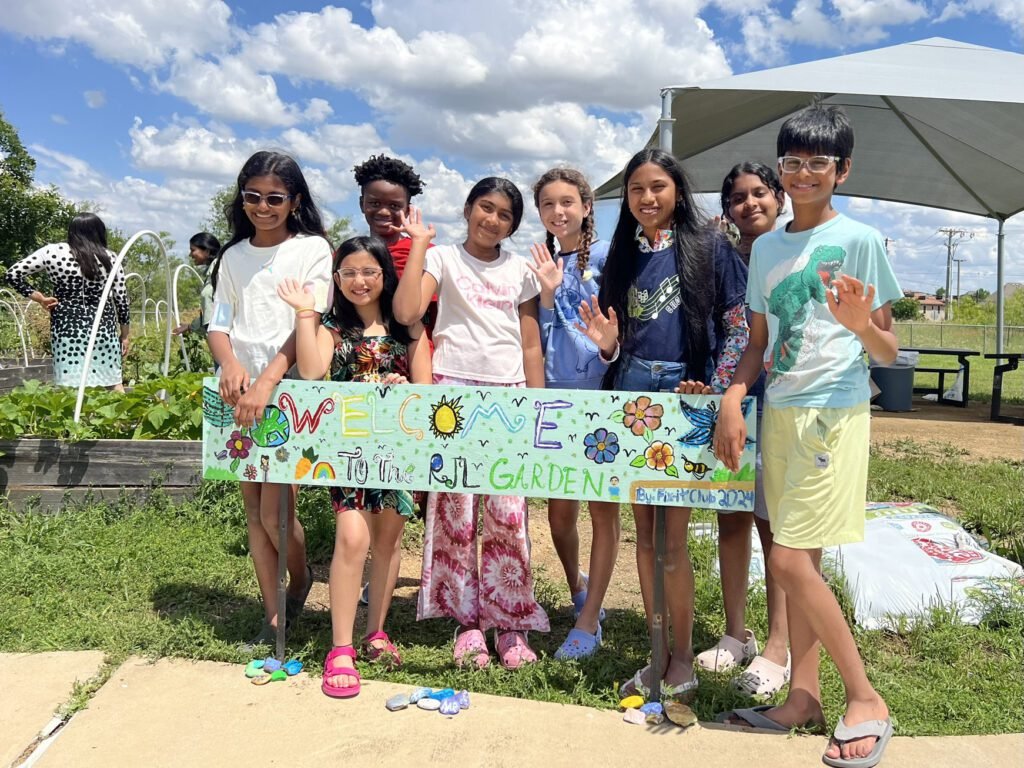


The members named their club "Monarch Sunset Gardens." One member designed a logo for the club, while another started creating a 3D life cycle model of monarch butterflies. Additionally, someone has developed an online quiz about monarch butterflies, and others have begun working on the club's website.
Many members are also engaged in creating Monarch gardens within the Minecraft world. One proposed combining the quiz with Minecraft to create a "Monarch Quiz Maze." Everyone is enthusiastic about building an amazing Monarch World that will capture people's interest, during recess. I can't wait to see what they create!


Thank you to the teachers for collaborating and bringing their learners to the outdoor learning!
I appreciate the continuous support from Naoko Maki, a former parent at Lee Elementary, of our Garden Time and compost project.
In this newsletter, I used the pictures and videos taken by Naoko Maki and the teachers.