remove_red_eye 2.6K
page background

December DEI Newsletter

ACNL | 2024

December DEINewsletterACNL | 2024

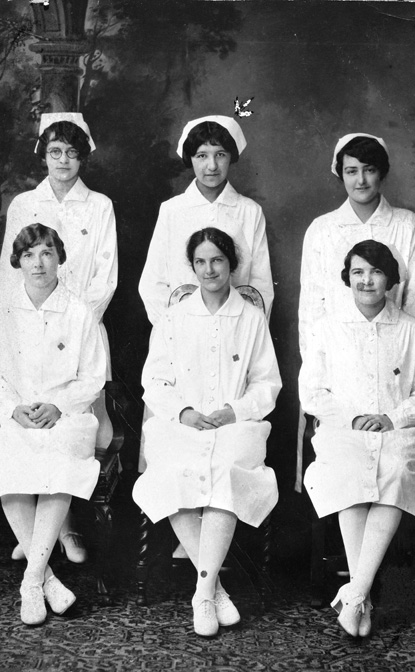
Celebrating Nursing History: The December DEI Committee Newsletter

As we close out the year, it is a fitting time to reflect on the history of nursing—a history rich with stories of resilience, innovation, and advocacy for equitable care. Understanding where we come from provides the foundation for shaping where we go, and the diverse voices that have contributed to our profession’s legacy serve as powerful reminders of the impact of inclusion and representation in healthcare.


This month, we delve into the pivotal moments and figures that have defined nursing’s trajectory, from the groundbreaking work of Florence Nightingale to the often-overlooked contributions of trailblazers like Mary Eliza Mahoney, the first African American nurse, and Susie Walking Bear Yellowtail, a champion for Native American healthcare rights. We also examine how the lessons of history can inform our efforts to address today’s challenges, including health disparities and workforce diversity.


Join us as we celebrate the past while envisioning a future of continued progress and equity within nursing. Together, let’s honor the stories that inspire us and commit to being part of the next chapter in advancing diversity, equity, and inclusion in our field.


The DEI Committee Members:

Anitra Williams

Christina M. Oldini

Kimberly Long

Karen Mitchell-Keels

Make'da Traynum

Marshall Blue

Nicole Barnett

Sharon Goldfarb

Sheree Criner

Yury Nevarez


Newsletter produced by Vanessa Kerr and Sharon Goldfarb.

The Museum of Nursing History - Museum of Nursing History

The Museum of Nursing History - Museum of Nursing History

Welcome to the Museum of Nursing History located at La Salle University!

launch nursinghistory.org
Barbara Bates Center for the Study of the History of Nursing

Barbara Bates Center for the Study of the History of Nursing

The Barbara Bates Center for the Study of the History of Nursing is the preeminent history of nursing research center and archive.

launch nursing.upenn.edu
The Heroic Black Nurses Who Helped Cure Tuberculosis

The Heroic Black Nurses Who Helped Cure Tuberculosis

Maria Smilios' new book The Black Angels chronicles the history of the nurses of Sea View Hospital and the cure for tuberculosis

launch scientificamerican.com
Biography: Mary Eliza Mahoney

Biography: Mary Eliza Mahoney

Eager to encourage greater equality for African Americans and women, Mary Eliza Mahoney pursued a nursing career which supported these aims. She is noted for becoming the first African American licensed nurse. Discover more at womenshistory.org

launch womenshistory.org
Susie Walking Bear Yellowtail: "Our Bright Morning Star"

Susie Walking Bear Yellowtail: "Our Bright Morning Star"

Susie Walking Bear Yellowtail was among the first Apsáalooke (Crow) people to achieve a higher education. Like many Native children of her generation, she attended mission boarding schools where st...

launch montanawomenshistory.org
Dr. Ildaura Murillo-Rohde: Latina Led Push for Diversity in Nursing - Salud America

Dr. Ildaura Murillo-Rohde: Latina Led Push for Diversity in Nursing - Salud America

In this article spotlight, we will recognize Ildaura Murillo-Rhode, PhD, RN, FAAN, a nurse and professor who strived to serve underrepresented communities and create equal opportunities for Latinos within health professions.

launch salud-america.org
open_in_new zoom_out_map

The History of Racism in Nursing: A Review of Existing Scholarship

History matters. Beyond George Santayana’s oft-repeated cliche that “those who cannot remember the past are condemned to repeat it,” history – or more correctly, the stories we tell about our history – frames how we think about ourselves now and the possibilities we can imagine for our future. These stories have their own power. They create a shared sense of identity. They can remain essential yet change over time in small but powerful ways to incorporate new questions and new issues. And they can construct meanings that sometimes bridge even if they cannot destroy divides based on what scholars have described as “positionality”: where one stands vis-a-vis backgrounds, assigned roles, social constructs, political capital, and sheer ambition.


Read more here.

open_in_new zoom_out_map

Working Nurse: 250 Years of Black Nursing History

Despite centuries of slavery, segregation, systemic inequality, and prejudice — including being denied entry into nursing schools and organizations — Black nurses have made great contributions to our profession. In this article, we’re spotlighting some of the efforts of courageous and determined Black nursing pioneers.


Read more here.

Hidden figures of nursing: The historical contributions of Black nurses and a narrative for those who are unnamed, undocumented and underrepresented

Hidden figures of nursing: The historical contributions of Black nurses and a narrative for those who are unnamed, undocumented and underrepresented

Author manuscript; available in PMC: 2022 Jun 10. Published in final edited form as: J Adv Nurs. 2021 Feb 10;77(4):1627-1632. doi: 10.1111/jan.14791 Unless I am allowed to tell the story of my life in my own way, I cannot tell it at all.

launch pmc.ncbi.nlm.nih.gov

ELSEVIER: Social mission in nursing: Reaffirming our roots

Abstract

The Organization of Associate Degree Nursing has declared Advancing the Social Mission of Nursing as the major theme for the year (Meyer, 2020). Nursing's historic roots are embedded in social mission. Social mission encompasses the social determinants of health, which are a major factor impacting health outcomes. In order to effectively prepare associate degree nursing graduates to address issues related to health equity, nurse educators should re-examine the core purpose of nursing education to ensure inclusion of social mission.


Read here.

Freedom House Ambulance: The FIRST Responders

Interview with a Leadership Legend: Shirley Steinback Hawthrone

Submitted by Dr. Nicole Barnett, ACNL DEI Committee Member


On October 1, 2022, I had the unique pleasure of interviewing Shirley Steinback Hawthrone. I worked on her team when she was the Medical Group Administrator for the Kaiser Permanente East Bay service area, and I remained on her team until her retirement in 2016. When I think about leaders that not only have a proven track record of performance, but a clear dedication to the profession of nursing and to the up-lifting of others, few names rival hers.


Tell us a bit about your background.


I was born and raised in Fresno, CA. My father was a pastor and my mother was a stay at home Mom. I am the only girl of five children and we lived in the Black community of Fresno at the time. My growing up was overall positive. We had our church family and our neighborhood behind us. We played outside and had a sense of community. Being raised in the church prepared me for leadership in many ways. I learned to speak in front of a group, work as a team such as singing in the choir or serving our community. It gave me a sense of self and built my courage early on.


How did you know that you wanted to enter the nursing profession?


I attended San Jose State University with the support of an equal opportunity program. While I was thankful for the financial support to attend college, it was quite a culture shock from the community that I grew up with in Fresno. My inspiration to study the healing profession really came from my father. Being a pastor, he would visit the sick and shut in and I would often accompany him. I would see him minister through his presence, his listening and his prayers. I saw the impact that it had on people and on their families and I wanted to find a way to do the same for people that were suffering due to illness. When he later became ill due to stomach cancer, I saw my mother care for him and so I learned so much about healing presence from her as well. Even as a young girl, I learned the power of presence, holding a hand, sharing a word of encouragement. It helped me to learn the foundations of how to take care of others. Later, when I was old enough, I started to volunteer at the local hospital. We were called “Candy Stripers” back them because of the striped pinafore that we wore as our uniform. It helped me to become comfortable in a hospital environment and apply everything that I had learned about healing to the patients that I served. That experience just sealed it for me, I knew that I wanted to be a nurse, and I also knew that my path was already divinely chosen for me and I felt comfortable walking into it.


Did you experience any discrimination while in nursing school at San Jose State?


Well, first of all, there were so few Blacks on campus, especially in nursing, that I could count them on one hand. One day in clinical, I was assigned to AM care for a patient. Back then, we still did full AM care, with a head to toe bed bath, oral care and all. I went in with my instructor, introduced myself to the patient, explained that I would be providing AM care and introduced my instructor. The patient then objected to having me care for her and called me a name I prefer not to repeat. At the time, I heard a lot on the news about racism and protests, but I had been raised in a safe, racially congruent, supportive community. This was the first time that I was directly confronted with hateful speech fueled by racism. So I said to myself that I am going to step out and speak with my instructor. When I asked her about the incident she calmly advised, “This is your patient and you are going to take care of her. This is not the last time that you will encounter people like this woman.” My instructor was a military trained nurse who was very disciplined. Being raised in a disciplined household, her teaching style was familiar and encouraging for me. But I did not expect this response, however, though I appreciate it now, because she was right. It is in these moments that we have an opportunity to choose how we respond, because these are opportunities not to just change minds but to change hearts. I hope to change hearts in everything that I do. And my instructor was correct - there would be many more times when I would encounter others like this woman, as patients, as co-workers, and as leaders in my career.


Your nursing career transects the height of the Civil Rights Movement. Tell us about how events on the national stage impacted your early years as a nurse.


I was in high school when MLK was assassinated, and our teachers did their best to help us process our grief, our anger and our confusion. Just a few months later, we learned of the assassination of Robert F. Kennedy. While the deaths of Medgar Evers, JFK and Malcom X happened when I was younger, these recent assassinations impacted me deeply. By the time that I entered college at San Jose State University, I found myself interacting with other students that were politically aware, impacted by national events and wanting to support positive change within our areas of influence. In fact, the Black Panthers were active on our campus and on other college campuses as well. It was refreshing and enlightening to partake in their socio-political educational program. Many of us even started changing our hair and our style of dress on campus to signify our solidarity with the movement. It was in my college years that I first wore an Afro and fatigues! The more I learned about the plight of the Black community from the Black Panthers, I knew that the larger world was not the same as the protective Black community that I had grown up with in Fresno. I was also in college when John Carlos and Tommie Evans ran in the Olympics and raised the Black Power fist! All of this fueled my determination to learn and to explore my own militancy. We were young, and we wanted change! Nursing is a perfect platform for change, because health is so closely tied to human rights. It all came together for me in college and was aligned with how I was raised, and what I believed in.


What advice would you offer for current nursing leaders, especially leaders of color?


Be confident in who you are, and in your excellent competence as a registered nurse. Hold on to your strength of character and maintain your commitment to emotional intelligence and civility even when others struggle to do the same. Your patients and your community are counting on you!

Previous Newsletters

November: Rural Healthcare

October: Disaster Preparedness

September: Political Action Edition

August: Community Health Nursing

July: Advocating for Patient Summer Safety

June: Pride Month

May: Mental Health Awareness Month

April: Disability Rights

March: Women's Health Equity

February: Environmental Health and Justice

January: Combatting Misinformation and Disinformation

December: Resilience and Community Care

November: Navigating the Digital Frontier

October: Legislative Update

September: Maternity Care

August: Civic Health Month

ACNL logo
open_in_new zoom_out_map

Association of California Nurse Leaders

Email: info@acnl.org
Website: https://www.acnl.org/
Location: 180 Promenade Circle suite 300, Sacramento, CA 95834, USA
Phone: 916-779-6949

Kimberly Long
Kimberly is using Smore to create beautiful newsletters
Loading indicator

close